
Phanerotoma
Wesmael, 1838
Phanerotoma is a of in the Braconidae, Cheloninae, with at least 190 described . Species within this genus are primarily larval or ovo-larval parasitoids of Lepidoptera, particularly in families Pyralidae, Gracillariidae, and Olethreutidae. Several species have been studied for their potential as agents of agricultural pests, including stored product pests and crop pests on cowpea, citrus, pecan, and litchi. The genus exhibits -specificity at the species level, with different Phanerotoma species attacking distinct host groups.
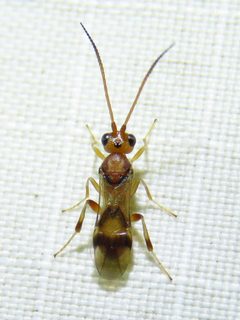
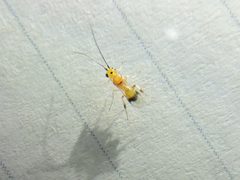
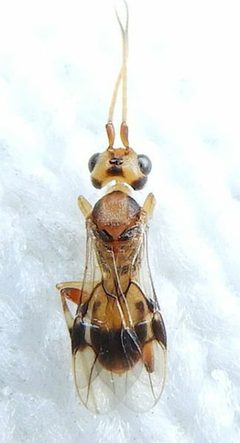
Pronunciation
How to pronounce Phanerotoma: /fæˌnɛroʊˈtoʊmə/
These audio files are automatically generated. While they are not always 100% accurate, they are a good starting point.
Identification
Identification to within Phanerotoma requires examination of morphological characters and often cannot be determined from images of living specimens. The is characterized by features typical of Cheloninae, including a laterally compressed metasoma. Species-level identification historically relied on associations, though this has been shown to be unreliable without morphological verification. Recent taxonomic revisions using and have revealed cryptic diversity and clarified species boundaries.
Images
Habitat
are defined by distributions, ranging from stored product environments (granaries, flour mills) to agricultural crops including cowpea fields, citrus orchards, pecan groves, and litchi plantations. have been documented in South Africa, South China, Turkey, and North America.
Distribution
Documented from multiple continents including Africa (South Africa), Asia (China, Turkey), Europe (Denmark, Norway, Sweden), and North America. Distribution varies by ; some species appear regionally restricted while others may be more widespread.
Host Associations
- Ephestia kuehniella (Pyralidae) - Mediterranean flour moth; laboratory studies of P. (P.) ocularis show rates of 84.5-100%
- Maruca vitrata (Pyralidae) - Legume pod borer on cowpea; for P. syleptae and P. leucobasis
- Ectomyelois ceratoniae (Pyralidae) - Carob ; for P. carobivora on pecan and citrus in South Africa
- Conopomorpha sinensis (Gracillariidae) - Litchi fruit borer; for P. conopomorphae in South China
- Hendecasis duplifascialis (Pyralidae) - Jasmine budworm; for P. hendecasiella
- Acrobasis spp. (Pyralidae) - for P. tibialis
- Tetralopha spp. (Pyralidae) - for P. tibialis
- Carpocapsa spp. (Olethreutidae) - for P. fasciata
- Grapholitha spp. (Olethreutidae) - for P. fasciata
- Laspeyresia spp. (Olethreutidae) - for P. fasciata
- Melissopus spp. (Olethreutidae) - for P. fasciata
Life Cycle
Development is parasitoidal, with larvae feeding internally or externally on larvae. P. (P.) ocularis exhibits low rates (16.57%). Virus-like particles have been documented in the calyx of P. flavitestacea and are transferred into host tissues, suggesting or similar involvement in host manipulation.
Behavior
Females orient to -infested plants using synomones; P. hendecasiella is attracted to compounds including allyl iso-thiocyanate, linalool, methyl salicylate, and from jasmine buds infested with its host. Some may interact with other ; P. leucobasis co-occurs with Trichogrammatoidea sp. as parasitoids of M. vitrata.
Ecological Role
agent of lepidopteran pests in agricultural and stored product systems. rates vary considerably by plant and locality (2-30% reported for P. carobivora). Potential for integration into pest management programs for crops including cowpea, citrus, pecan, litchi, and stored products.
Human Relevance
Studied as a biocontrol agent for multiple agricultural pests. Mass rearing protocols have been investigated using cowpea sprouts to optimize production of P. syleptae for release against Maruca vitrata. Susceptibility to such as fenoxycarb has been examined to assess compatibility with .
Similar Taxa
- BraconBoth are in Braconidae with larval of Lepidoptera; Phanerotoma is distinguished by Cheloninae characteristics including laterally compressed metasoma and belongs to tribe Phanerotomini
- ChelonusBoth in Cheloninae; Phanerotoma differs in morphological details and associations, with Chelonus often attacking different host groups
- IchneumonidaeSuperficially similar ; Phanerotoma is distinguished by Braconidae characteristics including reduced wing venation with only one recurrent in forewing
More Details
Taxonomic complexity
Historical confusion between P. tibialis and P. fasciata illustrates the importance of combining morphological and data; P. tibialis parasitizes Pyralidae (phycitid and epipaschiinid groups) while P. fasciata attacks Olethreutidae (Eucosminae). has recently revealed five new from China, indicating substantial undescribed diversity.
Virus-like particles
P. flavitestacea possesses virus-like particles in its calyx that are transferred to tissues during oviposition, a trait shared with some other braconid and associated with suppression of host immune responses.
Sources and further reading
- BugGuide
- Wikipedia
- GBIF taxonomy match
- iNaturalist taxon
- NCBI Taxonomy
- Catalogue of Life
- Bug Eric: First Night of Blacklighting
- Bug Eric: April 2024
- Effect of the juvenile hormone analogue fenoxycarb applied via the host on the parasitoid Phanerotoma (Phanerotoma) ocularis Kohl (Hym., Braconidae)
- Parasitization of Ephestia kuehniella Zeller (Lep., Pyralidae) by Phanerotoma (Phanerotoma) ocularis Kohl (Hym., Braconidae)
- A new species of Phanerotoma Wesmael (Hymenoptera: Braconidae: Cheloninae) parasitoid of the carob moth in South Africa
- A review of the tribe Phanerotomini (Hymenoptera, Braconidae, Cheloninae) in Turkey, with a new host record for Phanerotoma (Bracotritoma) permixtellae
- Suitability of cowpea sprouts to optimize rearing of biocontrol agents Phanerotoma syleptae and Liragathis javana
- Alluring response of the parasitoid Phanerotoma hendecasiella Cam to synomones from Hendecasis duplifascialis Hampson-infested jasmine (Jasminum sambac L.) buds and compound identification by GC-MS
- Notes on Phanerotoma tibialis (Hald.) and P. fasciata Prov., with Descriptions of Two New Species (Hymenoptera: Braconidae)
- Interaction de phanerotoma leucobasis kriechbaumer (hymenoptera : braconidae) avec trichogrammatoidea sp. (hymenoptera : trichogrammatidae), deux parasitoides de maruca vitrata fabricius (lepidoptera : pyralidae), ravageur du niebe, vigna unguiculata (l.)
- Virus-like Particles in the Calyx ofPhanerotoma flavitestacea(Hymenoptera: Braconidae) and Their Transfer Into Host Tissues
- A new species of Phanerotoma Wesmael (Hymenoptera: Braconidae: Cheloninae), a parasitoid of Conopomorpha sinensis Bradley (Lepidoptera: Gracillariidae) from South China
- DNA Barcodes and Morphology Reveal Five New Species of Phanerotoma (Hymenoptera, Braconidae, Cheloninae) from China.