
Acrobasis
Zeller, 1839
Species Guides
28- Acrobasis angusella(Hickory Leafstem Borer)
- Acrobasis aurorella
- Acrobasis betulella(Birch Tubemaker)
- Acrobasis betulivorella
- Acrobasis blanchardorum
- Acrobasis caliginella
- Acrobasis caryae(Hickory Shoot Borer)
- Acrobasis caryalbella
- Acrobasis caryivorella(pecan nursery casemaker)
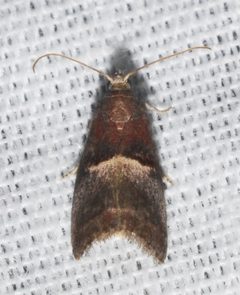
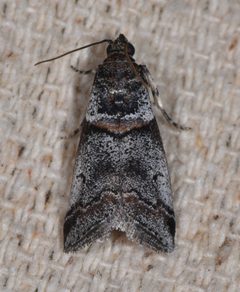
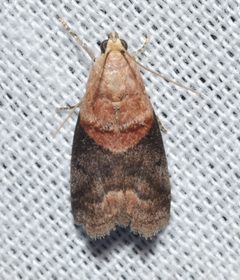
Acrobasis is a of small in the Pyralidae, Phycitinae. in this genus are primarily known as pests of nut and fruit crops, with several economically significant species including the pecan nut casebearer (A. nuxvorella) and species affecting chokeberry, walnut, and hickory. Larvae typically bore into developing nuts or fruits, causing direct damage to yield. The genus has a Holarctic distribution with records from North America and Europe.
Pronunciation
How to pronounce Acrobasis: //ˌækroʊˈbeɪsɪs//
These audio files are automatically generated. While they are not always 100% accurate, they are a good starting point.
Identification
Members of Acrobasis can be recognized as small pyralid moths, though specific diagnostic features distinguishing the from related phycitine genera are not well-documented in available sources. The pecan nut casebearer (A. nuxvorella) has a distinctive ridge of dark running across the forewings.
Images
Habitat
vary by : agricultural plantations of pecan (Carya illinoinensis) for A. nuxvorella; black chokeberry (Aronia melanocarpa) orchards for A. advenella; and woodland habitats including Wytham Woods, Oxfordshire, UK for A. repandana. Many species are associated with woody plants bearing nuts or fleshy fruits.
Distribution
Widely distributed in the Holarctic region. Records include: North America (United States including Vermont, southern states with pecan , Colorado); Europe (United Kingdom, Poland, Denmark, Norway, Sweden).
Seasonality
Activity patterns vary by and latitude. The pecan nut casebearer (A. nuxvorella) has multiple per year with spring activity timed to pecan nutlet development. A. advenella larvae feed in early spring on buds and fruits. A. repandana was collected in Wytham Woods, Oxfordshire in August.
Diet
Larvae are oligophagous, feeding primarily on reproductive structures (buds, flowers, developing nuts, fruits) of woody plants. Documented include: pecan (Carya illinoinensis), black chokeberry (Aronia melanocarpa), plants in Rosaceae ( Sorbus, Crataegus), walnut (Juglans), and hickory (Carya).
Host Associations
- Carya illinoinensis - larval pecan; sole of A. nuxvorella
- Aronia melanocarpa - larval black chokeberry; primary of A. advenella in Poland
- Sorbus spp. - larval rowan, mountain ash
- Crataegus spp. - larval hawthorn
- Juglans spp. - larval walnut
- Carya spp. - larval hickory
Life Cycle
Larvae complete feeding within plant tissues. A. nuxvorella completes all life stages in the pecan tree . A. advenella larvae feed on buds in early spring, with newly hatched caterpillars damaging chokeberries; occurs with variable success depending on environmental conditions. Multiple per year occur in warmer regions.
Behavior
of A. repandana are attracted to light traps. Larvae of A. advenella exhibit repellent to certain plant , with settling inhibition observed at higher concentrations. Larvae typically bore into tissues, producing characteristic and silk webbing at feeding sites.
Ecological Role
Several are significant agricultural pests. A. nuxvorella is one of the most important pests of pecan in the southern United States, with a single larva capable of destroying multiple developing nutlets. A. advenella causes approximately 20% yield reduction in Polish black chokeberry production. Larvae serve as for including Mesostenus spp. (Ichneumonidae) and Calliephialtes grapholithae.
Human Relevance
Economic impact through damage to nut and fruit crops. Management relies on approaches including traps for monitoring (PNCforecast model for A. nuxvorella), scouting for , and timed applications. Selective insecticides that preserve natural enemies are preferred. Regulatory prevents A. nuxvorella introduction to pecan-growing areas in Arizona and California.
Similar Taxa
- Other Phycitinae generaSimilar small pyralid ; precise differentiation requires examination
- Cydia caryana (hickory shuckworm)Shares pecan as and similar concealed feeding habit in nuts; belongs to Tortricidae rather than Pyralidae
More Details
Genomic resources
-level assembly available for Acrobasis repandana (620.40 Mb, 32 chromosomal pseudomolecules, 11,522 protein-coding genes) as part of the Darwin Tree of Life Project.
Parasitoid associations
Larvae are for ichneumonid wasps including Mesostenus gracilis and M. sicarius, which use long ovipositors to reach stem-boring or shoot-boring caterpillars. Calliephialtes grapholithae has been reared from multiple Acrobasis including A. betulella, A. juglandis, and A. rubrifasciella.
Sources and further reading
- BugGuide
- Wikipedia
- GBIF taxonomy match
- iNaturalist taxon
- NCBI Taxonomy
- Catalogue of Life
- Acrobasis nuxvorell Archives - Entomology Today
- Pecan Nut Casebearer: New Guide Provides IPM Options
- Bug Eric: Wasp Wednesday: Mesostenus
- Bug Eric: A Potential New Host Record for Calliephialtes grapholithae (Hymenoptera: Ichneumonidae) from a Paper Wasp nest (Hymenoptera: Vespidae: Polistes metricus)
- Chemical Composition and Toxicity of Achillea millefolium L. Essential Oil Against Acrobasis advenella (Lepidoptera, Pyralidae) Under Laboratory Conditions.
- The genome sequence of the Warted Knot-Horn moth, Acrobasis repandana Fabricius, 1798.