
Sitotroga
Heinemann, 1870
Species Guides
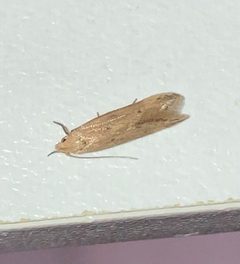
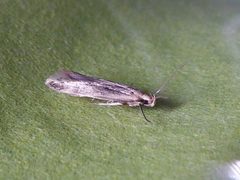
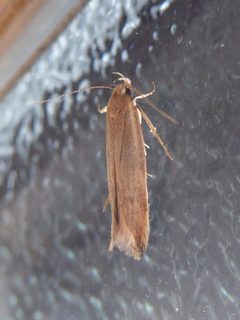
1- Sitotroga cerealella(Angoumois grain moth)
Sitotroga is a of small in the Gelechiidae, with five recognized . The genus is best known for , commonly called the , a significant stored-product pest of cereal grains. Species in this genus are routinely mass-reared in laboratory and insectary settings as factitious for used in programs, particularly Trichogramma chilonis.
Pronunciation
How to pronounce Sitotroga: /ˌsɪtoʊˈtroʊɡə/
These audio files are automatically generated. While they are not always 100% accurate, they are a good starting point.
Images
Habitat
Stored grain products; specifically documented in shelled corn and wheat grain storage systems. Mass rearing occurs in laboratory environments using tin chambers or glass jars with wheat grains as substrate.
Distribution
Distribution records from GBIF indicate presence in Norway (NO) and Sweden (SE). Natural distribution is poorly documented; are in association with stored grain products through human commerce.
Host Associations
- Trichogramma chilonis - Factitious relationship; S. cerealella are mass-reared to produce this egg for programs
- Pteromalus cerealellae - Documented of S. cerealella in shelled corn storage systems
Life Cycle
stage duration has been observed at 12 and 24 hours post-oviposition under laboratory conditions. of 7.06 days recorded for eggs exposed to 35 Gy gamma irradiation. Pupal stage documented with of 86.66% at 5 Gy irradiation. Natural parameters not established from available sources.
Ecological Role
Pest in stored grain . Serves as factitious for mass-rearing of agents, enabling year-round availability of for research and field release programs.
Human Relevance
Economic pest of stored cereal grains, particularly corn and wheat. Subject to control efforts including using and evaluation of . Used extensively in insectary production systems to support biological control industry.
More Details
Mass rearing methodology
Mass rearing in newly designed tin chambers with 6 kg wheat grains achieved 21% higher production compared to traditional glass jar rearing, yielding up to 77.9 g of eggs sufficient for 1756 Trichogramma cards
Radiation sensitivity
show dose-dependent response to gamma irradiation: 35 Gy resulted in 55.3% hatching rate and prolonged incubation, while 95 Gy caused lowest values for incubation, , and longevity
Sources and further reading
- BugGuide
- Wikipedia
- GBIF taxonomy match
- iNaturalist taxon
- NCBI Taxonomy
- Catalogue of Life
- MASS REARING OF SITOTROGA CEREALELLA (OLIVIER) (LEPIDOPTERA: GELECHIIDAE) IN NEWLY DESIGNED CHAMBERS
- Response of Sitotroga cerealella and Trichogramma chilonis to gamma irradiation exposure
- Suppression of Sitotroga cerealella in Shelled Corn by the Parasitoid Pteromalus cerealellae
- Notes on the Biology of the Angoumois Grain Moth, Sitotroga Cerealella Oliv.
- Effect of thermal stress on longevity and reproduction of Angoumois grain moth Sitotroga cerealella (Lepidoptera gelechidae) in laboratory Condition
- Phytochemistry and insecticidal activity of six local plant extracts against Sitotroga Cerealella (Oliv.) (Lepidoptera: Gelechiidae) in stored wheat.