
Anomologinae
Meyrick, 1926
Genus Guides
14- Aristotelia(twirler moths)
- Bryotropha
- Deltophora
- Enchrysa
- Isophrictis
- Megacraspedus(large twirler moths)
- Metzneria
- Monochroa
- Nealyda
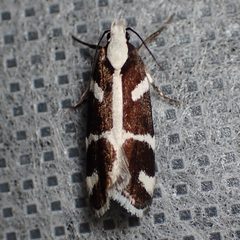
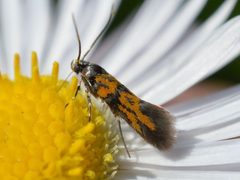
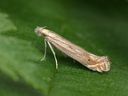
Anomologinae is a of small within the Gelechiidae, established by Meyrick in 1926. The subfamily contains over 50 organized into two tribes (Anomologini and Isophrictini) plus several unplaced genera. Members are generally small gelechioid moths with diverse ecological associations. The genus Aristotelia includes found in sandy in western North America.
Pronunciation
How to pronounce Anomologinae: /ænəˌmɒloʊˈdʒɪniː/
These audio files are automatically generated. While they are not always 100% accurate, they are a good starting point.
Identification
Anomologinae can be distinguished from other Gelechiidae primarily through genitalic and wing venation characters. The subfamily shares the general gelechiid body plan of narrow, often pointed forewings and relatively broad hindwings. Specific identification to subfamily level requires examination of genitalia structure and wing venation patterns; members lack the distinctive forewing pattern elements characteristic of Dichomeridinae and Gelechiinae.
Images
Habitat
vary by . The genus Aristotelia includes associated with sandy habitats in arid and semi-arid regions of western North America. Other genera occupy diverse terrestrial environments typical of small gelechiid moths.
Distribution
distribution with occurring across multiple continents. Documented in faunistic surveys from southern Africa. Aristotelia occur in Colorado, Kansas, and Texas in the United States.
Similar Taxa
- DichomeridinaeSimilar small gelechiid moths, but Dichomeridinae typically exhibit more pronounced forewing pattern elements and different genitalic structures.
- GelechiinaeThe largest of Gelechiidae; Gelechiinae generally show greater diversity in forewing pattern and different male genitalia .
More Details
Taxonomic composition
Anomologinae contains two formally recognized tribes: Anomologini (with 30 including Anomologa, Aristotelia, Bryotropha, Megacraspedus, and Theisoa) and Isophrictini (with 9 genera including Isophrictis, Metzneria, and Monochroa). An additional 11 genera remain unplaced to tribe, including Clepsimorpha, Huemeria, and Merimnetria.
iNaturalist documentation
The has accumulated over 33,000 research-grade observations on iNaturalist, indicating substantial citizen science engagement with this group, though many observations may not be identified to subfamily level.
Sources and further reading
- BugGuide
- Wikipedia
- iNaturalist taxon
- NCBI Taxonomy
- Catalogue of Life
- A New Species of Aristotelia (Lepidoptera: Gelechiidae: Anomologinae) from Sandy Habitats in Colorado, Kansas, and Texas
- Gelechioidea: Elachistidae: Ethmiinae; Gelechiidae: Anomologinae, Dichomeridinae, Gelechiinae, undetermined subfamily; Oecophoridae: undetermined subfamily; Scythrididae: undetermined subfamily; undetermined family