
Monochroa
Heinemann, 1870
Species Guides
9- Monochroa absconditella
- Monochroa angustipennella
- Monochroa fragariae(strawberry crown miner moth)
- Monochroa gilvolinella
- Monochroa harrisonella
- Monochroa placidella
- Monochroa pullusella
- Monochroa quinquepunctella(Five-spotted Twirler Moth)
- Monochroa robusta
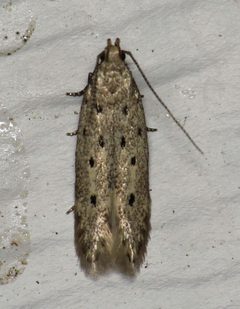
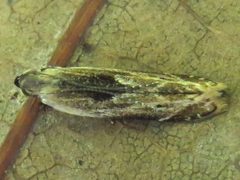
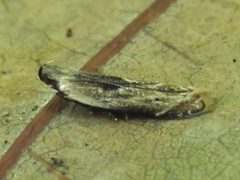
Monochroa is a of small in the Gelechiidae, first described by Heinemann in 1870. The genus contains multiple distributed across the Palearctic region, with records from Europe, Siberia, and Japan. Several species have been described from Central European type localities including Austria, Switzerland, and Germany. Taxonomic revisions have moved some species to other genera, and new species continue to be described from underexplored regions such as the southern Ural Mountains and the south-western Alps.
Pronunciation
How to pronounce Monochroa: /məˈnɒkroʊə/
These audio files are automatically generated. While they are not always 100% accurate, they are a good starting point.
Identification
Monochroa are small gelechiid moths that require close examination of genitalia for reliable species-level identification. External alone is generally insufficient to distinguish between closely related species within the . The genus is placed in the Aristoteliinae based on morphological characters.
Images
Distribution
Documented from Europe (Austria, Switzerland, Germany, Denmark, Norway, Sweden, south-western Alps), southern Siberia, the southern Ural Mountains, Primorsky district of Russia, and Japan.
Similar Taxa
- Other Aristoteliinae generaMonochroa can be distinguished from related in the Aristoteliinae by specific genitalia characters, though external features often overlap.
More Details
Taxonomic history
Several originally described under other have been transferred to Monochroa, including Monochroa decolorella (formerly Anacampsia decolorella), Monochroa griseella (formerly Doryphora griseella), and Monochroa rhenanella (formerly Gelechia rhenanella). Conversely, some species such as Monochroa csornensis and Monochroa nigromaculella have been removed from the genus.
Research activity
The has been subject to active taxonomic study, with multiple new described since 1990 from regions including Japan, the southern Ural Mountains, and the south-western Alps.