
Mesopolobus
Westwood, 1833
Mesopolobus is a of chalcidoid wasps in the Pteromalidae, established by Westwood in 1833. The genus contains approximately 135 valid with distribution. Most species are of pupae, though the genus exhibits diverse . Species have been documented from coniferous foliage, particularly spruce, as well as from gall-forming insects and other .
Pronunciation
How to pronounce Mesopolobus: /ˌmɛsoʊˈpoʊləbəs/
These audio files are automatically generated. While they are not always 100% accurate, they are a good starting point.
Identification
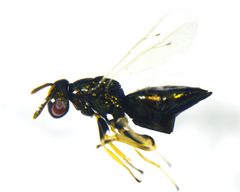
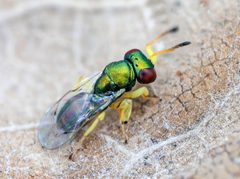
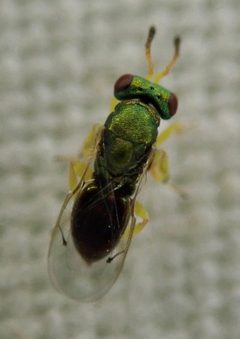
Mesopolobus are small chalcidoid wasps typical of Pteromalidae. Specific diagnostic characters include features of the clypeal emargination, setation patterns on the basal of the fore wing, and metallic coloration of the and mesosoma. For example, M. askewi is distinguished from the similar M. longicollis by a deeper clypeal emargination, a complete row of setae on the basal vein of the fore wings, blue to bluish-green head coloration, and bluish-green to green mesosoma with coppery reflections. Species-level identification requires examination of wing venation, antennal structure, and body .
Images
Habitat
Mesopolobus have been collected from foliage of coniferous trees, particularly Norway spruce (Picea abies), in forest environments. Collection records span elevations from approximately 1000 to 2150 meters in mountainous regions. The occupies forest , with specimens obtained by sweep netting from lowest branches of trees in forest stands.
Distribution
distribution with records from Europe (including Bulgaria, Canary Islands, Malta), North America (British Columbia, California, Colorado, Connecticut), and other regions. Approximately 135 valid worldwide, with 12 species described from continental Europe following Graham's 1969 monograph.
Host Associations
- Picea abies - foliage association (collected by sweep netting)Ten new -plant associations reported for Pteromalidae and Asaphesinae with P. abies; direct relationship for Mesopolobus species not confirmed by rearing
- Iteomyia major - for related M. longicollis specimens emerged from galls of this gall midge
Ecological Role
. Pteromalidae form a considerable component of the hymenopterous parasitoid complex associated with spruce pests. The majority of Mesopolobus are of pupae, contributing to regulation of in forest .
Similar Taxa
- M. longicollisSimilar ; distinguished by clypeal emargination depth, fore wing setation, and coloration patterns
Sources and further reading
- BugGuide
- Wikipedia
- GBIF taxonomy match
- iNaturalist taxon
- NCBI Taxonomy
- Catalogue of Life
- Publications | Entomology Research Museum
- Description of Mesopolobusaskewi sp. nov. (Hymenoptera, Pteromalidae), with notes on the fauna of Asaphesinae and Pteromalidae (Hymenoptera, Chalcidoidea) collected from foliage of Piceaabies (L.) H. Karst. in Bulgaria.