
Gelechia sabinellus
(Zeller, 1839)
juniper gelechiid moth
Gelechia sabinellus, known as the juniper gelechiid , is a small gelechiid moth native to Europe that has been introduced to Great Britain and North America through accidental transport in garden junipers. The is , with active in August. Larvae are feeders on Juniperus species.
Pronunciation
How to pronounce Gelechia sabinellus: /ɡɛˈlɛkiə səˈbaɪnɛləs/
These audio files are automatically generated. While they are not always 100% accurate, they are a good starting point.
Identification
Distinguished from other Gelechia by association with Juniperus plants and period in August. The specific epithet 'sabinellus' references its juniper host association (Sabina being a former name for some junipers). Genitalia examination may be required for definitive identification from congeneric species.
Images
Appearance
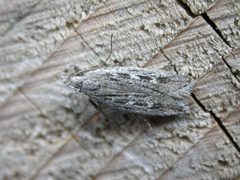
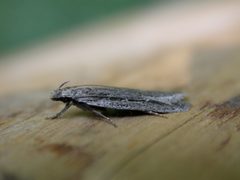
Small with wingspan of 15–18 mm. Typical gelechiid with narrow, elongated forewings and relatively broad hindwings. Coloration not explicitly described in sources.
Habitat
Associated with juniper stands, including both natural and ornamental plantings in gardens. Occupies where Juniperus occur, from coastal dunes to montane regions in its native European range.
Distribution
Native to most of Europe; introduced and established in Great Britain and North America. GBIF records confirm presence in Belgium (Flemish Region, Brabant and Limburg provinces). Introductions to North America occurred via accidental transport in garden junipers.
Seasonality
are on wing in August. Single per year ().
Diet
Larvae feed on Juniperus , including Juniperus communis (common juniper). Specific feeding mode (leaf mining, boring, or external feeding) not documented in available sources.
Host Associations
- Juniperus communis - larval food plantconfirmed
- Juniperus - larval food plant-level association
Life Cycle
Incomplete information. active August. Larval development occurs on Juniperus ; details not documented. Presumed to overwinter in larval or pupal stage given , but not confirmed.
Ecological Role
herbivore on Juniperus. No documented ecological interactions beyond larval feeding on conifers.
Human Relevance
Introduced in Great Britain and North America via accidental transport in ornamental garden junipers. Not reported as a significant pest; impacts on native juniper or horticultural plantings not documented.
Similar Taxa
- Other Gelechia speciesCongeneric may overlap in distribution and general ; plant association and (August ) assist in differentiation.
- Other Gelechiidae on JuniperusSeveral gelechiid utilize juniper ; precise identification requires examination of genitalia or molecular markers.
More Details
Subspecies
Two recognized: Gelechia sabinellus sabinellus (nominate) and Gelechia sabinellus corsella Rebel, 1930 (Corsica).
Nomenclature
Specific epithet 'sabinellus' derives from 'Sabina', a former generic name for certain juniper , reflecting the obligate association.