
Scambus
Hartig, 1838
Species Guides
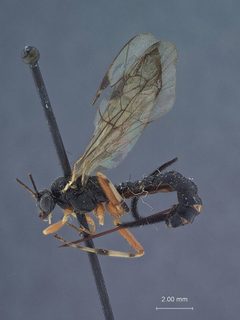
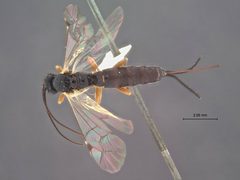
4Scambus is a of ichneumonid wasps in the Pimplinae, tribe Ephialtini. are recorded from Europe, the Middle East (Turkey), and South America (Peru). The genus includes with diverse , including some species that exhibit unusual dual parasitoid- strategies. Several species have been studied as agents of orchard pests.

Pronunciation
How to pronounce Scambus: /ˈskæmbəs/
These audio files are automatically generated. While they are not always 100% accurate, they are a good starting point.
Images
Habitat
vary by . Scambus pomorum occurs in apple orchards and outdoor insectaries, utilizing unopened flower buds of fruit trees and leaf mines on woody plants; females overwinter in small conifers (Chamaecyparis). Scambus sagax has been recorded from mountainous regions in Turkey (Kop Mountain Pass, Bayburt province).
Distribution
Europe; Middle East (Turkey); South America (Peru). Specific distribution records include Denmark, Norway, Sweden (GBIF), and Turkey (Bayburt province).
Host Associations
- Anthonomus pomorum - apple blossom weevil; larval ectoparasitoid (Scambus pomorum)
- Anthonomus piri - pear bud weevil; (Scambus pomorum)
- Agapanthia osmanlis - first record for Scambus sagax from Turkey
- Phyllonorycter blancardella - preypredatory prey during non-reproductive phase (Scambus pomorum)
- Phyllonorycter spp. - preyleaf-mining Lepidoptera, Gracillariidae; predatory prey on multiple tree (Scambus pomorum)
- Leaf-mining Diptera - preypredatory prey during non-reproductive phase (Scambus pomorum)
- Leaf-mining Hymenoptera - preypredatory prey during non-reproductive phase (Scambus pomorum)
Human Relevance
Some have potential as agents in () systems, particularly for orchard pests such as apple blossom weevil. However, extended lifespans and create vulnerability to applications.
Sources and further reading
- BugGuide
- Wikipedia
- GBIF taxonomy match
- iNaturalist taxon
- NCBI Taxonomy
- Catalogue of Life
- Misleading morphology: three European parasitoid wasp “species” are seasonal forms of just one | Blog
- Survival Mode between the Yearly Reproduction Periods, and Reproductive Biology of Scambus pomorum (Hymenoptera: Ichneumonidae: Pimplinae), a Parasitoid of the Apple Blossom Weevil Anthonomus pomorum (Coleoptera: Curculionidae)
- THE EXTRAORDINARY LIFE HISTORY OF SCAMBUS POMORUM (HYMENOPTERA, ICHNEUMONIDAE): PARASITOID AND PREDATOR.
- The First Host Record For Scambus sagax (Hartig, 1838) (Hymenoptera: Ichneumonidae) From Turkey
- FOOD SOURCES AND PREFERENCES OF ADULTS OF A PARASITE, SCAMBUS BUOLIANAE (HYM.: ICHN.), AND THEIR CONSEQUENCES
- Influence of Various Foods on Fecundity and Longevity of Adults of Scambus buolianae (Htg.) (Hymenoptera: Ichneumonidae)
- The complete mitochondrial genome of Scambus vesicarius Ratzeburg (Hymenoptera: ichneumonidae: pimplinae).