
Phyllonorycter blancardella
(Fabricius, 1781)
spotted tentiform leafminer, apple leafminer moth
Phyllonorycter blancardella is a small leaf-mining in the Gracillariidae, widely distributed across Europe and North America. The is a significant pest of apple orchards, where larvae create distinctive spotted tentiform mines in leaves. are tiny with variable forewing coloration, often orange or tawny with blackish scaling. The species has two to three per year in temperate regions and is subject to complex that influence its .


Pronunciation
How to pronounce Phyllonorycter blancardella: //ˌfɪloʊˈnɔːrɪktər ˌblæŋkɑːrˈdɛlə//
These audio files are automatically generated. While they are not always 100% accurate, they are a good starting point.
Identification
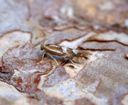
P. blancardella is very similar to Phyllonorycter hostis and other Rosaceae-feeding Phyllonorycter . Reliable identification requires examination of genitalia preparations; external alone is insufficient. The forewing ground colour is variable but never grey, distinguishing it from some . White streak patterns on the forewing may coalesce into larger fasciae and spots, but this is variable.
Images
Habitat
Apple orchards (Malus spp.), both commercial and unsprayed; occurs in association with cultivated and wild apple trees.
Distribution
Europe: widespread across all of Europe, east to Ukraine and central Anatolia. North America: throughout continent including Nova Scotia, Quebec, Ontario, Wisconsin, and California; also recorded in British Columbia, New Brunswick, and Prince Edward Island.
Seasonality
emerge in May and again in August in western Europe, indicating at least two . In Connecticut, three generations (trivoltine) have been documented with distinct activity periods. Spring timing varies with temperature accumulation.
Diet
Larvae feed on Malus including Malus angustifolia, M. × astracanica, M. baccata, M. coronaria, M. domestica, M. floribunda, M. fusca, M. ringo, M. × robusta, and M. sylvestris. Larvae mine the leaves of plants.
Host Associations
- Malus angustifolia - larval plant
- Malus baccata - larval plant
- Malus coronaria - larval plant
- Malus domestica - larval plantprimary commercial
- Malus floribunda - larval plant
- Malus fusca - larval plant
- Malus sylvestris - larval plant
- Pholetesor ornigis - braconid ; most abundant in first and third
- Sympiesis marylandensis - eulophid; most abundant in second
- Sympiesis serviceicornis - eulophid
- Pnigalio maculipes - eulophid
- Holcothorax testaceipes - introduced encyrtid; accepts P. blancardella as
Life Cycle
Multiple per year: two generations in western Europe (May and August emergences), three generations (trivoltine) in Connecticut. Larvae progress through at least five instars; 4th and 5th instar larvae create the leaf mines from which emerge. stage appears to be pupal. Development threshold estimated at 4.4°C.
Behavior
Larvae create spotted tentiform leaf mines—blister-like mines on the upper or lower leaf surface. show synchronized male and female patterns. Sex-attractant traps can detect onset of spring emergence but peak trap catches do not correspond to peak emergence; trap catches associate with relatively high daily air temperatures.
Ecological Role
Herbivore and on Malus . for diverse hymenopterous (16–29 species documented across studies, primarily Eulophidae and Braconidae). Subject to hyperparasitism. Parasitoid complexes vary regionally and may contribute to in programs.
Human Relevance
Serious pest of apple orchards; reduces crop yield. Increasing resistance to and synthetic documented. Target of programs emphasizing through conservation. Sex-attractant traps used for monitoring timing.
Similar Taxa
- Phyllonorycter hostisVery similar external ; both feed on Rosaceae. Genitalia examination required for reliable separation.
- Phyllonorycter crataegellaSimilar leaf-mining habit on Rosaceae; co-occurs in apple orchards and often confused in pest management contexts.
- Phyllonorycter ringoniellaRelated apple-feeding ; Holcothorax testaceipes reared on both species with different thermal constants.
More Details
Parasitoid community structure
Studies in Quebec recovered 29 from 7 ; Nova Scotia had 19 species from 5 families. vary by : Pholetesor ornigis dominates first and third generations, while Sympiesis marylandensis dominates the second. Hyperparasites present: 7 species in Nova Scotia, 5 in Quebec.
Temperature and development
Development threshold 4.4°C; 50% requires approximately 55 days at 8°C, 24 days at 12°C, 14 days at 16°C, 11 days at 20°C, and 8 days at 24°C. prediction methods for spring emergence have proven unreliable due to variation between temperature and air temperature.
Laboratory rearing
Continuous year-round laboratory rearing methods have been developed for this and associated , enabling research on and .
Sources and further reading
- BugGuide
- Wikipedia
- GBIF taxonomy match
- iNaturalist taxon
- NCBI Taxonomy
- Catalogue of Life
- Bug Eric: My Personal National Moth Week, 2017
- Bug Eric: September 2017
- Hymenopterous parasites associated with Phyllonorycter blancardella [Lepidoptera: Gracillariidae] in Nova Scotia and Quebec
- Methoden zur kontinuierlichen Laborzucht von Apfelminiermotten des Artenkomplexes Phyllonorycter blancardella Fabr. (Lep., Gracillariidae) und seiner Parasitoide
- ABUNDANCE AND PHENOLOGY OF PARASITOIDS OF THE SPOTTED TENTIFORM LEAFMINER, PHYLLONORYCTER BLANCARDELLA (LEPIDOPTERA: GRACILLARIIDAE), IN CONNECTICUT
- Elisa Used Without Host Trituration to Detect Larvae of Phyllonorycter blancardella (Lepidoptera: Gracillariidae) Parasitized by Pholetesor ornigis (Hymenoptera: Braconidae)
- Conservation of <i>Pholetesor ornigis</i> (Hymenoptera: Braconidae), a Parasitoid of <i>Phyllonorycter blancardella</i> (Lepidoptera: Gracillariidae) in Ontario
- Effect of Host Instar on Successful Parasitism by Pholetesor ornigis (Hymenoptera: Braconidae), Parasitoid of Phyllonorycter blancardella (Lepidoptera: Gracillariidae)
- Biology and Impact of Parasitoids of <i>Phyllonorycter blancardella</i> and <i>P. crataegella</i> (Lepidoptera: Gracillariidae) in Northeastern North American Apple Orchards
- Mortality fecundity and longevity of parasitoids of the spotted tentiform leafminer,Phyllonorycter blancardella [Lep.: Gracillariidae] at constant temperatures in the laboratory
- RELIABILITY OF DEGREE-DAY INDICES FOR PREDICTING SPRING EMERGENCE OF THE SPOTTED TENTIFORM LEAFMINER, PHYLLONORYCTER BLANCARDELLA (LEPIDOPTERA: GRACILLARIIDAE), IN ONTARIO
- EFFECT OF TEMPERATURE ON THE EMERGENCE OF OVERWINTERING PHYLLONORYCTER BLANCARDELLA (LEPIDOPTERA: GRACILLARIIDAE) AND ITS PARASITE APANTELES ORNIGIS (HYMENOPTERA: BRACONIDAE) IN NOVA SCOTIA
- Within-Tree Distribution of Phyllonorycter blancardella (F.) and P. crataegella (Clemens) (Lepidoptera: Gracillariidae) and Associated Levels of Parasitism in Commercial Apple Orchards
- DIAPAUSE TERMINATION AND MORPHOGENESIS OFHOLCOTHORAX TESTACEIPESRATZEBURG (HYMENOPTERA: ENCYRTIDAE), AN INTRODUCED PARASITOID OF THE SPOTTED TENTIFORM LEAFMINER,PHYLLONORYCTER BLANCARDELLA(F.) (LEPIDOPTERA: GRACILLARIIDAE)
- ASSESSMENT OF A SEX-ATTRACTANT TRAP FOR MONITORING THE SPOTTED TENTIFORM LEAFMINER, PHYLLONORYCTER BLANCARDELLA (FABR.) (LEPIDOPTERA: GRACILLARIIDAE): RELATIONSHIP BETWEEN MALE AND FEMALE EMERGENCE AND BETWEEN TRAP CATCHES AND EMERGENCE