
Diadegma
Förster, 1869
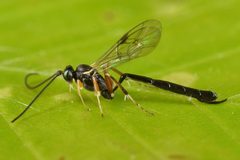
Diadegma is a of ichneumonid wasps established by Förster in 1869. in this genus are koinobiont , primarily attacking lepidopteran larvae. Several species, notably D. insulare and D. semiclausum, have been extensively studied and deployed as agents against agricultural pests, particularly the diamondback moth (Plutella xylostella). The genus contains over 200 described species with distribution.
Pronunciation
How to pronounce Diadegma: //ˌdaɪəˈdɛɡmə//
These audio files are automatically generated. While they are not always 100% accurate, they are a good starting point.
Identification
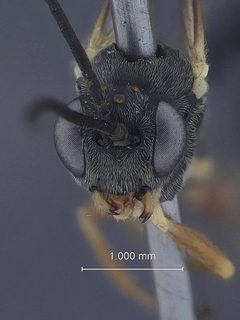
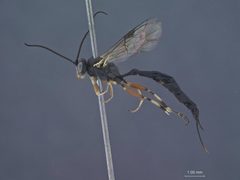
Diadegma are small to medium-sized ichneumonid wasps. Identification to species level requires examination of morphological characters including wing venation, structure, and coloration patterns. Separation from related within Ichneumonidae depends on detailed morphological analysis; species-level identification often necessitates taxonomic expertise and reference to original descriptions.
Images
Habitat
occur in diverse including agricultural fields, natural vegetation, and disturbed areas. Specific habitat associations vary by species: D. insulare and D. semiclausum are documented in crucifer crop systems, while other species occupy broader .
Distribution
distribution with records from North America, Europe, Asia, Africa, and Oceania. GBIF records confirm presence in Denmark, Norway, and Sweden. Individual show varying ranges: D. insulare occurs in North America, D. semiclausum is established in the Philippines for , and D. chrysostictos has Palearctic distribution.
Host Associations
- Plutella xylostella - primary documented for D. insulare and D. semiclausum; major target
- Pyralidae (Phycitinae and Galleriinae) - documented for D. chrysostictos
- Anthophila fabriciana - documented for D. fabricianae
Life Cycle
Koinobiont development: females lay in larvae. Larvae develop internally, consuming host tissues while allowing host to continue development. occurs within or adjacent to host remains. Specific developmental durations vary by and environmental conditions.
Behavior
females locate using ; D. semiclausum has been demonstrated to use larval of Plutella xylostella as an orientation cue for oviposition. Adult may feed on nectar and other sugar sources. Host searching is influenced by energy reserves, with assay studies showing that metabolic state affects activity patterns.
Ecological Role
Primary regulating lepidopteran larval . Significant role in agricultural as agents, particularly for management of diamondback moth in programs. Contribution to natural suppression of herbivorous lepidopteran populations in non-agricultural systems is presumed but less documented.
Human Relevance
Several are commercially important agents. D. insulare and D. semiclausum are used or recommended for diamondback moth management in crucifer crops (cabbage, broccoli, cauliflower, canola). Research on these species has contributed to understanding - interactions, -mediated foraging, and insect energetic . A study comparing D. insulare with Microplitis plutellae found D. insulare more effective at higher host densities, informing application strategies.
Similar Taxa
- Microplitis plutellaealso a of Plutella xylostella; distinguished by being a braconid with different and efficacy profile—D. insulare performs better at high densities while M. plutellae is more effective at low densities
- Cotesia plutellaeanother diamondback moth used in same contexts; differs in (Braconidae), sensitivity to , and establishment patterns
More Details
Taxonomic complexity
The includes numerous synonymies and . D. chrysostictos has over 12 recorded synonyms, illustrating historical taxonomic confusion. Artificial rearing can produce atypical morphological variants, complicating identification.
Research significance
Diadegma have served as model organisms for studies on energetic , with assays of , lipids, and used to understand foraging and efficacy.
Sources and further reading
- BugGuide
- Wikipedia
- GBIF taxonomy match
- iNaturalist taxon
- NCBI Taxonomy
- Catalogue of Life
- Assay Array: Entomologists' Lab Tests Expose Insect Secrets
- Canadian Teen Publishes Research on Diamondback Moth Parasitoids
- Microplitis plutellae Archives - Entomology Today
- Sensitivity of Cotesia plutellae and Diadegma semiclausum, Parasitoids of Diamondback Moth, Plutella xylostella (L.) to Several Insecticides
- KAIROMON SEBAGAI PEMANDU KEDATANGAN PARASITOID DIADEGMA SEMICLAUSUM HELLEN PADA LARVA INANG
- Establishment and Impact of the Parasitoids Diadegma semiclausum Hellen and Cotesia plutellae (Kurdj) in the Management of Diamondback Moth of Crucifers
- Wasp Parasitoid, Diadegma insulare (Cresson) (Insecta" Hymenotera: Idhneumonidae)
- The taxonomy and biology of Diadegma chrysostictos (Gmelin) and Diadegma fabricianae sp.n. (Hymenoptera: Ichneumonidae)
- In-Field Diadegma insulare (Cresson) (Hymenoptera: Ichneumonidae) Parasitism Rates of Plutella xylostella (L.) (Lepidoptera: Plutellidae) in Virginia Cole Crops.