
Microplitis
Förster, 1862
Microplitis is a of braconid wasps in the Microgastrinae, comprising over 190 described distributed worldwide. These small are larval endoparasitoids of Lepidoptera, primarily attacking caterpillars of Noctuidae and related . Several species are important in programs against agricultural pests, including M. croceipes and M. demolitor which parasitize Heliothis/Helicoverpa species. The genus was revised in 2015 for the Neotropics and in 2019 for India, with new species continuing to be described.
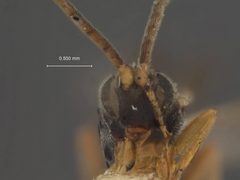
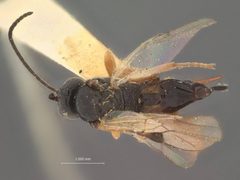
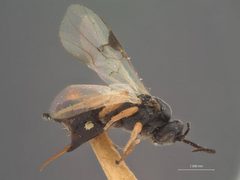
Pronunciation
How to pronounce Microplitis: /ˌmaɪkroʊˈplaɪtɪs/
These audio files are automatically generated. While they are not always 100% accurate, they are a good starting point.
Identification
Microplitis are small , typically 2-5 mm in length, with the characteristic reduced wing venation of Microgastrinae. They possess a distinct pronotum that reaches the tegulae, and tarsal claws with a basal lobe or tooth. Species identification requires examination of wing venation patterns, body proportions, and genitalic structures. Microplitis can be distinguished from the closely related Snellenius by ecological and molecular characteristics, though some species are nearly identical morphologically.
Images
Distribution
Worldwide distribution with recorded from all major biogeographical regions. Documented from North America, South America (including Rica's Area de Conservación Guanacaste), Europe, Africa (including Saudi Arabia and Togo), Asia (including India, China, and Japan), and Australia. Specific distribution data varies by species, with many having restricted ranges while others are more broadly distributed.
Host Associations
- Heliothis virescens - larval tobacco budworm, primary for M. croceipes
- Helicoverpa zea - larval corn earworm, for M. croceipes and M. demolitor
- Helicoverpa armigera - larval cotton bollworm, for M. croceipes, M. demolitor, and Cotesia kazak
- Mythimna separata - larval Oriental , for M. mediator
- Mythimna sp. - larval for M. idreesae in Saudi Arabia
- Spodoptera spp. - larval armyworms, for several Microplitis
- Chrysodeixis includens - indirect associationsoybean looper, for studies involving M. demolitor
Life Cycle
All Microplitis are koinobiont endoparasitoids: the larva develops inside the living caterpillar, which continues feeding and growing. The wasp hatches into a larva that feeds internally on host tissues, eventually killing the host when it emerges to pupate. Most species produce a single offspring per host (solitary), though some are gregarious. In tropical regions, many species form thick, hard cocoons and enter during dry months.
Behavior
Female use volatile organic compounds emitted by herbivore-damaged plants to locate caterpillars. In M. croceipes, females show strong innate attraction to specific plant volatiles including cis-3-hexenol (green leaf volatile), α-pinene, and binary mixtures of these compounds, with limited plasticity in olfactory response. Attraction to host-related odors is generally not strongly modulated by age or mating status, though some variation exists. M. croceipes has been observed to oviposit in under laboratory conditions, an unusual for a larval .
Ecological Role
Larval of lepidopteran caterpillars, contributing to natural suppression of . As koinobiont endoparasitoids, they allow caterpillars to continue feeding while developing, thereby potentially causing more plant damage than idiobiont parasitoids. Some are significant mortality factors for agricultural pest species in the Heliothis, Helicoverpa, and Spodoptera.
Human Relevance
Several Microplitis are used or studied for of agricultural pests. M. croceipes has been extensively studied for its potential in of cotton pests. M. demolitor is used in research on physiology and competition with other parasitoids. The has been featured in studies on chemical , tritrophic interactions, and the mechanisms of location by parasitoids.
Similar Taxa
- SnelleniusClosely related in Microgastrinae, historically confused with Microplitis. Distinguished by ecological and molecular characteristics, though some are morphologically nearly identical. The two genera were revised and confirmed as separate based on tropical species studies.
- CotesiaAnother Microgastrinae with similar as larval endoparasitoids of Lepidoptera. Cotesia often have different ranges and cocoon characteristics; Microplitis species tend to be more specialized on Noctuidae.
- MeteorusRelated braconid with similar lifestyle, but Meteorus typically emerge from the to spin their cocoons externally, whereas Microplitis species usually pupate within the host's cocoon or nearby.
Sources and further reading
- BugGuide
- Wikipedia
- GBIF taxonomy match
- iNaturalist taxon
- NCBI Taxonomy
- Catalogue of Life
- Scientists Reveal New Method to Characterize Physiological Responses to Parasitism | Bug Squad
- This Wasp's Larvae Sometimes Grow Hundreds of Soldier Clones—But Why?
- Small Creatures, Complex Behaviors: How One Scientist Got Hooked on Entomology
- Uncategorized | Blog - Part 12
- entomology | Blog - Part 8
- Development of the Endoparasitoids Microplitis croceipes, Microplitis demolitor, and Cotesia kazak (Hymenoptera: Braconidae) on Helicoverpa zea and H. armigera (Lepidoptera: Noctuidae)
- Electroantennogram (EAG) response of female Microplitis croceipes to four host-related plant odors
- Revision of the Indian Microplitis Foerster (Hymenoptera: Braconidae: Microgastrinae), with description of one new species
- Female-Biased Odorant Receptor MmedOR48 in the Parasitoid Microplitis mediator Broadly Tunes to Plant Volatiles
- A new gregarious parasitoid species, Microplitis idreesae (Hymenoptera, Braconidae, Microgastrinae) reared from Mythimna sp. (Lepidoptera, Noctuidae), with a key to the species of Microplitis in the Kingdom of Saudi Arabia
- The Effect of Molecular Structure on Olfactory Discrimination by the Parasitoid Microplitis croceipes
- The larval parasitoid Microplitis croceipes oviposits in conspecific adults
- Attraction of female Microplitis croceipes to four host-related plant odors in Y-tube olfactometer bioassays
- Effect of mixed infestations on plant-mediated host location in the parasitoid <i>Microplitis croceipes</i>
- Figure 1: Distribution of body weight for Mythimna separata larvae with or without escaping in response to Microplitis mediator (A) and Meteorus pulchricornis (B).