
Mythimna
Ochsenheimer, 1816
Armyworm moths
Species Guides
3- Mythimna oxygala(Lesser Wainscot)
- Mythimna sequax(wheat armyworm)
- Mythimna unipuncta(true armyworm moth)
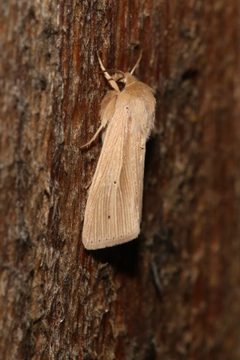
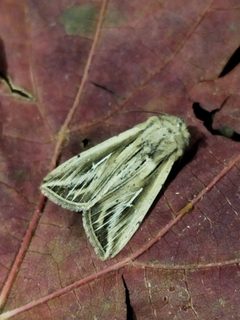
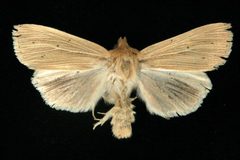
Mythimna is a of in the Noctuidae, commonly known as armyworm moths. Several are significant agricultural pests, with larvae that feed on cereal crops, corn, rice, and other grasses. The genus has a global distribution spanning Europe, Asia, Africa, the Americas, and Australasia. Notable species include M. unipuncta (true ), M. separata (Oriental armyworm), and M. loreyi, all of which cause economic damage to major food crops. moths have been documented as of apple flowers and other crops.
Pronunciation
How to pronounce Mythimna: /ˈmɪθɪmnə/
These audio files are automatically generated. While they are not always 100% accurate, they are a good starting point.
Images
Distribution
Europe (including Britain, France, Greece, Spain, Portugal, Italy, Azores, Sicily, Crete), Asia (including China, India, Japan, Iran, Israel, Southeast Asia), Africa (including Morocco, Egypt, South Africa, Kenya, Nigeria, Senegal, Mali, Canary Islands, Madeira), North America (Canada, USA, Mexico), Central America and West Indies ( Rica, Guatemala, Panama), South America (Argentina, Brazil, Chile, Colombia, Paraguay, Uruguay, Venezuela), and Australasia and Pacific Islands (Australia, Hawaii, Fiji, Papua New Guinea, Solomon Islands).
Diet
Larvae feed on cereal crops, corn, rice, wheat, sorghum, sugar cane, and other grasses. have been observed visiting apple flowers and other crops for nectar.
Host Associations
- Coix lacryma-jobi - herbivoreM. separata causes severe yield reduction in this crop; simulated herbivory triggers plant defense responses
- Zea mays - herbivoreM. separata and M. unipuncta are major corn pests; rye cover crops increase M. unipuncta damage in cornfields
- Oryza sativa - herbivoreM. loreyi and M. venalba feed on rice; M. venalba known as rice ear-cutting caterpillar
- Triticum - herbivoreM. unipuncta and M. loreyi feed on wheat
- Sorghum - herbivoreM. loreyi feeds on sorghum
- Saccharum officinarum - herbivoreM. loreyi feeds on sugar cane
- Malus domestica - M. unipuncta observed as of apple flowers
Life Cycle
Complete with , larva (caterpillar), pupa, and stages. Larvae pass through multiple instars (typically 5-6). Specific developmental timing varies by and climate.
Behavior
Larvae exhibit defensive against including thrashing, escaping, and dropping from plants. Thrashing frequency varies by parasitoid , with significantly higher response to Microplitis mediator than Meteorus pulchricornis. are and attracted to light. M. unipuncta larvae disperse from field margins throughout cornfields when rye cover crops are present, but remain limited to margins in fields without cover crops.
Ecological Role
Larvae act as herbivores and agricultural pests, causing significant yield reduction in cereal and grass crops. serve as , contributing to pollination of apple and potentially other crops. Larvae are prey for including Ammophila pictipennis, which provisions nests with cutworms and armyworms.
Human Relevance
Major agricultural pests causing economic damage to corn, rice, wheat, and other cereal crops. M. unipuncta and M. separata are among the most destructive lepidopteran corn pests globally. Management includes adjusting cover crop termination timing to prevent 'green bridge' for pest movement. provide service as . Subject of AI-based identification research for pest management.
Similar Taxa
- SpodopteraSimilar larval appearance and agricultural pest status; both include that damage corn and other crops. Mythimna separata was included alongside Spodoptera frugiperda and S. litura in AI identification studies due to similar and pest impact.
- LeucaniaHistorical taxonomic confusion; M. loreyi and other were formerly placed in Leucania. Synonymy noted in literature.
- CirphisFormer name for some now in Mythimna; M. unipuncta was previously Cirphis unipuncta.
More Details
AI Identification Research
Mythimna separata was one of four targeted by a convolutional neural network (CNN) model developed to identify lepidopteran corn pest larvae by species and instar, achieving 96.65% using the Densenet121 model with Adam optimizer.
Long-term Population Monitoring
M. ferrago was included in a 29-year light-trapping study in Prague (1967-1995), showing consistently high abundance without significant long-term trend, unlike other noctuid that increased or decreased.
Plant Defense Priming
M. separata herbivory triggers jasmonic acid-mediated defense responses in Coix lacryma-jobi and primes leaves for enhanced resistance, representing a documented plant-insect interaction with ecological implications.
Sources and further reading
- BugGuide
- Wikipedia
- GBIF taxonomy match
- iNaturalist taxon
- NCBI Taxonomy
- Catalogue of Life
- How Artificial Intelligence Could Make It Easier to ID Common Corn Pests
- Rye Cover Crops Can Increase Armyworm Damage in Corn
- P.M. Pollinators: Study Shines Light on Nocturnal Insects' Role in Apple Production
- Bug Eric: National Moth Week 2021 Review
- Bug Eric: Wasp Wednesday: Ammophila pictipennis
- What Does It Take to Detect Long-Term Insect Abundance Trends?
- Mythimna separate herbivory primes Coix resistance in systemic leaves
- Mythimna unipuncta . [Distribution map].
- Peer Review #1 of "Defensive behaviors of the Oriental armyworm Mythimna separata in response to different parasitoid species (Hymenoptera: Braconidae) (v0.1)"
- Mythimna venalba . [Distribution map].
- Mythimna loreyi . [Distribution map].