
Noctuinae
Latreille, 1809
Cutworms and Dart Moths
Tribe Guides
19- Actinotiini
- Apameini(Arches)
- Arzamini(Diver Moths)
- Caradrinini
- Dypterygiini
- Elaphriini
- Eriopygini
- Glottulini
- Hadenini(cutworm moths)
Noctuinae is a large of within Noctuidae, commonly known as cutworms and dart moths. The group contains numerous whose larvae are significant agricultural pests, feeding on roots and stems of grasses and other plants. of the subfamily remains unsettled, with tribal classifications provisional and boundaries with related groups such as Hadeninae under revision.
Pronunciation
How to pronounce Noctuinae: /nɒkˈtjuːɪniː/
These audio files are automatically generated. While they are not always 100% accurate, they are a good starting point.
Identification
distinguished from other Noctuidae by combination of genitalia structure, wing venation patterns, and presence of specific tympanal organ characteristics. The subfamily can be difficult to separate from Hadeninae, and historical classifications have varied. Larval identification to subfamily level is challenging; -level identification of larvae often requires rearing to adulthood or molecular analysis.
Images
Appearance
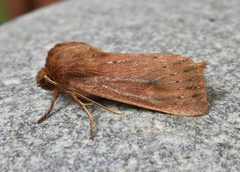
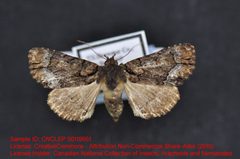
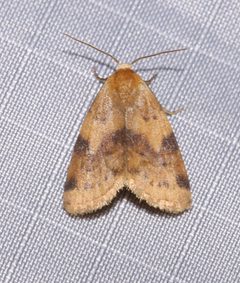
are typically medium-sized with stout bodies and relatively dull coloration, often in shades of brown, gray, or black. Forewings usually display characteristic patterns including lines, spots, or stigmata that aid in identification. Hindwings are generally paler than forewings, often whitish or gray with darker margins. Larvae are cylindrical, smooth-bodied caterpillars with five pairs of , typically grayish or brownish in color.
Habitat
Occupies diverse terrestrial including grasslands, agricultural fields, forests, and urban areas. Many associated with open habitats where larval plants grow.
Distribution
Worldwide distribution, with present on all continents except Antarctica. Particularly diverse in temperate and tropical regions.
Seasonality
activity varies by and latitude; many temperate species active from spring through autumn, with peak periods typically in summer months. Some species exhibit multivoltine with multiple per year.
Diet
Larvae of many feed on roots or stems of various grasses (Poaceae). Some species are feeders on diverse herbaceous plants. primarily feed on nectar, though specific floral associations are poorly documented for most species.
Life Cycle
Complete with , larva, pupa, and stages. Larvae typically feed on or below ground surface; some are cutworms that sever plant stems at soil level. occurs in soil or leaf litter. Number of per year varies by species and climate.
Behavior
are and attracted to light. Larvae exhibit diverse feeding : some are subterranean root feeders, others are climbing cutworms that feed on above-ground plant parts, and some are foliage feeders. Many show characteristic curling behavior when disturbed.
Ecological Role
Larvae function as primary consumers in terrestrial , converting plant to animal tissue. Serve as prey for diverse including birds, , and ground-dwelling . Some are significant engineers through their soil-dwelling activities.
Human Relevance
Many are economically important agricultural pests, particularly of cereal crops, vegetables, and turf grasses. Larval feeding damage includes cutting stems, destroying roots, and defoliating plants. Pest management relies on integrated approaches including , monitoring, and targeted application. Some species are used as model organisms in lepidopteran research.
Similar Taxa
- HadeninaeHistorically included within Noctuinae; separation based on subtle morphological differences in genitalia and wing venation, with boundaries currently under revision
- Noctuidae (other subfamilies)Share -level characteristics; Noctuinae distinguished by specific combinations of tympanal organ structure, larval , and molecular markers, though definitive identification often requires dissection
More Details
Systematic instability
Noctuinae is currently in flux. The list of constituent tribes is provisional, and the validity of some tribal groupings (e.g., Xestiini) is doubtful. Formerly included groups such as Hadeninae are now treated as separate , though boundaries remain unclear.
Economic importance
The contains numerous significant agricultural pests. The feeding habits of many contribute to their pest status, allowing exploitation of diverse crop plants.