
Heliothis
Ochsenheimer, 1816
Species Guides
7- Heliothis acesias(Acesias Buff Gem)
- Heliothis australis
- Heliothis belladonna
- Heliothis borealis(Boreal Gem Moth)
- Heliothis ononis(flax bollworm)
- Heliothis oregonica(Oregon Gem Moth)
- Heliothis phloxiphaga(Darker-spotted Straw Moth)
Heliothis is a of noctuid established by Ochsenheimer in 1816. The genus has undergone significant taxonomic revision, with several economically important formerly placed here now reclassified to Helicoverpa and Chloridea. Larvae of remaining Heliothis species are agricultural pests on crops including tobacco, cotton, soybean, and pigeon pea. The genus is characterized by specific morphological features including porrect palpi with long hair on the second joint, a short third palpal joint, and distinctive venation patterns in the forewing.

Pronunciation
How to pronounce Heliothis: /ˌhiːliˈoʊθɪs/
These audio files are automatically generated. While they are not always 100% accurate, they are a good starting point.
Identification
Distinguished from related by the combination of porrect, hairy palpi with a short third joint, absence of thoracic and abdominal tufts, and the characteristic forewing venation pattern. formerly in this genus that are major agricultural pests—such as the corn earworm, cotton bollworm, and tobacco budworm—have been moved to Helicoverpa and Chloridea based on molecular and morphological data. Current Heliothis species are generally less economically significant than these transferred species.
Images
Appearance
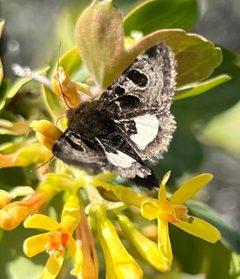
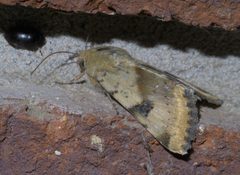
possess a fully developed . Palpi are porrect (extending forward) with the second joint evenly clothed in long hair; the third joint is short and depressed. A short frontal shift is present. and lack tufts. Fore tibia bears a pair of slender terminal spines; mid and hind tibia are also spined. Forewings exhibit variable venation where 8 and 9 sometimes arise from the end of the areole.
Habitat
Associated with agricultural and cultivated where larval plants occur. Specific habitat preferences vary by but generally include fields and plantations of tobacco, cotton, soybean, and pigeon pea.
Distribution
Distribution records indicate presence in Denmark, Norway, Sweden, Vermont (USA), and other parts of the United States. The has a broad distribution corresponding to the range of its agricultural plants.
Diet
Larvae feed on tobacco, cotton, soybean, and pigeon pea. Specific feeding habits vary by .
Host Associations
- Nicotiana tabacum - larval food planttobacco
- Gossypium - larval food plantcotton
- Glycine max - larval food plantsoybean
- Cajanus cajan - larval food plantpigeon pea
Ecological Role
Larvae function as herbivores in agricultural . Their feeding can significantly impact crop yields, placing them in a pest role within intensive agricultural systems.
Human Relevance
Larvae are agricultural pests of economic importance on multiple crop . Historical taxonomic confusion with Helicoverpa and Chloridea species has complicated pest management efforts, as several major pest species were formerly classified under Heliothis.
Similar Taxa
- HelicoverpaFormerly included such as H. zea (corn earworm, cotton bollworm, soybean podworm). Distinguished by molecular and morphological differences; Helicoverpa species are generally larger and exhibit different genitalia structure.
- ChlorideaFormerly included such as C. virescens (tobacco budworm), C. subflexa, and C. tergemina. Distinguished by morphological and molecular characters; Chloridea species have been separated based on distinct genitalic and larval characteristics.
- TimoraSometimes treated as a subgenus of Heliothis; taxonomic relationship remains under discussion.
Misconceptions
The Heliothis has been frequently confused with Helicoverpa in agricultural literature and pest management contexts. Many historically important 'Heliothis' pests—particularly those referenced in older literature—actually belong to Helicoverpa or Chloridea. This taxonomic reclassification has only been widely accepted in recent decades, leading to potential confusion when interpreting historical records.
More Details
Taxonomic history
The has been substantially revised based on molecular phylogenetic studies. Major agricultural pests formerly placed in Heliothis have been transferred to Helicoverpa (e.g., H. zea) and Chloridea (e.g., C. virescens, C. subflexa, C. tergemina). These revisions reflect improved understanding of evolutionary relationships within the Heliothinae.
Subgeneric classification
Timora has been treated both as a subgenus of Heliothis and as a separate ; its status remains subject to taxonomic interpretation.