
Plutella xylostella
(Linnaeus, 1758)
diamondback moth, cabbage moth
is a globally distributed and one of the most economically significant agricultural pests worldwide. The small grayish-brown moth derives its from the cream-colored band that forms a diamond pattern along its back. Its larvae feed exclusively on cruciferous plants, causing extensive damage to cabbage, broccoli, cauliflower, canola, and other Brassica crops. The species has evolved resistance to nearly every class of , including Bacillus thuringiensis toxins, making it exceptionally difficult to control. global management costs are estimated at $4–5 billion.
Pronunciation
How to pronounce Plutella xylostella: /pluːˈtɛlə zaɪloʊˈstɛlə/
These audio files are automatically generated. While they are not always 100% accurate, they are a good starting point.
Identification
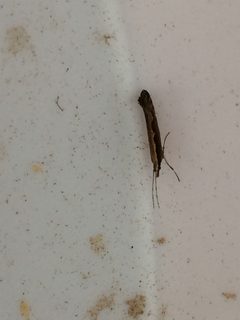
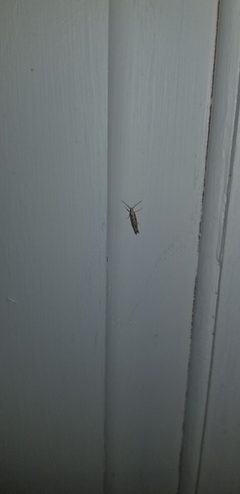
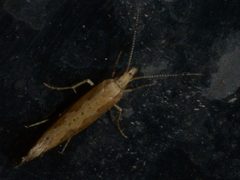
are small with a wingspan of approximately 12–15 mm. The forewings are narrow and grayish-brown with a distinct cream or pale yellow band that forms a diamond-shaped pattern along the margin when the wings are folded at rest. This diamond pattern is the key visual diagnostic feature. The hindwings are narrow and fringed. Larvae are small, greenish, and tapered at both ends, reaching about 10 mm at maturity.
Images
Habitat
Agricultural and natural environments wherever cruciferous plants occur. Found in cultivated fields, gardens, and weedy areas containing wild Brassicaceae. are highly mobile and wind-borne, enabling of temporary .
Distribution
distribution spanning all continents except Antarctica. Present throughout Europe, Asia, Africa, North and South America, Australia, and Pacific islands. Native origin uncertain; possibly Europe, South Africa, or the Mediterranean region. Now established wherever cruciferous grow, from tropical to temperate zones.
Seasonality
Multivoltine with continuous breeding in warm climates; peaks vary regionally. In temperate regions, activity resumes in spring with from sites or recolonization by wind-dispersed .
Diet
Larvae feed exclusively on plants in the Brassicaceae (Cruciferae). Documented include cabbage (Brassica oleracea var. capitata), broccoli, cauliflower, kale, canola, and various wild crucifers.
Host Associations
- Brassica oleracea - primary cabbage, broccoli, cauliflower
- Brassica napus - primary canola, rapeseed
- Brassica rapa - primary turnip, field mustard
- Sinapis arvensis - wild
- Capsella bursa-pastoris - wild shepherd's purse
Life Cycle
Complete with four developmental stages: , larva, pupa, and . Eggs are laid singly or in small groups on leaves. Larvae pass through four instars. Development time from egg to adult ranges from 23–30 days depending on host plant and temperature; development is fastest on white cabbage (23.4 days at 20°C) and slowest on broccoli (26.1 days). Multiple overlapping occur annually in favorable climates.
Behavior
are and strongly phototactic. Highly migratory; wind-borne adults can travel long distances, enabling rapid invasion of new regions and seasonal recolonization of temperate areas. stages can be transported on plant material, facilitating human-mediated .
Ecological Role
Human Relevance
Major economic pest of cruciferous vegetable and oilseed crops worldwide. Management costs exceed $4 billion annually. Subject of extensive research on resistance evolution. Target of programs and novel genetic control methods including self-limiting gene technologies.
Similar Taxa
- Plutella australianaCryptic sister found only in Australia; distinguished by barcodes and internal reproductive anatomy, not external . Previously confused with P. xylostella.
Sources and further reading
- BugGuide
- GBIF taxonomy match
- iNaturalist taxon
- NCBI Taxonomy
- Catalogue of Life
- How Many Species of Moths at Bohart Museum's Moth Night? | Bug Squad
- Beneficial Insects and Nematodes are not Harmed by Genetically-modified, Insect-resistant Plants
- A New Pesticide-Free Way to Control Diamondback Moths
- How One Entomologist Puts a Childhood Love of Insects to Work in IPM
- Assay Array: Entomologists' Lab Tests Expose Insect Secrets
- Uncategorized | Blog - Part 33
- Plutella xylostella . [Distribution map].
- Plutella xylostella (diamondback moth).
- New cases of massive reproduction of Plutella xylostella
- Sensitivity of Cotesia plutellae and Diadegma semiclausum, Parasitoids of Diamondback Moth, Plutella xylostella (L.) to Several Insecticides
- Starvation biology of Plutella xylostella from a post-harvest crop sanitation perspective
- Sublethal effects of hexaflumuron on development and reproduction of the diamondback moth, Plutella xylostella (Lepidoptera: Yponomeutidae)
- Determination of Biological Properties of Plutella xylostella (Linnaeus, 1758) (Lepidoptera: Plutellidae) Plutella xylostella (Linnaeus, 1758) (Lepidoptera: Plutellidae)’nın Biyolojik Özelliklerinin Belirlenmesi
- Identification of ABCG transporter genes associated with multi-insecticide resistance in Plutella xylostella (L.)
- The Biology and Ecology of the Diamondback Moth, Plutella xylostella (L.) in Eastern Ontario Revisited