
Plutella
Schrank, 1802
Species Guides
3- Plutella armoraciae
- Plutella porrectella(Dame's Rocket Moth)
- Plutella xylostella(diamondback moth)
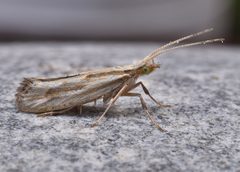
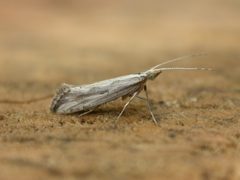
Plutella is a of small in the Plutellidae. The genus is best known for , the , one of the most economically significant agricultural pests worldwide. in this genus are characterized by distinctive wing patterns including diamond-shaped markings along the forewing margins. The genus has a distribution, with members found across all continents except Antarctica.
Pronunciation
How to pronounce Plutella: //pluˈtɛl.la//
These audio files are automatically generated. While they are not always 100% accurate, they are a good starting point.
Images
Distribution
distribution spanning Europe, Asia, Africa, Australasia, North America, Central America, South America, and Pacific Islands. Records from Albania, Austria, Azores, Belgium, Britain, Bulgaria, Crete, Czechoslovakia, Denmark, Dodecanese, Faeroe Islands, Finland, France, Germany, Greece, Hungary, Iceland, Ireland, Italy, Jan Mayen Island, Malta, Netherlands, Norway, Poland, Portugal, Romania, Sicily, Spain, Spitzbergen, Sweden, Switzerland, Yugoslavia, Afghanistan, Brunei, Burma, Cambodia, Ceylon, China, Cyprus, Hong Kong, India, Indonesia, Iran, Iraq, Israel, Japan, Kashmir, Korea, Lebanon, Malaya, Nepal, Pakistan, Philippine Islands, Ryukyu Islands, Sabah, Sarawak, Saudi Arabia, Singapore, South Arabian Protectorates, Syria, Taiwan, Thailand, Turkey, Vietnam, Yemen, USSR, Algeria, Angola, Cameroon, Canary Islands, Congo, Egypt, Eritrea, Ethiopia, Gambia, Ghana, Kenya, Libya, Madagascar, Madeira, Malawi, Mali, Mauritius, Morocco, Rhodesia, St. Helena, São Tomé, Senegal, Seychelles, South Africa, Sudan, Tanzania, Tristan, Tunisia, Uganda, Zambia, Australia, Fiji, Hawaii, Marquesas Islands, New Caledonia, New Hebrides, New Zealand, Norfolk Island, Papua & New Guinea, Pitcairn Island, Solomon Islands, Tonga, Tubuai, Wake Island, Irian Jaya, Western Samoa, Canada, Greenland, Mexico, USA, Rica, El Salvador, Nicaragua, West Indies, Argentina, Bolivia, Brazil, Chile, Juan Fernandez Islands, Paraguay, Peru, Uruguay, and Venezuela.
Human Relevance
The includes (), one of the most economically destructive agricultural pests globally. This costs the world economy an estimated US$4-5 billion annually in control costs and crop losses. It was the first crop insect reported to develop resistance to Bacillus thuringiensis and has shown resistance to almost every insecticide class including diamides. The species is highly migratory with wind-borne capable of long-distance across regions, countries, and continents. stages can hitchhike on plant material to establish in new areas. Research on Plutella xylostella has driven development of strategies, programs using such as Cotesia plutellae and Diadegma semiclausum, and novel genetic control methods including self-limiting gene techniques.
Similar Taxa
- YponomeutaBoth belong to the superfamily Yponomeutoidea and share small size and similar wing patterns, though Yponomeuta typically have more pronounced spotted patterns and different plant associations.
More Details
Notable Species
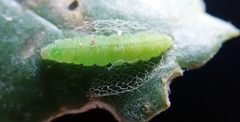
(Linnaeus, 1758) is the most studied and economically important . Plutella australiana, described in 2013 from Australia, was initially confused with P. xylostella but distinguished by and internal reproductive anatomy. Plutella porrectella is a related species with different , completing two per year and as early-instar larvae in buds of dame's rocket (Hesperis matronalis) rather than as an agricultural pest.
Research Significance
serves as a model organism for resistance research, with studies identifying ABCG transporter genes associated with multi-insecticide resistance. The has been used to test effects of genetically modified Bt crops on non-target organisms and to evaluate novel pest control technologies including self-limiting gene approaches.
Sources and further reading
- BugGuide
- Wikipedia
- GBIF taxonomy match
- iNaturalist taxon
- NCBI Taxonomy
- Catalogue of Life
- How Many Species of Moths at Bohart Museum's Moth Night? | Bug Squad
- Beneficial Insects and Nematodes are not Harmed by Genetically-modified, Insect-resistant Plants
- How One Entomologist Puts a Childhood Love of Insects to Work in IPM
- A New Pesticide-Free Way to Control Diamondback Moths
- Uncategorized | Blog - Part 33
- Assay Array: Entomologists' Lab Tests Expose Insect Secrets
- Plutella xylostella . [Distribution map].
- Plutella xylostella (diamondback moth).
- Sensitivity of Cotesia plutellae and Diadegma semiclausum, Parasitoids of Diamondback Moth, Plutella xylostella (L.) to Several Insecticides
- LIFE HISTORY OF PLUTELLA PORRECTELLA, A RELATIVE OF THE DIAMONDBACK MOTH, PLUTELLA XYLOSTELLA (LEPIDOPTERA: PLUTELLIDAE)
- Starvation biology of Plutella xylostella from a post-harvest crop sanitation perspective
- Sublethal effects of hexaflumuron on development and reproduction of the diamondback moth, Plutella xylostella (Lepidoptera: Yponomeutidae)
- Identification of ABCG transporter genes associated with multi-insecticide resistance in Plutella xylostella (L.)
- Determination of Biological Properties of Plutella xylostella (Linnaeus, 1758) (Lepidoptera: Plutellidae) Plutella xylostella (Linnaeus, 1758) (Lepidoptera: Plutellidae)’nın Biyolojik Özelliklerinin Belirlenmesi