
Plutella armoraciae
Busck, 1913
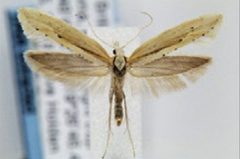
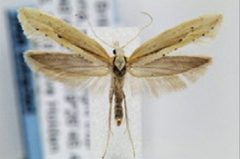
Plutella armoraciae is a in the Plutellidae, first described by Busck in 1913. It is restricted to north-western North America and is closely related to the (). The is notable for its very pale coloration compared to its and its specialized larval association with Armoracia species (horseradish and related plants).
Pronunciation
How to pronounce Plutella armoraciae: /pluˈtɛl.la ˌar.moˈra.ki.ae/
These audio files are automatically generated. While they are not always 100% accurate, they are a good starting point.
Identification
Distinguished from the similar by its markedly paler wing coloration. The two can be confused based on general wing pattern, but P. armoraciae lacks the darker pigmentation present in P. xylostella. Examination of genitalia may be required for definitive identification. The geographic restriction to north-western North America also aids in separation from the P. xylostella.
Images
Habitat
Associated with where plants of the Armoracia occur. Specific habitat preferences beyond host plant association have not been documented.
Distribution
Restricted to north-western North America. The precise range boundaries have not been extensively documented, but records are limited to this region.
Diet
Larvae feed exclusively on of Armoracia (horseradish and related plants in the Brassicaceae). feeding habits have not been documented.
Host Associations
- Armoracia - larval plant-level association; specific not documented
Similar Taxa
- Plutella xylostellaSuperficially similar in wing pattern, but distinguished by much paler coloration and geographic restriction to north-western North America versus distribution
More Details
Taxonomic history
Described by August Busck in 1913, this has received limited study compared to its economically important P. xylostella. The specific epithet armoraciae reflects its larval association with Armoracia (horseradish).
Sources and further reading
- BugGuide
- Wikipedia
- GBIF taxonomy match
- iNaturalist taxon
- NCBI Taxonomy
- Catalogue of Life
- How Many Species of Moths at Bohart Museum's Moth Night? | Bug Squad
- Beneficial Insects and Nematodes are not Harmed by Genetically-modified, Insect-resistant Plants
- How One Entomologist Puts a Childhood Love of Insects to Work in IPM
- A New Pesticide-Free Way to Control Diamondback Moths
- Uncategorized | Blog - Part 33
- Assay Array: Entomologists' Lab Tests Expose Insect Secrets