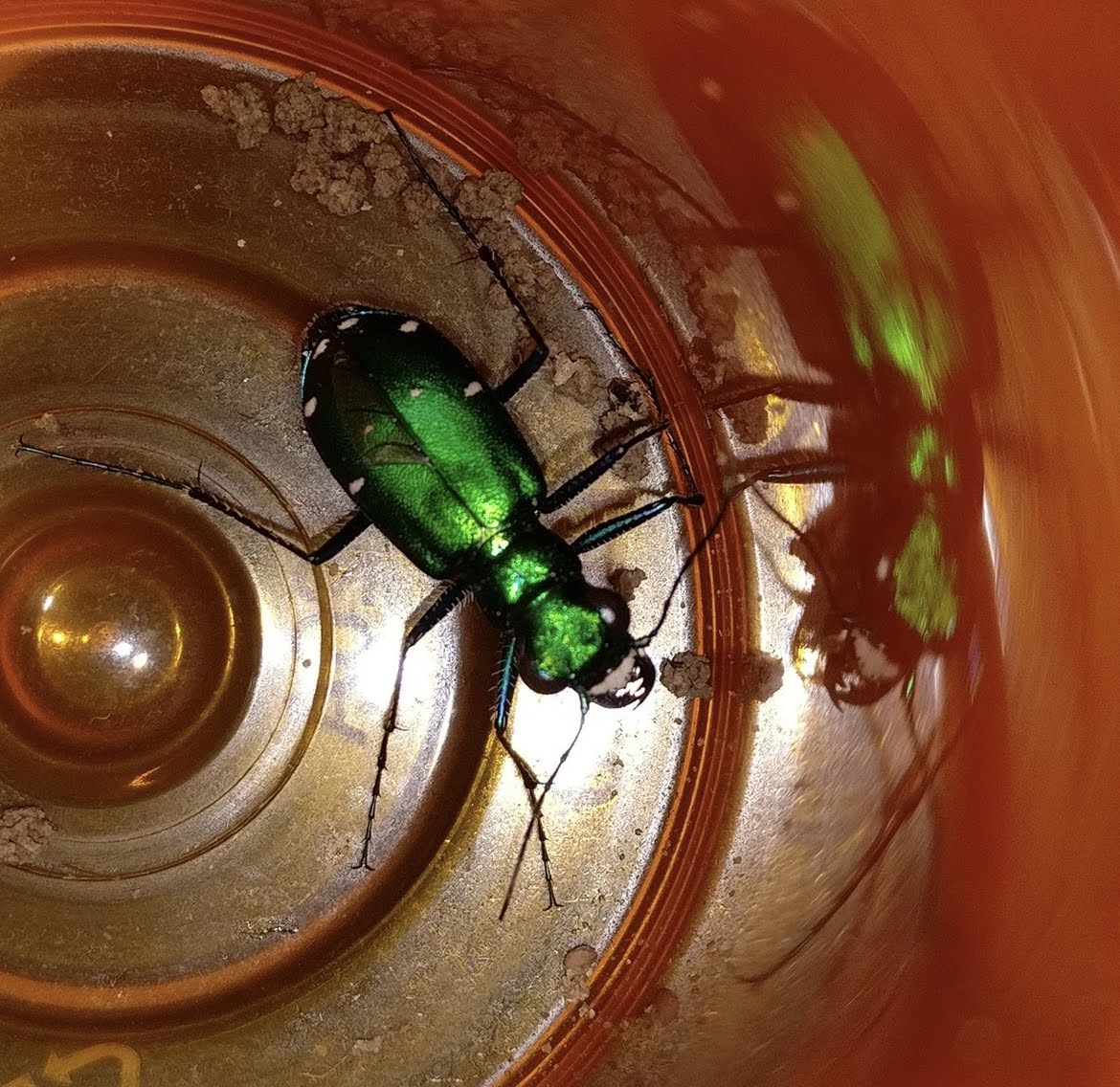
Neoporus arizonicus is a species of predaceous diving beetle in the family Dytiscidae, subfamily Hydroporinae. First described by Fall in 1917 under the basionym Hydroporus arizonicus, this species is currently classified in the genus Neoporus. It is a small diving beetle known from the southwestern United States, with Arizona representing the core of its known distribution. Like other members of the Hydroporinae, it is adapted to aquatic habitats where it preys on small invertebrates.
Neoporus hebes is a small diving beetle (family Dytiscidae) described by Fall in 1923. As a member of the subfamily Hydroporinae, it inhabits freshwater aquatic environments. The genus Neoporus comprises numerous small dytiscid species found primarily in North America. This species is among the lesser-documented members of the genus, with limited observational records available.
Neoporus hybridus is a diving beetle species in the family Dytiscidae, first described by Aubé in 1838. Originally placed in the genus Hydroporus, it was later transferred to Neoporus. The species belongs to the subfamily Hydroporinae, a diverse group of small to medium-sized predatory aquatic beetles. Records indicate presence in North America, though detailed biological studies appear limited in the available literature.
Neoporus mellitus is a small predaceous diving beetle (family Dytiscidae) in the subfamily Hydroporinae. Originally described by LeConte in 1855 as Hydroporus mellitus, the species was later transferred to the genus Neoporus. It is recorded from eastern North America, with confirmed observations in New Brunswick and Ontario, Canada. Like other members of the genus, it inhabits freshwater aquatic environments.
Neoporus sulcipennis is a species of predaceous diving beetle in the family Dytiscidae. It is found in North America.
Neoporus undulatus is a predaceous diving beetle in the family Dytiscidae. It is found in North America, with records from Canada (Alberta, British Columbia) and the United States. The species was first described by Thomas Say in 1823. As a member of the Hydroporinae subfamily, it belongs to a diverse group of small to medium-sized diving beetles that inhabit aquatic environments.
Neoporus vitiosus is a small predaceous diving beetle in the family Dytiscidae, subfamily Hydroporinae. The species was described by LeConte in 1855 and is documented from North America, with specific records from Ontario and Québec in Canada. As a member of the Hydroporinae, it likely inhabits freshwater environments, though detailed ecological studies are limited.
Neopristilophus aethiops is a species of click beetle in the family Elateridae. As a member of this family, it possesses the characteristic ability to right itself when flipped onto its back using a specialized prosternal spine that fits into a mesosternal groove, producing an audible clicking sound. The genus Neopristilophus belongs to a group of elaterid beetles, though specific ecological and biological details for this particular species remain poorly documented in scientific literature.
Neopristilophus maurus is a species of click beetle in the family Elateridae. The species was described by LeConte in 1853. Records indicate presence in British Columbia, Canada. Available sources provide minimal biological information for this species.
Neoproxius schwarzii is a species of narrow-waisted bark beetle in the family Salpingidae. Members of this genus are small, elongate beetles associated with dead or decaying wood. The species was described by American entomologist Ernst A. Schwarz, after whom it is named. Like other salpingids, it likely inhabits forested environments where it contributes to decomposition processes.
Neopsammodius interruptus is an aphodiine dung beetle in the family Scarabaeidae. The species was first described by Thomas Say in 1835. It is known from multiple states across the United States.
Neorthopleura is a genus of checkered beetles in the family Cleridae, established by Barr in 1976. The genus comprises at least three described species distributed in North America. Species within this genus are part of the subfamily Korynetinae, a group of clerid beetles often associated with predatory habits.
Texas Brick-and-Brown Clerid
Neorthopleura texana is a species of checkered beetle in the family Cleridae. It is found in Central America and North America, with over 300 observations documented on iNaturalist. The species was first described by Bland in 1863.
Horn's Predaceous Diving Beetle
Neoscutopterus hornii is a species of predaceous diving beetle in the family Dytiscidae. It is found in North America, with distribution records from Alberta and British Columbia in Canada. The species was described by Crotch in 1873. As a member of the predaceous diving beetles, it is an aquatic predator, though specific ecological details remain poorly documented in the available literature.
Neotobia alberta is a rove beetle species described by Ashe in 1992, belonging to the subfamily Aleocharinae within the family Staphylinidae. The species is known from scattered localities across Canada and the northeastern United States. As a member of the Homalotini tribe, it is likely associated with fungal or decaying organic substrates, though specific ecological details remain poorly documented. The species name refers to Alberta, Canada, where the type specimen was presumably collected.
Neotriphyllus is a genus of hairy fungus beetles in the family Mycetophagidae, described in 2014. It belongs to the tribe Typhaeini within the subfamily Mycetophaginae. The genus was erected based on morphological distinctions from related genera. Very few observations of this genus exist in public databases.
Neoxenus is a genus of fungus weevils in the beetle family Anthribidae. The genus was established by Valentine in 1998 and contains approximately six described species. Members of this genus are part of the diverse weevil fauna associated with fungal substrates.
Tropical Coppery Fungus Weevil
Neoxenus versicolor is a species of fungus weevil described by Valentine in 1998. It belongs to the family Anthribidae, a group of weevils commonly associated with fungal associations. The species has been documented in both Central America and North America.
Dusky Lady Beetle
Nephus binaevatus is a small lady beetle species in the family Coccinellidae, commonly known as the Dusky Lady Beetle. The genus Nephus comprises diminutive lady beetles, many of which are associated with scale insects and mealybugs as prey. This species has a notably broad geographic distribution spanning Africa, North America, and Oceania, suggesting either natural dispersal capabilities or human-mediated spread. The specific epithet 'binaevatus' refers to two spots or markings, though the exact pattern requires verification from specimen examination.
George's lady beetle, Farmer's lady beetle
Nephus georgei is a small lady beetle species in the family Coccinellidae, commonly known as George's lady beetle or Farmer's lady beetle. It belongs to the genus Nephus, a group of dusky lady beetles characterized by their diminutive size and often subdued coloration compared to the brightly patterned lady beetles of the genus Coccinella. The species is known from limited records in North America.
ornate lady beetle
Nephus ornatus is a small lady beetle species in the family Coccinellidae, commonly known as the ornate lady beetle. It is classified among the dusky lady beetles, a group characterized by generally subdued coloration compared to the brightly patterned lady beetles more familiar to the public. The species was described by John Lawrence LeConte in 1850 and is known to occur across North America.
dusky lady beetle
Nephus timberlakei is a species of dusky lady beetle in the family Coccinellidae. It was described by Gordon in 1985 and is found in North America. The species belongs to the genus Nephus, a group of small lady beetles often referred to as dusky lady beetles due to their typically subdued coloration compared to the brightly colored Coccinellinae.
Nesaecrepida is a genus of flea beetles (Chrysomelidae) established by Blake in 1964. The genus contains two described species: Nesaecrepida asphaltina and Nesaecrepida infuscata. These beetles are found in North America, Mexico, and the West Indies. As members of the flea beetle tribe Alticini, they possess enlarged hind femora adapted for jumping.
Nesaecrepida asphaltina is a flea beetle in the family Chrysomelidae, first described by Suffrian in 1868. It belongs to a genus of small leaf beetles distributed across tropical and subtropical regions. The species has been documented in the Caribbean, Central America, and North America based on collection records. Very few observations exist in community science databases.
Mexican burying beetle
Nicrophorus mexicanus is a burying beetle in the family Silphidae, described by Matthews in 1888. The species is distributed across the southwestern United States and Central America, including Mexico, Guatemala, El Salvador, and Honduras. As a member of the genus Nicrophorus, it exhibits the characteristic behavior of burying small vertebrate carcasses to serve as food for developing larvae.
spider beetle
Niptinus ovipennis is a species of spider beetle in the family Ptinidae, described by Fall in 1905. It belongs to a group of beetles commonly known as spider beetles due to their rounded, compact body form and long legs that give them a superficial resemblance to spiders. The species is documented from North America, though specific ecological details remain poorly recorded in the scientific literature.
Niptus ventriculus is a species of spider beetle (family Ptinidae) first described by John Lawrence LeConte in 1859. It belongs to the genus Niptus, which comprises several species of small beetles associated with stored products and dry organic materials. The species has been documented in Central America and North America, though detailed biological studies remain limited.
Nipus is a genus of lady beetles in the family Coccinellidae, established by Casey in 1899. The genus comprises at least four described species distributed in North America: N. biplagiatus and N. niger (both described by Casey, 1899), and N. occiduus and N. planatus (both described by Gordon, 1970). These beetles are part of the diverse Coccinellidae family, which includes many species valued for predation on pest insects.
ant-loving beetle
Nisaxis caudata is a species of ant-loving beetle (family Staphylinidae) first described by Schaeffer in 1905. It belongs to the subfamily Pselaphinae, a diverse group of small rove beetles often associated with ant colonies. The species has been recorded from North America (Oklahoma and Texas) and Mexico, with additional Central American distribution. Very little detailed biological information is available for this specific species.
Nisaxis tomentosa is a species of rove beetle in the family Staphylinidae, specifically within the ant-associated subfamily Pselaphinae. It has been recorded across a broad geographic range spanning North America, the Caribbean, and South America. The species epithet 'tomentosa' refers to a densely hairy or woolly appearance.
Resplendent Click Beetle
Nitidolimonius resplendens is a species of click beetle in the family Elateridae, commonly known as the Resplendent Click Beetle. The species was described by Eschscholtz in 1829 and is distributed across multiple Canadian provinces including Alberta, British Columbia, Manitoba, New Brunswick, and Newfoundland and Labrador. As a member of the click beetle family, it possesses the characteristic ability to right itself when overturned by flexing its body to produce an audible clicking sound.
Nitidolimonius weidtii is a species of click beetle in the family Elateridae, first described by Angell in 1892. It belongs to the tribe Limoniini, a group characterized by slender body forms. The species is known from a limited number of observations in western North America.
Nitidotachinus agilis is a species of rove beetle in the family Staphylinidae, described by Horn in 1877. It belongs to the subfamily Tachyporinae, a group commonly known as cramp-ball fungi beetles or associated with decaying organic matter. The species is documented from western North America, with records spanning from the southwestern United States to the Pacific Northwest.
Nitidula is a genus of sap-feeding beetles in the family Nitidulidae, first described by Fabricius in 1775. The genus contains approximately 20-23 described species, though estimates vary among sources. Several species are associated with carrion and decaying organic matter, with some species such as N. carnaria and N. flavomaculata being utilized in forensic investigations due to their predictable colonization of mammalian corpses during later stages of decay. Other species breed in carrion or are found in association with fermenting plant materials.
two-spotted sap beetle, two-dots sap beetle
Nitidula bipunctata, commonly known as the two-spotted sap beetle, is a sap-feeding beetle in the family Nitidulidae. It has a holarctic distribution, occurring across Europe, Northern Asia (excluding China), and North America. The species is associated with carrion and decomposing organic matter, though its specific ecological relationships remain incompletely documented.
Nitidula carnaria is a species of sap beetle in the family Nitidulidae, originally described by Schaller in 1783 under the name Silpha carnaria. It belongs to the genus Nitidula, a group of beetles commonly associated with fermenting or decaying organic matter. The species has been recorded from several islands of the Azores archipelago.
Nitidula nigra is a small sap-feeding beetle in the family Nitidulidae, first described by Schaeffer in 1911. The species is recorded from western and central Canada, including Alberta, British Columbia, and Manitoba. Like other members of its genus, it is associated with decomposing organic matter and carrion habitats.
Nitidula ziczac is a species of sap-feeding beetle in the family Nitidulidae. It is a small beetle, measuring 3–5 millimeters in length, and is known to associate with carrion. The species is found in North America, primarily from the Great Plains westward, and also occurs in Central America.
sap beetles, sap-feeding beetles, picnic beetles
Nitidulidae is a family of small beetles commonly known as sap beetles or picnic beetles, with approximately 4,500 described species worldwide and 173 species in North America. Members exhibit highly variable feeding habits, ranging from sap-feeding to scavenging on carrion, fermenting fruits, fungi, and stored products. Several species are economically significant as agricultural pests, particularly in tree nut crops and honey bee colonies. The family has gained recent attention as vectors of the oak wilt pathogen (Bretziella fagacearum), with beetles transmitting fungal spores from infected to healthy oak trees. Some species have been successfully deployed in bioconversion systems to recycle agricultural waste.
sap beetles
Nitidulinae is a subfamily of small beetles within the family Nitidulidae, commonly known as sap beetles. The subfamily contains approximately 110 genera and at least 70 described species, though taxonomic revision is ongoing. Members are primarily associated with fungal substrates, particularly large-bodied Basidiomycetes, and exhibit diverse feeding habits including phallalophagy in some lineages. The group has been subject to recent phylogenetic study focusing on body convexity as a morphological trait and host-use patterns.
Nitops craigheadi is a small beetle species in the family Nitidulidae (sap beetles), originally described as Carpophilus craigheadi by Dobson in 1972. The genus Nitops comprises species often associated with fermenting plant materials, though specific ecological data for this species remain limited. Like other nitidulids, adults are likely attracted to decaying organic matter and fungal growth. The species is distinguished from congeners by subtle morphological features of the antennae and pronotum.
Nodopus caviceps is a species of soft-winged flower beetle in the family Melyridae. The genus Nodopus is a small group within this family, characterized by distinctive morphological features. Information on this species is limited, with only four observations recorded on iNaturalist as of the source date. The species epithet 'caviceps' refers to a hollow or concave head structure.
Wounded-tree Beetles
Nosodendridae is a small family of beetles containing fewer than 100 species across three extant genera, with a worldwide distribution. The family represents an isolated lineage within Polyphaga, positioned as sister to the clade comprising Staphyliniformia, Bostrichoidea, and Cucujiformia. Members are primarily associated with decaying organic matter and tree wound environments. The largest genus, Nosodendron, is attracted to yeast-generated slime on tree wounds.
wounded-tree beetle
Nosodendron californicum is a species of wounded-tree beetle in the family Nosodendridae, first described by Horn in 1874. The species belongs to a small family of beetles associated with wounded or decaying trees. It has been documented in Central America and North America. A new host record for this species was reported in a 2021 publication in The Coleopterists' Bulletin, though specific details require access to the full text.
Pale-spotted gray weevil
Notaris puncticollis is a marsh weevil species described by LeConte in 1876. It belongs to the family Erirhinidae (sometimes historically placed in Brachyceridae or Curculionidae in various classifications). The species has a boreal transcontinental distribution and is primarily associated with wetland habitats. It is one of approximately 10 observed species in the genus Notaris.
Notiobia cephala is a species of ground beetle in the family Carabidae, first described by Casey in 1914. It is native to North America, with distribution records from the United States. As a member of the genus Notiobia, it belongs to a group of small to medium-sized carabid beetles often associated with riparian or moist habitats.
Notiobia purpurascens is a species of ground beetle in the family Carabidae, found in North America. The specific epithet "purpurascens" refers to a purplish coloration. As a member of the tribe Notiobiini, it belongs to a group of carabid beetles characterized by particular morphological features. The species has been documented from both the United States and Mexico based on distribution records.
Notiobia sayi is a species of ground beetle in the family Carabidae, first described by Blatchley in 1910. It occurs in North America, with confirmed records from Canada and the United States. As a member of the genus Notiobia, it belongs to a group of ground beetles whose ecology and natural history remain poorly documented in the scientific literature. The species is represented by 76 observations on iNaturalist, indicating it is encountered with moderate frequency by naturalists.
marsh weevil
Notiodes depressus is a species of marsh weevil in the beetle family Brachyceridae. The species was originally described by Burke in 1961 and has been recorded as a synonym under Endalus depressus in some taxonomic databases. As a member of the marsh weevil group, it is associated with wetland or moist habitat environments. The species has been documented through a limited number of observations (3 records in iNaturalist), suggesting it may be uncommon or under-recorded.
marsh weevil
Notiodes ovalis is a species of marsh weevil in the beetle family Brachyceridae. The species was originally described by LeConte in 1876 and has been placed in the genus Endalus in some taxonomic treatments. As a member of Brachyceridae, it belongs to a family of weevils commonly associated with marsh and wetland habitats.