
Neotobia alberta
Ashe, 1992
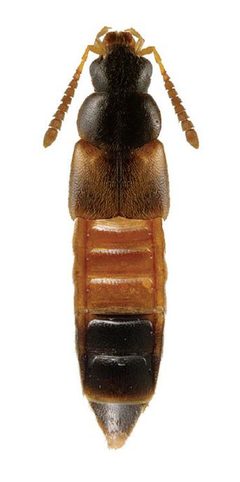
Neotobia alberta is a rove beetle described by Ashe in 1992, belonging to the Aleocharinae within the Staphylinidae. The species is known from scattered localities across Canada and the northeastern United States. As a member of the Homalotini tribe, it is likely associated with fungal or decaying organic substrates, though specific ecological details remain poorly documented. The species name refers to Alberta, Canada, where the was presumably collected.
Pronunciation
How to pronounce Neotobia alberta: /niːoʊˈtoʊbiə ælˈbɜːrtə/
These audio files are automatically generated. While they are not always 100% accurate, they are a good starting point.
Images
Distribution
Canada (Alberta, Manitoba, New Brunswick, Ontario, Quebec) and United States (Maine, New Hampshire, Wisconsin). The exhibits a transcontinental northern distribution pattern with disjunct eastern and western .
More Details
Taxonomic notes
Neotobia alberta is a relatively recently described (1992) within the large and taxonomically challenging rove beetle Aleocharinae. The Neotobia belongs to the tribe Homalotini, a group characterized by small body size and often associated with fungi, decaying plant matter, or social insect colonies. The specific epithet 'alberta' indicates the Canadian province of type locality.
Data limitations
Minimal biological information is available for this beyond basic taxonomic description and occurrence records. Only one observation is documented in iNaturalist as of the knowledge cutoff, suggesting it is rarely encountered or underreported. No published studies specifically address its , , or .
Sources and further reading
- BugGuide
- GBIF taxonomy match
- iNaturalist taxon
- Catalogue of Life
- “Cicindelophilically” | Beetles In The Bush
- These are a few of my favorite trees | Beetles In The Bush
- Monroe Canyon epilogue – Audubon’s tiger beetle | Beetles In The Bush
- Guest Blogger: Dogbane for Dinner | Beetles In The Bush
- cuckoo bees | Blog
- Entomological Vase Earns First Place in Art Show at 2022 Joint Annual Meeting