
Nitidula ziczac
Say, 1825
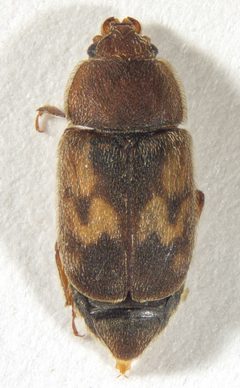
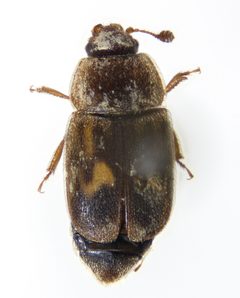
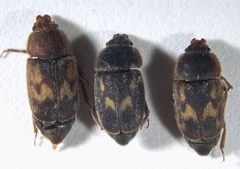
Nitidula ziczac is a of sap-feeding beetle in the Nitidulidae. It is a small , measuring 3–5 millimeters in length, and is known to associate with carrion. The species is found in North America, primarily from the Great Plains westward, and also occurs in Central America.
Pronunciation
How to pronounce Nitidula ziczac: /nɪˈtɪd.jʊ.lə ˈzɪk.zæk/
These audio files are automatically generated. While they are not always 100% accurate, they are a good starting point.
Identification
Difficult to spot due to small size (3–5 mm). Distinguished from other Nitidulidae by its association with carrion and its specific geographic distribution in North America west of the Great Plains.
Images
Appearance
Small , 3–5 millimeters in length. Specific morphological details are not well documented in available sources.
Habitat
Associated with carrion and decomposing animal remains. Has been found on dry bones of large mammals where ligaments remain intact.
Distribution
North America (primarily from the Great Plains westward, including southern California, the southwest, southern Rocky Mountains, and Great Plains states; also recorded from Alberta, Canada) and Central America.
Seasonality
have been observed in spring (March to April in Colorado). Specific period or seasonal activity patterns are otherwise poorly documented.
Diet
Sap-feeding beetle; also known to associate with carrion and feed on decomposing organic matter.
Behavior
Attracted to carrion, where it has been found on dry bones. Manages to locate scarce carrion resources through olfactory detection of aromatic compounds liberated during decomposition.
Ecological Role
Contributes to decomposition of animal remains; part of the carrion insect that helps recycle nutrients from dead animals.
Human Relevance
Of minor forensic interest due to carrion association; not a significant pest or beneficial in agriculture or human structures.
Similar Taxa
- Other NitidulidaeMany sap-feeding beetles in Nitidulidae are found on flowers, fungi, or fermenting plant materials rather than carrion. N. ziczac is distinguished by its specific carrion association and geographic range.
- Dermestes marmoratusAlso found on carrion and bones, but larger (10–13 mm), with silvery-gray on black body, and belongs to Dermestidae.
- Thanatophilus lapponicusAlso a carrion beetle found on bones, but larger (8–15 mm), hairy, and belongs to Silphidae.
More Details
Taxonomic note
The specific epithet 'ziczac' refers to a zigzag pattern, though published descriptions of this pattern are not readily available in the cited sources.
Collection difficulty
Due to its small size and specific preference for carrion, this is likely undercollected and underreported in many regions within its range.
Sources and further reading
- BugGuide
- Wikipedia
- GBIF taxonomy match
- iNaturalist taxon
- Meloidae Holdings | Entomology Research Museum
- Publications | Entomology Research Museum
- Bug Eric: Beetles from Bones
- Nymphula nitidulata Archives - Entomology Today
- The Lepidopteran Life Aquatic
- The Changing Distributions of our Grasshoppers, Crickets and Relatives - Buglife Blog - Buglife