
Thanatophilus sagax
(Mannerheim, 1853)
Carrion Beetle
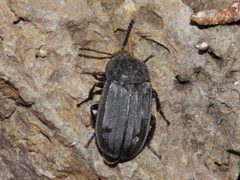
Thanatophilus sagax is a carrion in the Silphidae. It inhabits northern regions of North America, with records from Alaska through western Canada and into the northwestern United States. Like other members of its , it is associated with decomposing animal remains. The was described by Mannerheim in 1853.

Pronunciation
How to pronounce Thanatophilus sagax: /θænəˈtɒfɪləs ˈseɪɡæks/
These audio files are automatically generated. While they are not always 100% accurate, they are a good starting point.
Images
Distribution
Found in northern and western North America. Documented from Alaska, Yukon, Northwest Territories, British Columbia, Alberta, Saskatchewan, Manitoba, Ontario, and Quebec in Canada. In the United States, recorded from Washington, Oregon, Idaho, Montana, Wyoming, Colorado, North Dakota, and South Dakota. A single unverified record suggests possible occurrence in Siberia, Russia.
Diet
and larvae feed on carrion and decomposing animal matter.
Ecological Role
Contributes to decomposition of animal carcasses, facilitating nutrient cycling and carcass removal from the landscape.
Similar Taxa
- Thanatophilus lapponicusAlso a North American carrion beetle with overlapping range; T. lapponicus is holarctic and has been documented from March to October, with a hairy body possibly adapted to cooler temperatures.