
Nosodendridae
Erichson, 1846
Wounded-tree Beetles
Genus Guides
1- Nosodendron(wounded-tree beetles)
is a small of beetles containing fewer than 100 across three extant , with a worldwide distribution. The family represents an isolated lineage within Polyphaga, positioned as sister to the clade comprising Staphyliniformia, Bostrichoidea, and Cucujiformia. Members are primarily associated with decaying organic matter and tree wound environments. The largest genus, Nosodendron, is attracted to yeast-generated slime on tree wounds.
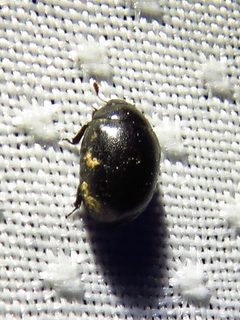
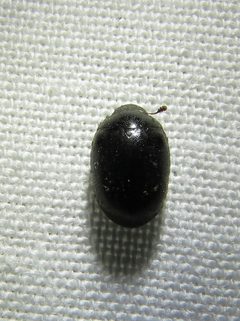
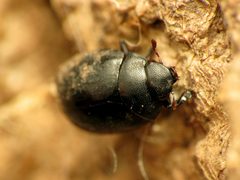
Pronunciation
How to pronounce Nosodendridae: //ˌnosoʊˈdɛndrɪˌdiː//
These audio files are automatically generated. While they are not always 100% accurate, they are a good starting point.
Images
Habitat
Decaying organic matter in wet or moist environments, particularly associated with decomposition processes. Members of the Nosodendron are found in forests and attracted to yeast-generated slime on tree wounds.
Distribution
Worldwide. Documented from the Americas, Europe (Denmark, Norway, Sweden), Asia (Philippines, India, China), and other regions.
Diet
Likely consumes fermented substances, fungi, and microorganisms based on observations of the Nosodendron.
Ecological Role
Associated with decomposition processes in their specialized .
More Details
Taxonomic Position
is considered an isolated lineage within Polyphaga, being the sister group to the clade containing Staphyliniformia, Bostrichoidea, and Cucujiformia.
Fossil Record
Several additional and are known from the fossil record.
Sources and further reading
- BugGuide
- Wikipedia
- GBIF taxonomy match
- iNaturalist taxon
- NCBI Taxonomy
- Catalogue of Life
- The Habitat-Niche of American Nosodendridae
- A New Host Record and Notes on Nosodendron californicum Horn (Coleoptera: Nosodendridae)
- Distributional notes on some Nosodendridae (Coleoptera) — XXIII. Description of a new species from the Philippines
- Distributional notes on some Nosodendridae (Coleoptera) — XX. Descriptions of a new species from the Philippines
- Distributional notes on some Nosodendridae (Coleoptera) - XXII. : A new species of Nosodendron (Nosodendron) from India
- Distributional notes on some Nosodendridae (Coleoptera) — XVII. Description of a new species from China