
Nitidula bipunctata
(Linnaeus, 1758)
two-spotted sap beetle, two-dots sap beetle
Nitidula bipunctata, commonly known as the two-spotted sap beetle, is a sap-feeding beetle in the Nitidulidae. It has a holarctic distribution, occurring across Europe, Northern Asia (excluding China), and North America. The is associated with carrion and decomposing organic matter, though its specific ecological relationships remain incompletely documented.
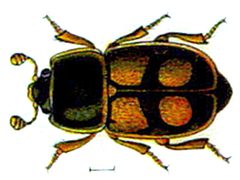
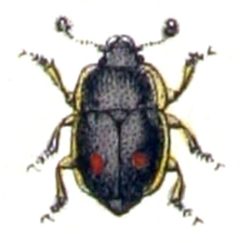
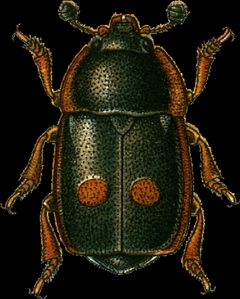
Pronunciation
How to pronounce Nitidula bipunctata: /nɪˈtɪd.jʊ.lə baɪ.pʌŋkˈteɪ.tə/
These audio files are automatically generated. While they are not always 100% accurate, they are a good starting point.
Identification
Distinguished from similar sap beetles by the combination of small size (3–5 mm), holarctic distribution, and association with carrion and sap flows. The two-spotted pattern implied by the specific epithet may aid identification, though this requires verification. Differs from Nitidula ziczac, another carrion-associated , by distribution and likely pattern details.
Images
Appearance
Small , 3–5 mm in length. Body form typical of Nitidulidae: compact, somewhat oval, with short that may expose part of the . Coloration and specific markings not detailed in available sources, though the specific epithet "bipunctata" suggests two distinct spots or punctations.
Habitat
Found in association with carrion, decomposing organic matter, and sap flows. Occurs in diverse terrestrial across its broad geographic range, including temperate forests, grasslands, and anthropogenic environments where carrion or fermenting materials are present.
Distribution
Holarctic: Europe and Northern Asia (excluding China), and North America. Present across northern temperate regions with records spanning multiple continents.
Diet
Sap-feeding; has been observed on carrion and associated with decomposing organic matter. Specific dietary breadth remains incompletely documented.
Behavior
Attracted to carrion and decomposing matter; likely active during warmer months. Specific behavioral details such as mating systems or larval habits not documented in available sources.
Ecological Role
Contributes to nutrient cycling through consumption of decomposing organic matter and carrion. May serve as prey for other in carrion-based .
Human Relevance
Minor forensic relevance due to carrion association; otherwise limited direct interaction with humans. Not known as a significant pest or beneficial in agriculture.
Similar Taxa
- Nitidula ziczacAlso a small sap-feeding beetle (3–5 mm) associated with carrion, but distinguished by distribution (primarily Great Plains westward in North America) and likely pattern differences
- Dermestes marmoratusShares carrion but belongs to different (Dermestidae); larger (10–13 mm) with distinctive silvery-gray scaled appearance
More Details
Taxonomic note
Originally described by Linnaeus in 1758 as Dermestes bipunctatus, later transferred to Nitidula. The basionym reflects historical classification in Dermestidae before recognition of its placement in Nitidulidae.
Observation data
iNaturalist records 62 observations, indicating the is documented but not frequently encountered by citizen scientists relative to more conspicuous beetles.
Sources and further reading
- BugGuide
- Wikipedia
- GBIF taxonomy match
- iNaturalist taxon
- NCBI Taxonomy
- Meloidae Holdings | Entomology Research Museum
- Bembicid Holdings | Entomology Research Museum
- The Lepidopteran Life Aquatic
- Bug Eric: Beetles from Bones
- Bug Eric: January 2012
- The Changing Distributions of our Grasshoppers, Crickets and Relatives - Buglife Blog - Buglife