
Coleoptera
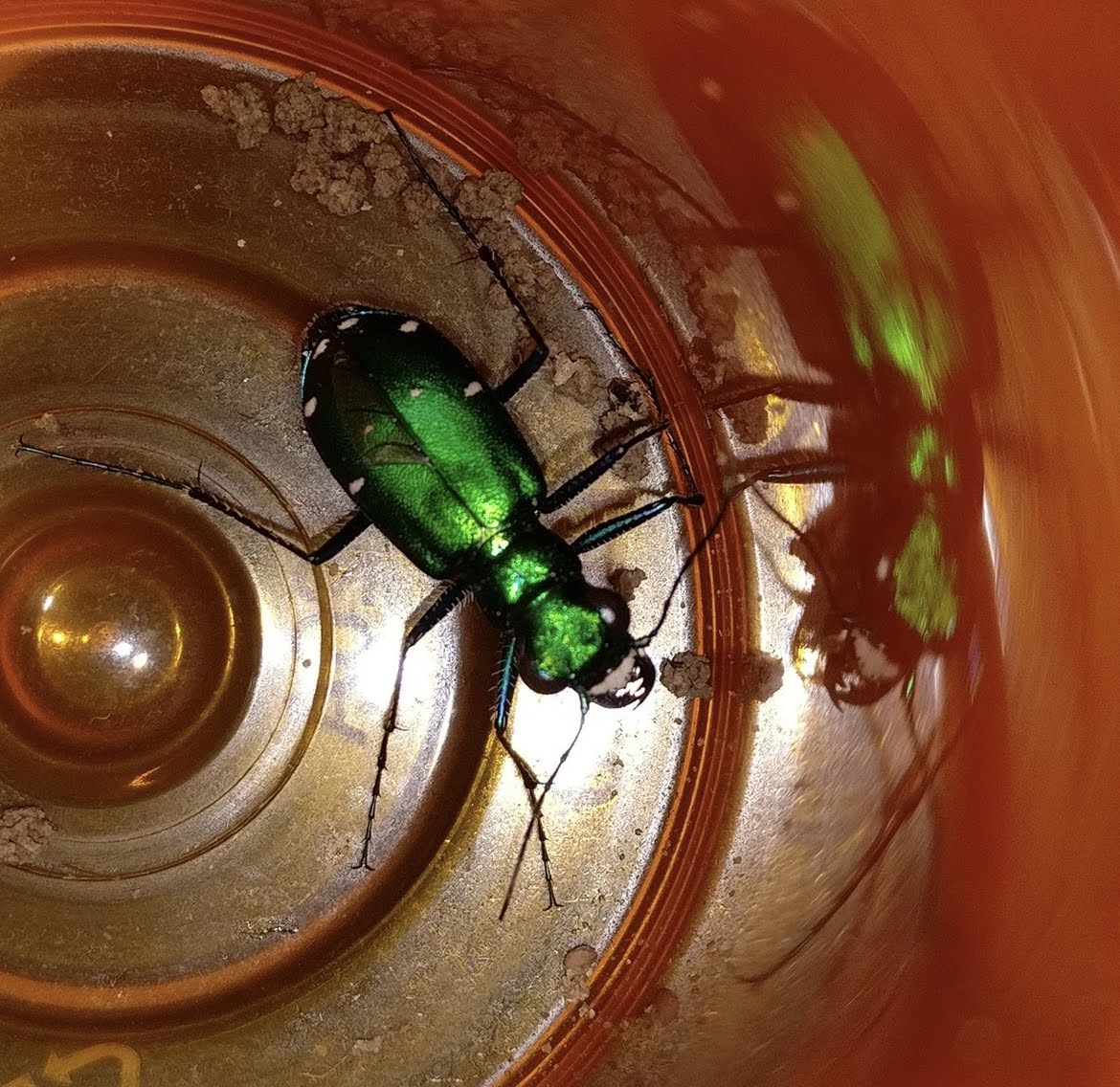
- Tiger beetles are some of the most charismatic insects on Earth: metallic, sharp-eyed, absurdly fast, and every bit as predatory as their name suggests. Come learn how they hunt, why their larvae live like tiny trapdoor monsters in the soil, and what their decline says about the fragile open habitats many other species need too.
Guides
Melanotus dietrichi
Melanotus dietrichi is a species of click beetle (Elateridae) described by Quate in 1967. The genus Melanotus includes several economically significant wireworm species whose larvae are agricultural pests. M. dietrichi belongs to a group of soil-dwelling beetles where larval stages feed on plant roots and subterranean plant parts.
Melanotus gradatus
Melanotus gradatus is a species of click beetle in the family Elateridae. Like other members of the genus Melanotus, it is part of a group commonly referred to as wireworms in their larval stage. The genus includes several agricultural pest species, though specific information on M. gradatus itself is limited.
Melanotus ignobilis
Melanotus ignobilis is a click beetle species in the family Elateridae, first described by Melsheimer in 1844. The species is known from Ontario, Canada, with limited observational records. As a member of the genus Melanotus, it belongs to a group of wireworm beetles whose larvae are soil-dwelling agricultural pests. Specific biological details for this species remain poorly documented in published literature.
Melanotus infaustus
Melanotus infaustus is a species of click beetle in the family Elateridae. The genus Melanotus includes multiple wireworm species that are agricultural pests, though specific information about M. infaustus is limited. Related species in the genus are known as corn wireworms and are significant pests of potato and corn crops.
Melanotus insipiens
Melanotus insipiens is a small click beetle (Elateridae) native to the eastern United States. Its female-produced sex pheromone has been identified as decyl butanoate, enabling pheromone-based monitoring of this species. Adults are active above ground primarily in May and June, while immature stages are soil-dwelling. The species has been recorded as a pest of alsike clover and wheat in Georgia.
Melanotus lanceatus
Melanotus lanceatus is a species of click beetle in the family Elateridae. As a member of the genus Melanotus, it shares characteristics with other wireworm beetles, whose larval forms are known agricultural pests. The species has been documented in taxonomic records but remains poorly studied compared to economically significant congeners such as Melanotus communis. No observations of this species have been recorded in community science databases.
Melanotus leonardi
Melanotus leonardi is a species of click beetle in the family Elateridae, first described by John Lawrence LeConte in 1853. The genus Melanotus contains multiple species of wireworms, the soil-dwelling larval forms that are agricultural pests. Larvae of related Melanotus species, including M. communis, are known as corn wireworms and damage crop roots and tubers. Adults possess the characteristic click mechanism of Elateridae, using a prosternal process and mesosternal socket to produce an audible snapping sound.
Melanotus longulus
Melanotus longulus is a species of click beetle in the family Elateridae, first described by LeConte in 1853. The species is part of the genus Melanotus, which includes several economically important wireworm species whose larvae damage agricultural crops. Two subspecies are recognized: M. l. longulus and M. l. oregonensis. Like other elaterids, adults possess the characteristic clicking mechanism for righting themselves when overturned.
Melanotus miscellus
Melanotus miscellus is a species of click beetle in the family Elateridae, described by Quate in 1967. It belongs to a genus containing several agricultural pest species whose larvae are known as wireworms. The species is recorded from Ontario and Québec, Canada. Specific ecological and biological details for M. miscellus remain poorly documented in the available literature.
Melanotus morosus
Melanotus morosus is a species of click beetle (family Elateridae) described by Candèze in 1860. It belongs to a genus containing agricultural pest species, though specific information about this particular species is limited. The genus Melanotus includes several economically important wireworm species whose larvae damage crop roots.
Melanotus pertinax
Melanotus pertinax is a species of click beetle in the family Elateridae. The species was described by Say in 1839. Like other members of the genus Melanotus, it is a soil-dwelling beetle with larvae (wireworms) that feed on plant roots and underground plant parts. The genus includes several agricultural pest species, though specific documentation of M. pertinax as a crop pest appears limited in available sources.
Melanotus pilosus
Melanotus pilosus is a species of click beetle in the family Elateridae, described by Blatchley in 1910. The specific epithet 'pilosus' refers to the hairy appearance of the species. It belongs to a genus containing several economically important species, including the corn wireworm Melanotus communis, which is a significant agricultural pest. The biology of M. pilosus has been less studied compared to its congener M. communis.
Melanotus prasinus
Melanotus prasinus is a species of click beetle in the family Elateridae, described by Blatchley in 1910. The species belongs to the genus Melanotus, a group of soil-dwelling beetles whose larvae are commonly known as wireworms. As with other members of this genus, the larvae are likely subterranean and feed on plant roots, though specific ecological details for this species remain poorly documented. The species has been recorded in Ontario, Canada.
Melanotus spadix
Melanotus spadix is a species of click beetle in the family Elateridae, first described by Erichson in 1841. It belongs to a genus containing several agricultural pest species whose larvae (wireworms) damage crop roots and tubers. The species has been recorded from Ontario, Canada, though specific details about its biology and ecology remain limited in available literature.
Melanotus tenax
Melanotus tenax is a species of click beetle in the family Elateridae. The genus Melanotus contains numerous species of wireworms, the soil-dwelling larval forms that are significant agricultural pests. Larvae feed on roots and tubers of crops, causing economic damage in agricultural systems. Adults are generally nocturnal and attracted to lights.
Melasinae
false click beetles
Melasinae is a subfamily of false click beetles in the family Eucnemidae, containing approximately 15 genera and at least 30 described species. The subfamily includes several tribes: Calyptocerini, Ceballosmelasini, Dirhagini, Epiphanini, Hylocharini, Melasini, Neocharini, and Xylobiini. Genera within Melasinae include Melasis, Hylis, Epiphanis, Xylophilus, and Isorhipis. Some species, such as Hylis olexai, have established adventive populations in the Nearctic region after originating from Western and Central Europe.
Melasis tsugae
Melasis tsugae is a species of false click beetle in the family Eucnemidae, described by Hopping in 1926. It is known from British Columbia, Canada. Very little published information exists regarding its biology, ecology, or specific host associations.
Melba
Melba is a genus of rove beetles in the family Staphylinidae, subfamily Pselaphinae. The genus was described by Thomas Lincoln Casey Jr. in 1897. It belongs to the tribe Trichonychini within the diverse and species-rich rove beetle lineage. Members of this genus are small beetles associated with leaf litter and soil habitats.
Meligethes atratus
Meligethes atratus is a pollen beetle in the family Nitidulidae, distributed across Europe and Northern Asia (excluding China). The species belongs to a genus of small beetles commonly associated with flowers, particularly those of Brassicaceae and other plant families. Like related pollen beetles, adults likely feed on pollen and floral tissues. The species was first described by Olivier in 1790.
Melittomma sericeum
Chestnut Timberworm Beetle, chestnut timberworm
Melittomma sericeum, commonly known as the chestnut timberworm, is a species of ship-timber beetle in the family Lymexylidae. This beetle is found in North America. The family Lymexylidae is characterized by unusual morphology including highly reduced elytra in some genera, though specific morphological details for M. sericeum itself are not well documented in available sources. Larvae of related genera in this family are known to bore into hardwoods and form symbiotic associations with ambrosia fungi.
Meloe dianella
Meloe dianella is a species of blister beetle (family Meloidae) first described by Pinto and Selander in 1970. It belongs to the genus Meloe, commonly known as oil beetles, which are characterized by their defensive production of cantharidins. The species is known from North America, with records from Canada (Alberta, British Columbia, and Nova Scotia). Like other members of its genus, it is presumed to have a parasitic life cycle involving solitary bees, though specific details for this species remain undocumented.
Meloe dugesi
Meloe dugesi is a species of blister beetle (family Meloidae) described by Champion in 1891. It belongs to the genus Meloe, commonly known as oil beetles, which are characterized by their defensive production of cantharidins. The species occurs in Central America and North America. Like other members of its genus, it likely exhibits the typical Meloe life cycle involving triungulin larvae that parasitize solitary bees.
Melyridae
Soft-winged Flower Beetles, Soft-wing Flower Beetles
Melyridae is a family of beetles in the superfamily Cleroidea, containing over 100 genera worldwide with approximately 520 species in 48 genera in North America. Members are commonly found on flowers, with most adults and larvae being predaceous. The family includes three recognized subfamilies: Dasytinae, Malachiinae, and Melyrinae. Some species, notably in the genus Choresine, have been found to contain potent batrachotoxins, potentially serving as a dietary source for toxic birds and poison-dart frogs.
Melyrodes basalis
Red-shouldered Melyrid
Melyrodes basalis is a species of soft-winged flower beetle in the family Melyridae, commonly known as the Red-shouldered Melyrid. The species is documented through 43 iNaturalist observations, indicating it is recognized in citizen science records. Members of the genus Melyrodes are part of the diverse Melyridae family, which are frequently found on flowers where they feed on pollen and small insects.
Menoeceus
Menoeceus is a genus of darkling beetles in the family Tenebrionidae, described by Champion in 1888. The genus is distributed in the Nearctic and Neotropical regions. As a tenebrionid genus, it belongs to a large and diverse family of beetles commonly associated with arid and semi-arid environments. The genus name derives from Greek mythology, though this etymological origin has no biological significance.
Menoeceus texanus
Menoeceus texanus is a species of darkling beetle in the family Tenebrionidae, described by Champion in 1888. The genus Menoeceus is a small group within this large family of beetles. Very little specific information is available about this particular species beyond its taxonomic classification.
Merhynchites bicolor bicolor
Merhynchites bicolor bicolor is a subspecies of leaf-rolling weevil in the family Attelabidae. Members of the genus Merhynchites are known for their distinctive elongated rostrum and association with oak foliage. The nominate subspecies designation indicates this is the typical form of the species. This taxon belongs to a group of insects commonly referred to as oak leaf-rolling weevils due to their larval habit of manipulating host leaves.
Merhynchites bicolor cerdonis
Merhynchites bicolor cerdonis is a subspecies of leaf-rolling weevil in the family Attelabidae. The genus Merhynchites belongs to the tribe Merhynchitini, a group of rhynchitine weevils characterized by their association with foliage manipulation behaviors. Subspecies in this group often show geographic variation in coloration and body proportions. The specific epithet "cerdonis" indicates this is a named geographic variant of the widespread M. bicolor.
Merhynchites bicolor cockerelli
Merhynchites bicolor cockerelli is a subspecies of leaf-rolling weevil in the family Attelabidae. It is part of the Merhynchites bicolor species complex, which exhibits notable color polymorphism across its range. The subspecies epithet "cockerelli" honors the American entomologist Theodore Dru Alison Cockerell. Members of this genus are known for their distinctive elongated rostrum and association with various host plants for leaf-rolling behavior.
Merhynchites bicolor nigricephalus
Merhynchites bicolor nigricephalus is a subspecies of leaf-rolling weevil in the family Attelabidae. The species Merhynchites bicolor is known for its distinctive bicolored appearance, and this subspecies is characterized by a black head (nigricephalus = black-headed). Members of this genus are associated with various host plants where they feed and lay eggs in rolled leaves. The subspecies designation indicates geographic or morphological variation within the broader species distribution.
Merhynchites wickhami wickhami
Merhynchites wickhami wickhami is a subspecies of leaf-rolling weevil in the family Attelabidae. The genus Merhynchites contains species associated with woody plants, with adults typically found on host vegetation during the growing season. This subspecies represents the nominate form of M. wickhami. Members of this genus are known for their distinctive elongated rostrum and behavior of rolling or folding leaves to create protective chambers for their eggs and larvae.
Merinus laevis
Smooth Darkling Beetle
Merinus laevis is a species of darkling beetle in the family Tenebrionidae, commonly known as the Smooth Darkling Beetle. It is native to eastern North America, with confirmed records from Ontario and Québec in Canada. As a member of the darkling beetle family, it likely occupies habitats typical of tenebrionids, though specific ecological details remain poorly documented in published literature.
Merobruchus insolitus
White Dart Bruchid
Merobruchus insolitus is a species of leaf beetle in the family Chrysomelidae, first described by Sharp in 1885. It is distributed across Central America and North America. The species is commonly known as the White Dart Bruchid. As a member of the genus Merobruchus, it belongs to a group of seed beetles typically associated with leguminous host plants.
Merohister
clown beetles
Merohister is a genus of clown beetles in the family Histeridae, established by Reitter in 1909. The genus contains approximately eight described species distributed across Europe and Asia. One species, Merohister ariasi, has been the subject of detailed biological study including descriptions of its larval and nymphal stages. Members of this genus are part of the diverse Histeridae family, which are generally associated with decomposing organic matter.
Merohister arboricavi
clown beetle
Merohister arboricavi is a species of clown beetle in the family Histeridae, described by Wenzel in 1992. It belongs to the genus Merohister, a group of small predatory beetles. The species is known from limited collection records in the southeastern and midwestern United States.
Meronera
Meronera is a genus of rove beetles in the family Staphylinidae, established by Sharp in 1887. The genus contains at least four described species distributed in North America and Europe. Members of this genus belong to the subfamily Aleocharinae, one of the largest groups within rove beetles.
Mesagroicus hispidus
hispid broad-nosed weevil
Mesagroicus hispidus is a species of broad-nosed weevil in the family Curculionidae. The species was described by Buchanan in 1929. It belongs to the subfamily Entiminae, a group commonly known as broad-nosed or root weevils. The specific epithet 'hispidus' refers to a bristly or hairy surface texture, likely describing the integument of this species.
Mesagroicus minor
Mesagroicus minor is a species of broad-nosed weevil (family Curculionidae, subfamily Entiminae) described by Buchanan in 1929. It belongs to the tribe Psallidiini and is native to North America. The genus Mesagroicus contains multiple species of weevils, with M. minor being one of the documented members. Like other entimine weevils, adults possess a broad snout and elbowed antennae.
Mesites
Mesites is a genus of true weevils (Curculionidae) in the tribe Cossonini, established by Schoenherr in 1838. The genus comprises at least 30 described species. These beetles are part of the diverse weevil fauna within the Curculionidae, the largest family of beetles.
Mesites rufipennis
Mesites rufipennis is a species of true weevil (Curculionidae) described by John Lawrence LeConte in 1878. It is a small beetle native to North America. The specific epithet "rufipennis" refers to reddish wing covers. Very little is known about its biology or ecology.
Mesonoterus addendus
Mesonoterus addendus is a small diving beetle species in the family Noteridae, first described by Blatchley in 1920. The species belongs to a genus of burrowing water beetles adapted to aquatic habitats. Based on the limited available records, this species has been documented from the Caribbean and North America. The genus Mesonoterus contains species typically associated with shallow, often temporary aquatic habitats where they burrow in muddy or sandy substrates.
Metachroma longulum
Metachroma longulum is a species of leaf beetle in the family Chrysomelidae, described by Horn in 1892. It is a member of the genus Metachroma, which comprises small to medium-sized leaf beetles found primarily in North America. The species has been recorded in the Canadian provinces of Alberta and Saskatchewan. Like other members of its family, it is associated with vegetation, though specific host plants and ecological details remain poorly documented.
Metaclisa atra
Metaclisa atra is a species of darkling beetle in the family Tenebrionidae, described by LeConte in 1866. The genus Metaclisa belongs to the subfamily Lagriinae within the diverse beetle family Tenebrionidae. Very little published information exists regarding the specific biology, ecology, or distribution of this particular species. The species epithet "atra" refers to its black coloration. Records in GBIF and iNaturalist indicate it is a rarely encountered species with limited observational data.
Metanomus
Metanomus is a genus of click beetles (family Elateridae) established by Buysson in 1887. As a member of the diverse Elateridae family, species in this genus possess the characteristic clicking mechanism used for righting themselves when overturned. The genus is relatively poorly documented in public sources, with limited species-level information available.
Metanomus insidiosus
Insidious Click Beetle
Metanomus insidiosus is a click beetle species described by John Lawrence LeConte in 1853. As a member of the family Elateridae, it possesses the characteristic "click" mechanism that allows these beetles to right themselves when flipped onto their backs. The species is distributed across multiple Canadian provinces.
Metaxydytes fraternus
Metaxydytes fraternus is a species of predaceous diving beetle in the family Dytiscidae. It belongs to a small genus of aquatic beetles found in the Neotropical region. Very few observations of this species have been documented, with only six records currently available.
Metaxyphloeus texanus
Nose-jawed Flat Bark Beetle
Metaxyphloeus texanus is a species of flat bark beetle in the family Laemophloeidae, known from North America. The common name "Nose-jawed Flat Bark Beetle" refers to distinctive cranial modifications characteristic of the genus. Very little published information exists on the biology or ecology of this species.
Methia brevis
Methia brevis is a species of longhorn beetle in the family Cerambycidae, first described by Henry Clinton Fall in 1929. The species belongs to the tribe Methiini and is one of approximately 30 described species in the genus Methia. Very little published information exists regarding its biology, ecology, or distinguishing characteristics beyond its taxonomic placement. The species has been recorded in both the United States and Mexico.
Metophthalmus americanus
Metophthalmus americanus is a minute beetle in the family Latridiidae (plaster beetles). Members of this family are among the smallest beetles, with adults typically measuring less than 2 millimeters in length. The genus Metophthalmus contains species associated with moist, decaying organic matter.
Metophthalmus rileyi
Metophthalmus rileyi is a species of minute brown scavenger beetle in the family Latridiidae. The genus Metophthalmus belongs to a group of tiny beetles commonly associated with decaying organic matter and fungal growth. The specific epithet "rileyi" honors Edward Riley, an indefatigable collector of beetles who contributed significantly to the study of North American coleopteran diversity. The species is known from very few records and remains poorly documented in the scientific literature.
