
Melasinae
Fleming, 1821
false click beetles
Tribe Guides
5Melasinae is a of false click beetles in the Eucnemidae, containing approximately 15 and at least 30 described . The subfamily includes several tribes: Calyptocerini, Ceballosmelasini, Dirhagini, Epiphanini, Hylocharini, Melasini, Neocharini, and Xylobiini. Genera within Melasinae include Melasis, Hylis, Epiphanis, Xylophilus, and Isorhipis. Some species, such as Hylis olexai, have established in the Nearctic region after originating from Western and Central Europe.

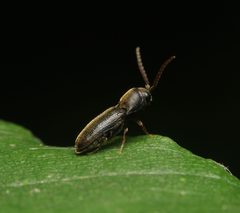
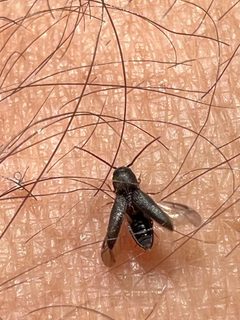
Pronunciation
How to pronounce Melasinae: /ˌmɛləˈsaɪniː/
These audio files are automatically generated. While they are not always 100% accurate, they are a good starting point.
Images
Distribution
Global distribution with documented presence in the Nearctic region (Canada: Ontario, Quebec; United States: Connecticut, Illinois, Maine, Massachusetts, New Hampshire, New Jersey, New York, Ohio, Pennsylvania, Rhode Island, Vermont, Virginia, West Virginia, Wisconsin, Arkansas, Delaware) and the Western and Central Palearctic (native range of Hylis olexai).
Life Cycle
Larvae of at least some have been described, including mature larval descriptions for Entomophthalmus rufiolus and Rhagomicrus bonvouloiri in the Nearctic region.
Behavior
Some have been observed to establish successfully as species in new geographic regions. Hylis olexai has expanded its range from Western and Central Europe to eastern North America.
More Details
Taxonomic composition
BioLib recognizes eight tribes within Melasinae: Calyptocerini, Ceballosmelasini, Dirhagini, Epiphanini, Hylocharini, Melasini, Neocharini, and Xylobiini. Notable include Melasis (authority Olivier, 1790), Hylis (authority Des Gozis, 1886), Epiphanis (authority Eschscholtz, 1829), and Xylophilus (authority Mannerheim, 1823).
Adventive species establishment
The success of eucnemid establishment in the Nearctic region has been documented for Hylis olexai, which has become widespread across multiple Canadian provinces and U.S. states since its introduction from Europe.
Sources and further reading
- BugGuide
- Wikipedia
- iNaturalist taxon
- Catalogue of Life
- Eucnemid Larvae of the Nearctic Region. Part IV: Description of the Mature Larva of Entomophthalmus rufiolus (LeConte, 1866) (Coleoptera: Eucnemidae: Melasinae: Dirhagini), with Notes on its Biology
- New species of Hylis des Gozis (Coleoptera: Eucnemidae: Melasinae) discovered in the Nearctic region along with the first North American records for Hylis olexai (Palm) and new distribution records
- Eucnemid Larvae of the Nearctic Region. Part I: Description of the Larva ofRhagomicrus Bonvouloiri(Horn, 1886) (Coleoptera: Eucnemidae: Melasinae: Dirrhagini), With Notes on Its Biology