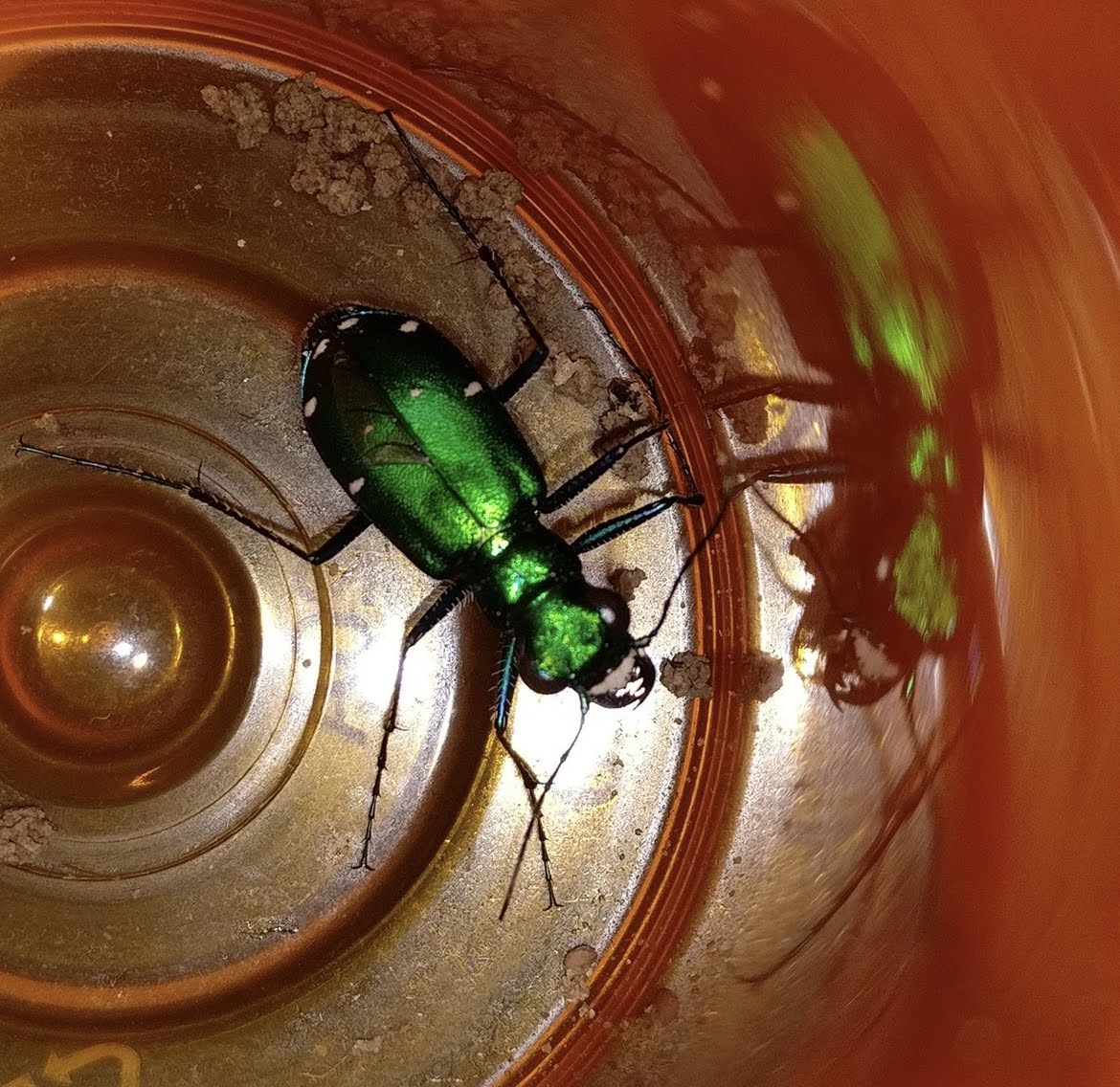
Metopoloba pruinosa is a species of darkling beetle in the family Tenebrionidae, first described by Horn in 1870. The species is classified within the order Coleoptera and is part of the diverse beetle fauna of North America. Very little specific biological information has been published for this particular species.
Metoponium abnorme is a species of darkling beetle in the family Tenebrionidae. The genus Metoponium is a small group within this large family of beetles, which are primarily distributed in arid and semi-arid regions. Very few records exist for this species, and its biology remains poorly documented.
Metoponium abnorme abnorme is a subspecies of darkling beetle in the family Tenebrionidae, originally described by LeConte in 1851. The genus Metoponium contains species associated with arid and semi-arid regions of western North America. As a nominate subspecies, it represents the typical form of Metoponium abnorme. Published records for this taxon are sparse, with no observations documented in major biodiversity databases.
Metrionella is a genus of tortoise beetles (Cassidinae) in the family Chrysomelidae, established by Spaeth in 1932. The genus comprises approximately 12 described species. As members of the tortoise beetle subfamily, these beetles are characterized by a distinctive shield-like body form with the elytra and pronotum expanded to cover the legs and antennae when at rest.
Meziini is a tribe of small beetles within the family Ptinidae (spider beetles and deathwatch beetles), established by Bellés in 1985. Members of this tribe are characterized by their compact body form and are classified within the subfamily Ptininae. The tribe represents a distinct lineage within the diverse Ptinidae, a family known for species associated with stored products, wood, and dry organic matter. Based on iNaturalist records, the group has been documented in at least 446 observations, indicating moderate levels of detection by naturalists.
Micracis lignator is a species of weevil in the family Curculionidae, described by Blackman in 1928. The genus Micracis belongs to a group of bark beetles, though specific ecological details for this species remain poorly documented. It occurs in Middle and North America. Like other members of its genus, it is likely associated with woody plants, though direct observations are limited.
Micracis swainei is a bark beetle in the weevil family Curculionidae, described by Blackman in 1920. The species occurs in North America, with records from Canada (Ontario), the United States, the Caribbean, and Middle America. As a member of the subfamily Scolytinae, it is presumed to be associated with woody plants, though specific ecological details remain poorly documented.
Micracisella is a genus of bark beetles in the family Curculionidae, established by M.W. Blackman in 1928. The genus contains at least 20 described species. Like other bark beetles, members of this genus are likely associated with woody plants, though specific ecological details remain poorly documented. The genus is part of the diverse weevil family and shares the characteristic rostrum of Curculionidae.
Micracisella nanula is a species of weevil in the family Curculionidae, subfamily Corthylinae, described by Wood & Bright in 1992. The genus Micracisella comprises small bark beetles associated with coniferous hosts. This species is recorded from the Caribbean and North America, though specific details of its biology and ecology remain poorly documented in the available literature.
Micracisella opacithorax is a bark beetle species in the family Curculionidae, described by Wood & Bright in 1992. It is distributed across North America and Middle America. As a member of the typical bark beetle group, it is associated with woody plants, though specific host relationships remain undocumented in available sources.
Micraegialia pusilla is a small scarab beetle in the subfamily Aegialiinae, first described by Horn in 1887. The species occurs in northern North America, with records from Alaska, Washington, Minnesota, North Dakota, and Canadian provinces including Alberta, British Columbia, and Manitoba. As a member of the tribe Aegialiini, it belongs to a group commonly known as sand-loving scarabs.
Micralcinus maculatus is a species of true weevil in the family Curculionidae, first described by Sleeper in 1955. It is known from North America. The specific epithet 'maculatus' refers to spotted or mottled coloration, though detailed descriptions of its appearance are not available in the provided sources.
horned powder-post beetles
Micrapate is a genus of beetles in the family Bostrichidae, commonly known as horned powder-post beetles. The genus was established by Casey in 1898 and contains at least 40 described species. Members are found in various regions including the Neotropics, with at least one species documented from the cerrado savanna biome of Brazil.
horned powder-post beetle
Micrapate bilobata is a species of powder-post beetle in the family Bostrichidae, first described by Fisher in 1950. It is characterized by horn-like projections on the head, a trait common among male bostrichids. The species is found in North America. As with other members of its family, it is associated with wood-boring habits.
horned powder-post beetle
Micrapate cristicauda is a species of horned powder-post beetle in the family Bostrichidae. The species was described by Casey in 1898 and is known from North America. Like other members of Bostrichidae, it is a wood-boring beetle. Very few observations of this species have been documented.
Microcara is a genus of marsh beetles in the family Scirtidae, established by C.G. Thomson in 1859. The genus comprises approximately 10 described extant species, with four additional fossil species described from Eocene deposits. Species in this genus are found in the Holarctic region, with records from Scandinavia and other northern European localities.
marsh beetle
Microcara explanata is a small marsh beetle in the family Scirtidae. It was described by LeConte in 1866 and is known from North America, with records from Canada and the United States. As a member of Scirtidae, it is associated with moist or aquatic habitats. The genus Microcara contains multiple species that are often difficult to distinguish without detailed examination.
flower weevil
Microcholus striatus is a species of flower weevil in the beetle family Curculionidae, described by John Lawrence LeConte in 1876. It is native to North America. As a member of the flower weevil group, it likely associates with flowers or developing plant parts, though specific ecological details remain poorly documented.
Microcylloepus similis is a species of riffle beetle (family Elmidae) described by Horn in 1870. It belongs to a group of aquatic beetles commonly known as elmids or riffle beetles, which are characteristic inhabitants of flowing water habitats. The species is part of the genus Microcylloepus, a group of small aquatic beetles within the subfamily Elminae.
Striated Click Beetle
Microhypnus striatulus is a species of click beetle in the family Elateridae. It is known from eastern and western Canada, with records from Alberta, British Columbia, New Brunswick, Nova Scotia, and Ontario. The species was first described by LeConte in 1853. It is one of few described species in the genus Microhypnus, a group of small click beetles. Available information on its biology and ecology remains limited.
Microhyus is a genus of true weevils (Curculionidae) established by LeConte in 1876. The genus contains at least one described species, M. setiger. As a curculionid weevil, it possesses the characteristic elongated rostrum typical of the family. The genus is poorly documented in the literature, with limited information available on its biology and ecology.
Microhyus setiger is a species of weevil in the family Curculionidae, first described by LeConte in 1876. This small beetle belongs to a genus of weevils whose biology and ecology remain poorly documented in scientific literature. Distribution records indicate presence in eastern North America, specifically in the Canadian provinces of Ontario and Québec.
Microlestes is a genus of ground beetles in the family Carabidae, subfamily Lebiinae. The genus contains approximately 127 species distributed across the Afro-tropical region, Palearctic (including Europe), Near East, North Africa, and Oriental region. Species in this genus are small ground beetles, with some exhibiting pronounced sexual dimorphism in leg structure.
Microlestes curtipennis is a species of ground beetle in the family Carabidae. It was described by Casey in 1920. The species is found in North America, with records from Canada and the United States. As a member of the genus Microlestes, it belongs to a group of small carabid beetles commonly known as ant-like beetles due to their morphology and behavior.
Microlipus productus is a species of beetle in the genus Microlipus. The genus Microlipus is placed within the family Cleridae (checkered beetles), a group of predatory beetles commonly associated with other insects in wood-boring habitats. No specific information about the biology, distribution, or appearance of M. productus could be located in the provided source material. The source document is a detailed field report of a 2023 collecting trip across the southwestern United States, but this species is not mentioned in the narrative.
Microon is a genus of weevils in the family Brentidae, established by Alonso-Zarazaga in 1989. These beetles belong to the straight-snouted weevil lineage within Coleoptera. The genus has been documented from limited observations in northern Europe.
Microon canadense is a species of weevil in the family Brentidae, described by Brown in 1944. As a member of the genus Microon, it belongs to a group of small brentid weevils. The species epithet "canadense" indicates a Canadian type locality or distribution. Information regarding its biology, ecology, and specific identification features remains poorly documented in available sources.
Microphotus is a genus of fireflies (family Lampyridae) in western North America. At least one undescribed species is known to exist, distinguished from described congeners by morphological and potentially genetic differences. The genus is poorly studied relative to more widespread firefly genera, and taxonomic revision is needed to clarify species boundaries.
California Pink Glowworm
Microphotus angustus is a firefly species in the beetle family Lampyridae, commonly known as the California Pink Glowworm. It is found in North America, with distribution records spanning Middle America and North America. The species was described by LeConte in 1874. As a member of Lampyridae, it possesses bioluminescent capabilities, though specific details of its light production and mating signals remain poorly documented in available sources.
Micropsephodes is a small genus of beetles in the family Anamorphidae (formerly placed in Endomychidae), containing at least two described species. The genus was established by Champion in 1913. Species include Micropsephodes serraticornis (Champion, 1913) and Micropsephodes lundgreni Leschen & Carlton, 2000. Biological details remain poorly documented for most species.
Microrhagus is a genus of false click beetles in the family Eucnemidae, tribe Dirhagini. The genus was established by Dejean in 1833 and contains Palaearctic species, including two species recently described from the Russian Far East (M. nikitskyi and M. vicarius). Members of this genus are small beetles associated with decaying wood habitats.
Microrhagus audax is a species of false click beetle in the family Eucnemidae, described by Horn in 1886. The species belongs to a family of wood-boring beetles whose larvae develop in decaying wood and are associated with forest ecosystems. Very little specific information is available for this particular species, with most knowledge inferred from family-level characteristics.
Microrhagus breviangularis is a small beetle in the family Eucnemidae, described by Otto in 2015. Members of this family are commonly known as false click beetles. The species is known from very few observations.
Microrhagus opacus is a species of false click beetle in the family Eucnemidae, described by Otto in 2015. The genus Microrhagus comprises small to medium-sized beetles characterized by their inability to produce the clicking sound typical of true click beetles (Elateridae), despite superficial similarities in body form. As a relatively recently described species, detailed biological information remains limited.
Microscapha clavicornis is a small beetle species in the family Melandryidae, described by John Lawrence LeConte in 1866. It belongs to a genus characterized by compact body forms and clubbed antennae, as suggested by the species epithet. The species has been documented in eastern Canada, with records from New Brunswick, Ontario, and Quebec. Like other members of Melandryidae, it is likely associated with decaying wood and fungal habitats, though specific ecological details remain poorly documented.
Microschatia championi is a species of darkling beetle in the family Tenebrionidae, described by Horn in 1893. The genus Microschatia belongs to a diverse family of primarily nocturnal beetles commonly found in arid and semi-arid environments. This species is known from Mexico based on distribution records.
Microschatia inaequalis is a species of darkling beetle (family Tenebrionidae) native to southwestern North America. Its known distribution is restricted to southern California south of Los Angeles and northern Baja California Norte. As a member of the Tenebrionidae, it belongs to a large family of beetles commonly associated with arid and semi-arid environments.
Microschatia morata is a species of darkling beetle in the family Tenebrionidae, first described by Horn in 1878. It belongs to a genus of small to medium-sized beetles distributed in North America. The species has been documented in Mexico based on collection records.
pleasing fungus beetles
Microsternus is a genus of pleasing fungus beetles in the family Erotylidae. The genus contains three described species: M. perforatus, M. tricolor, and M. ulkei. These beetles are associated with fungal habitats, consistent with the ecology of the Erotylidae family. The genus has been documented across North America with relatively few observation records.
Microsternus ulkei is a species of pleasing fungus beetle in the family Erotylidae. It is native to North America. The species is one of 17 documented observations on iNaturalist, indicating it is rarely encountered or underreported. As a member of Erotylidae, it likely feeds on fungal fruiting bodies, though specific ecological details remain poorly documented.
Microtonus is a genus of beetles in the family Melandryidae, first described by LeConte in 1862. Members of this genus are small beetles associated with decaying wood and fungal habitats. The genus is documented through iNaturalist observations and taxonomic databases, though detailed biological studies remain limited.
Migiwa is a genus of click beetles (family Elateridae) described by Kishii in 1966. The genus is placed within the order Coleoptera and is part of the diverse family of elaterid beetles, which are characterized by their ability to produce a clicking sound and jump by flexing the joint between the pro- and mesothorax. The genus is accepted in current taxonomy but appears to be poorly documented in public databases, with no observations recorded in iNaturalist.
Migneauxia lederi is a small beetle species in the family Latridiidae (plaster beetles), described by Reitter in 1875. The genus Migneauxia contains minute beetles often associated with damp, moldy environments. This species has been recorded from Belgium and Denmark based on occurrence data.
Mimosestes protractus is a species of leaf beetle first described by Horn in 1873. It belongs to the family Chrysomelidae, a diverse group of herbivorous beetles commonly known as leaf beetles. The species has been documented in both North America and Central America.
retama weevil
Mimosestes ulkei, commonly known as the retama weevil, is a seed beetle in the family Chrysomelidae (subfamily Bruchinae). The species was originally described by Horn in 1873 as Bruchus ulkei and later transferred to the genus Mimosestes. It is distributed across Central America and North America. Like other members of the Bruchinae, this species is associated with leguminous host plants.
broad-nosed weevil
Minyomerus laticeps is a species of broad-nosed weevil in the family Curculionidae, first described by Casey in 1888. It belongs to the subfamily Entiminae, a group characterized by their broad, short rostrums. The species has been recorded from the southwestern United States and adjacent Mexico.
Bronze-winged Buckthorn Leaf Beetle
Miraces aeneipennis is a species of leaf beetle in the family Chrysomelidae. It was first described by Jacoby in 1888. The species occurs in Central America and North America. The specific epithet aeneipennis refers to the bronze-colored wings. Very little detailed information is available about its biology or ecology.
Miraces placida is a species of skeletonizing leaf beetle in the family Chrysomelidae. The species was described by Horn in 1893 and is known to occur in North America. As a skeletonizing leaf beetle, it likely feeds by consuming leaf tissue between the veins, leaving a characteristic lace-like pattern.
broad-nosed weevil
Mitostylus elongatus is a species of broad-nosed weevil in the beetle family Curculionidae. The species was described by Van Dyke in 1936. It is known from North America, with confirmed records from Texas.
broomweed broad-nosed weevil
Mitostylus tenuis is a broad-nosed weevil in the family Curculionidae, described by Horn in 1876. The common name 'broomweed broad-nosed weevil' suggests an association with broomweed (Gutierrezia spp.), a genus of composite plants. The species is known from North America, with records from Oklahoma and Texas.