
Melanotus leonardi
(LeConte, 1853)
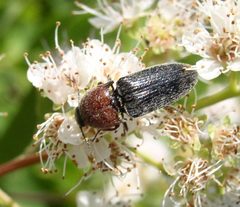
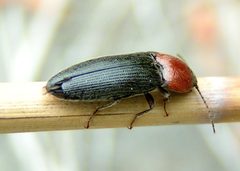
Melanotus leonardi is a of click beetle in the Elateridae, first described by John Lawrence LeConte in 1853. The Melanotus contains multiple species of wireworms, the soil-dwelling larval forms that are agricultural pests. Larvae of related Melanotus species, including M. communis, are known as corn wireworms and damage crop roots and tubers. possess the characteristic click mechanism of Elateridae, using a prosternal process and mesosternal socket to produce an audible snapping sound.
Pronunciation
How to pronounce Melanotus leonardi: /mɛ.ləˈnoʊ.təs liː.əˈnɑr.di/
These audio files are automatically generated. While they are not always 100% accurate, they are a good starting point.
Identification
may be distinguished from other click beetles by genitalia examination and subtle differences in body proportions, structure, and punctation patterns. The name honors an individual (likely collector or colleague of LeConte). Differentiation from congeneric species such as M. communis, M. rufipes, and M. similis requires detailed morphological study. Larvae are not reliably identifiable to species without molecular methods or rearing to adulthood.
Images
Habitat
are likely found in grassy or agricultural areas where larvae develop in soil. Related inhabit fields, pastures, and areas with grass cover. Larval is soil, particularly in crop fields where they feed on roots and tubers.
Distribution
Recorded from eastern and central Canada: Manitoba, New Brunswick, Ontario, and Quebec. The distribution appears centered in the Canadian prairie and Great Lakes regions. Specific United States records are not confirmed in available sources, though related occur broadly in North America.
Life Cycle
Complete with , larval, pupal, and stages. Larval stage () is prolonged, typically lasting 2-5 years in related . occurs in soil . Adults are relatively short-lived and primarily reproductive. Specific timing for M. leonardi is not documented.
Behavior
exhibit the characteristic clicking/jumping of Elateridae when disturbed, achieved by rapid body flexion using the prosternal-mesosternal mechanism. This is a escape response. Larvae move through soil to locate food sources. Activity patterns and specific behaviors for this are not documented.
Ecological Role
Larvae act as soil-dwelling herbivores or , consuming plant roots, seeds, and decaying organic matter. They contribute to soil nutrient cycling but can become pests in agricultural systems. likely function as minor or feed on pollen, though specific ecological roles are unstudied.
Human Relevance
The Melanotus contains significant agricultural pests. While M. leonardi itself is not specifically documented as a pest, related (particularly M. communis, the corn wireworm) cause substantial damage to corn, potatoes, and other crops. larvae bore into seeds, roots, and tubers, reducing yield and quality. Management typically involves soil , crop , and using .
Similar Taxa
- Melanotus communisAlso known as corn wireworm; major agricultural pest with overlapping distribution. are extremely similar morphologically; separation requires examination of male genitalia and subtle body proportions.
- Melanotus rufipes with similar body form; distinguished by leg coloration (rufipes = red foot) and genitalia structure.
- Limonius spp.Another of click beetles containing agricultural pests; differ in body proportions and structure, larvae are not reliably distinguishable without molecular identification.
More Details
Taxonomic Note
The epithet 'leonardi' likely honors an individual associated with early North American entomology or specimen collection. LeConte described numerous species in 1853 based on material from expanding survey collections.
Research Context
Melanotus are frequently referenced in agricultural entomology literature regarding management, though specific studies on M. leonardi are sparse. The species appears in Canadian faunal surveys and biodiversity databases.
Identification Challenges
-level identification within Melanotus is notoriously difficult and often requires male genitalia dissection or molecular barcoding. Many historical records may require verification.
Sources and further reading
- BugGuide
- GBIF taxonomy match
- iNaturalist taxon
- NCBI Taxonomy
- How a City-Raised Entomologist Found Her Path in Agricultural Pest Management
- Entomology 2020: Attendees Share Early Reactions to On-Demand Presentations, Posters
- Quiz Yourself: 2020 Entomology Games Questions
- Pin-Chu Lai, Ph.D. - Entomology Today