
Melanotus communis
Gyllenhal
corn wireworm
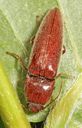
Melanotus communis is a click beetle (Elateridae) whose larvae, known as corn wireworms, are significant agricultural pests in the eastern United States. are reddish-brown and approximately 13 mm long. The has been studied extensively for its pest status in sugarcane, potato, and other crops, with research focusing on entomopathogen susceptibility, -based monitoring, and soil preferences.
Pronunciation
How to pronounce Melanotus communis: /mɛˈlænoʊtəs kəˈmjuːnɪs/
These audio files are automatically generated. While they are not always 100% accurate, they are a good starting point.
Identification
can be distinguished from other Melanotus by their reddish-brown coloration and size. Larvae are recognized as typical wireworms—elongate, cylindrical, short-legged, with a somewhat flattened . The species has been confirmed to produce 13-tetradecenyl acetate as a female-specific component, which may assist in distinguishing it from sympatric congenerics through trapping.
Images
Habitat
Soil-dwelling in agricultural fields, particularly sugarcane fields in Florida. Shows strong preference for muck (organic) soils over sandy soils in Florida sugarcane systems, though present in both.
Distribution
Eastern North America: Canada (Ontario, Quebec); United States (Alabama, Arizona, Arkansas, Colorado, Florida, Georgia, Illinois, Indiana, Iowa, Louisiana, Maryland, Massachusetts, Minnesota, Missouri, Nebraska, New Jersey, New York, North Carolina, North Dakota, Ohio, Pennsylvania, South Carolina, South Dakota, Texas, Virginia, Wisconsin).
Diet
Larvae feed on roots and tubers of grain crops, root vegetables, and sugarcane. plants include sugarcane (Saccharum officinarum), potato (Solanum tuberosum), many grasses, and various vegetables and cereals.
Host Associations
- Saccharum officinarum - pestmajor in Florida
- Solanum tuberosum - pestsignificant agricultural
- Zea mays - pestimplied by 'corn '
- various grasses - pestgeneral category
- various vegetables and cereals - pestgeneral category
Life Cycle
Complete with , larva (), pupa, and stages. Egg stage approximately 0.3 mm. Larval stage is the damaging wireworm form, reaching 21–25 mm at maturity. occurs in soil; pupa white and adult-sized.
Behavior
Larvae exhibit soil-dwelling with directed movement toward food sources such as oat baits. In free-choice tests, larvae show strong preference for residing in muck versus sandy soil. produce (13-tetradecenyl acetate) for mate location; males exhibit dose-dependent response to this compound.
Ecological Role
Agricultural pest in agroecosystems. Soil-dwelling larval stage contributes to nutrient cycling through feeding activity, though economic impact is negative due to crop damage.
Human Relevance
Major economic pest of sugarcane in Florida, potatoes in the eastern U.S., and other grain, root, and vegetable crops. Subject of ongoing research into using and fungi, though current strains show limited efficacy. Synthetic (13-tetradecenyl acetate) has been identified for potential monitoring and management applications.
Similar Taxa
- Limonius spp.Other pests in same ; distinguished by chemistry and morphological features of and larvae
- other Melanotus speciesCongeneric click beetles; M. communis distinguished by confirmed component 13-tetradecenyl acetate and specific associations
Sources and further reading
- BugGuide
- Wikipedia
- iNaturalist taxon
- Catalogue of Life
- A Close Call | Bug Squad
- How a City-Raised Entomologist Found Her Path in Agricultural Pest Management
- Entomology 2020: Attendees Share Early Reactions to On-Demand Presentations, Posters
- Tingidae | Beetles In The Bush
- Russian Journal of Economics finds a new publishing home on ARPHA platform | Blog
- New NeoBiota special issue: tackling invasive forest pests
- Observations on the Biology of Melanotus Communis and Melanotus Pilosus
- Melanotus communis . [Distribution map].
- Survival and Behavior of Melanotus communis (Coleoptera: Elateridae) in Florida Sugarcane Soils
- Host Plant Preference of Melanotus communis (Coleoptera: Elateridae) among Weeds and Sugar Cane Varieties Found in Florida Sugar Cane Fields
- Effect of Host Size on Susceptibility of Melanotus communis (Coleoptera: Elateridae) Wireworms to Entomopathogens
- Feeding Behavior ofMelanotus communis(Coleoptera: Elateridae) in Florida Sugarcane1
- 13-Tetradecenyl acetate, a female-produced sex pheromone component of the economically important click beetle Melanotus communis (Gyllenhal) (Coleoptera: Elateridae)
- Linking crop history to Melanotus communis (Coleoptera: Elateridae) abundance in North Carolina and Virginia agroecosystems.