
Elaterinae
Leach, 1815
click beetles
Tribe Guides
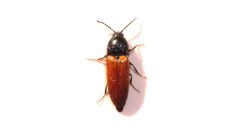
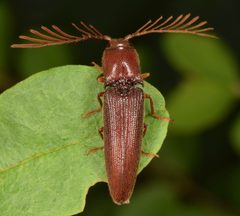
9Elaterinae is a of click beetles ( Elateridae) comprising 12 tribes distributed worldwide. Members possess the characteristic 'click' mechanism of the family, using a prosternal spine and mesosternal groove to spring themselves upright when overturned. The subfamily is taxonomically diverse and includes numerous across varied . On Lord Howe Island, Australia, at least seven genera have been documented, including the radiation of Ochosternus.
Pronunciation
How to pronounce Elaterinae: /ɛˌlætəˈraɪniː/
These audio files are automatically generated. While they are not always 100% accurate, they are a good starting point.
Identification
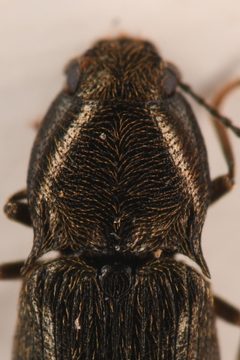
Elaterinae can be distinguished from other elaterid primarily through examination of prosternal and mesosternal structures, though specific diagnostic characters vary among tribes. The prosternal process typically fits into a mesosternal groove to form the clicking mechanism. Detailed identification to tribe or level requires examination of antennal structure, body form, and genitalic characters.
Images
Distribution
Worldwide distribution with 12 tribes; documented from Lord Howe Island, Australia (Pacific Ocean) with at least seven present.
Behavior
Possesses the characteristic clicking or springing mechanism shared with other Elateridae, allowing the to launch itself into the air to right itself when on its back.
Human Relevance
Some are agricultural pests; Monocrepidius exsul is noted as an established pasture pest on Lord Howe Island.
Similar Taxa
- Other Elateridae subfamiliesDistinguished by prosternal-mesosternal junction structure and other subtle morphological characters; Elaterinae specifically defined by tribal-level characteristics that separate it from such as Agrypninae, Cardiophorinae, and others.
More Details
Tribal diversity
The contains 12 tribes worldwide, indicating substantial morphological and ecological diversification within Elaterinae.
Taxonomic history
Authored by Leach in 1815, making it one of the earlier-established .