
Pomachiliini
Candèze, 1859
Genus Guides
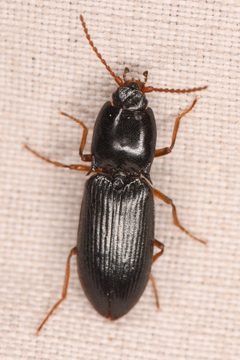
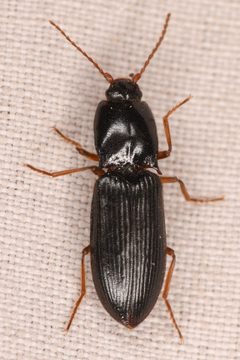
2Pomachiliini is a tribe of click beetles (Elateridae) established by Candèze in 1859. The tribe includes the Isidus, whose are specialized to coastal dune environments in the Mediterranean region. Isidus moreli, the best-studied member, is the only saproxylophagous elaterid known from Italian dunes and serves as an umbrella species for coastal conservation.
Pronunciation
How to pronounce Pomachiliini: //poʊˌmæ.kɪˈlaɪ.naɪ//
These audio files are automatically generated. While they are not always 100% accurate, they are a good starting point.
Images
Habitat
Coastal dune environments, particularly sandy beaches near river mouths with decaying wood of Platanus and Populus in advanced decomposition. Larvae inhabit sandy substrate among roots of dune vegetation, moving between microhabitats.
Distribution
Palearctic region: France, Italy, Malta, Spain, Ukraine, Morocco, Tunisia, Algeria, Egypt, Cyprus, and Turkey. In Italy, confirmed in Sicily (provinces of Trapani, Agrigento, Caltanissetta, Ragusa, Siracusa, and Catania).
Seasonality
emerge between June and August, with activity occurring from late evening through night.
Diet
Saproxylophagous. Larvae are opportunistic with documented preference for larvae of Curculionidae Cossoninae; diet may include wooden compounds, fungi, or organic debris. has been observed in larvae.
Host Associations
- Platanus - larval development in decaying woodlarge strains in advanced decomposition
- Populus - larval development in decaying woodlarge strains in advanced decomposition
- Curculionidae Cossoninae - preypreferred prey of larvae
Life Cycle
Larval development lasts 3–4 years. emerge June–August.
Behavior
are photophilous and attracted to light. Larvae display opportunistic predatory including . Adults take in sand during daylight.
Ecological Role
The only saproxylophagous elaterid present in Italian dunes, playing a fundamental ecological role in coastal . Serves as an umbrella for conservation of Mediterranean sandy coast and as a bioindicator of integrity.
Human Relevance
Conservation concern: Isidus moreli is assessed as Vulnerable (VU) in Italy and Near Threatened (NT) in Europe. Threatened by fragmentation and degradation of coastal dune systems. Protected areas are important for its conservation.
More Details
Conservation status
Isidus moreli is listed as Vulnerable in the Italian national red list and Near Threatened in European red lists, reflecting dependence on fragile coastal dune .
Research limitations
Most detailed ecological information derives from Isidus moreli; broader tribe-level data for Pomachiliini remain limited.