
Hypnoidus
Dillwyn, 1829
wireworms
Species Guides
6- Hypnoidus abbreviatus(Abbreviated Wireworm)
- Hypnoidus bicolor(Bicolour Click Beetle)
- Hypnoidus impressicollis(Large-necked Click Beetle)
- Hypnoidus nocturnus(Nocturnal Click Beetle)
- Hypnoidus rivularius(Mountain Click Beetle)
- Hypnoidus squalidus(Rough Click Beetle)
Hypnoidus is a of click beetles ( Elateridae) whose soil-dwelling larval stages are known as . in this genus are found across Eurasia and North America, with several species recognized as agricultural pests. The genus includes economically significant species such as Hypnoidus bicolor and Hypnoidus abbreviatus, which damage crop roots in the Canadian Prairies.
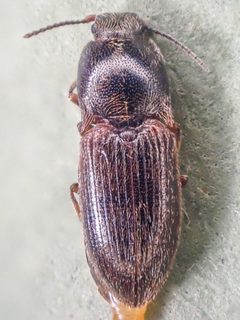
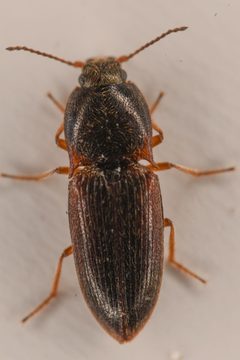
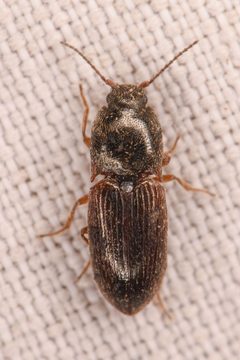
Pronunciation
How to pronounce Hypnoidus: /hɪpˈnɔɪdəs/
These audio files are automatically generated. While they are not always 100% accurate, they are a good starting point.
Images
Habitat
Soil-dwelling; larvae inhabit agricultural soils and field environments. Studies indicate that damage susceptibility varies by soil texture, with loam and silt soils showing greater vulnerability to larval feeding than clay soils.
Distribution
Eurasia and Northern America. Documented from Denmark, Norway, Sweden, and the United States (including Vermont and the Canadian Prairies).
Life Cycle
Larvae are soil-living , the stage of click beetles. Complete details beyond the larval stage are not well documented for most in this .
Human Relevance
Several are agricultural pests. Hypnoidus bicolor is the most ubiquitous in the Canadian Prairies and can significantly damage soybean crops at high larval densities, particularly at lower temperatures (10–20°C). Hypnoidus abbreviatus is noted as more damaging to crops than H. bicolor. These wireworms have become major pests following restrictions on lindane use.
Similar Taxa
- Limonius californicusAnother pest in the Canadian Prairies; causes more severe crop damage than Hypnoidus bicolor
More Details
Cryptic diversity
Genetic studies of Hypnoidus bicolor in the Canadian Prairies have identified two genetically distinct clades (>4.66% COX1 sequence divergence), suggesting possible cryptic within what is currently recognized as a single species.
Population dynamics
Clade A of H. bicolor predominates in eastern prairie localities and shows evidence of and range expansion, potentially associated with intensive agricultural practices. Both clades exhibit uneven among populations with low regional genetic structuring.
Sources and further reading
- BugGuide
- Wikipedia
- GBIF taxonomy match
- iNaturalist taxon
- NCBI Taxonomy
- Catalogue of Life
- Wireworm feeding behaviours: the capacity of Hypnoidus bicolor to damage soybean under different environmental conditions
- Genetic structure and population demographics of Hypnoidus bicolor ( C oleoptera: E lateridae) in the C anadian P rairies