
Melanotus
click beetles (insect genus), dark-spored mushrooms (fungal genus)
Species Guides
43- Melanotus americanus(corn wireworm)
- Melanotus castanipes(Chestnut-footed Click Beetle)
- Melanotus chiricahuae
- Melanotus clandestinus
- Melanotus communis(corn wireworm)
- Melanotus communis(corn wireworm)
- Melanotus concisus
- Melanotus corticinus
- Melanotus cribricollis
Melanotus is a of click beetles ( Elateridae) comprising approximately 800 described distributed worldwide. The genus includes several economically significant agricultural pests, particularly species whose larvae damage crop roots and tubers. Research has identified for some species, enabling development of monitoring and management tools. The genus name Melanotus is also applied to a fungal genus in Strophariaceae, but this record addresses the genus.
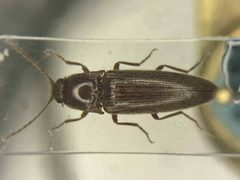
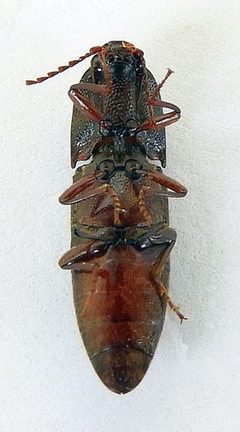
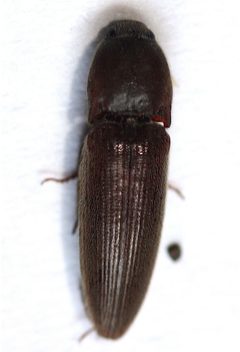
Pronunciation
How to pronounce Melanotus: //mɛˈlænətəs//
These audio files are automatically generated. While they are not always 100% accurate, they are a good starting point.
Images
Distribution
Worldwide distribution with particularly well-studied in Western Eurasia and North America.
Human Relevance
Several Melanotus are significant agricultural pests. Larvae (wireworms) feed on roots and tubers of crops including potatoes, corn, and other vegetables, causing substantial economic damage. Melanotus communis, known as the corn wireworm, is a major pest in North American agriculture. Research on for M. piceatus and M. insipiens has enabled development of -based monitoring tools. Management strategies include and chemical control.
Similar Taxa
- AgriotesAnother elaterid containing economically important pests; distinguished by specific chemistry and morphological characters
- LimoniusRelated elaterid with similar pest ; differ in chemical structure (e.g., Limonius uses different ester compounds)
- ConoderusClick beetle with similar larval habits; identification requires examination of morphological features and specificity
More Details
Pheromone chemistry
identified in Melanotus include sesquiterpene esters: (2Z,6E)-farnesyl acetate for M. piceatus and decyl butanoate for M. insipiens. Male show selective electrophysiological response to single components.
Research applications
Cornell University vegetable research (2023-2024) evaluated native strains (Steinernema carpocapsae, S. feltiae, Heterorhabditis bacteriophora) for biocontrol of Melanotus communis in potatoes.
Fungal homonym
The name Melanotus is also used for a fungal in Strophariaceae (Basidiomycota), creating potential nomenclatural confusion. The fungal genus is associated with or potentially synonymized under Deconica.
Sources and further reading
- BugGuide
- Wikipedia
- iNaturalist taxon
- NCBI Taxonomy
- Catalogue of Life
- How a City-Raised Entomologist Found Her Path in Agricultural Pest Management
- Entomology 2020: Attendees Share Early Reactions to On-Demand Presentations, Posters
- Pin-Chu Lai, Ph.D. - Entomology Today
- Observations on the Biology of Melanotus Communis and Melanotus Pilosus
- Costs associated with tail autotomy in an ambush foraging lizard, Cordylus melanotus melanotus
- Observations of satellite nesting and nocturnal incubation behaviours in pūkeko (Porphyrio melanotus melanotus)
- Selected Body Temperature and Thermoregulatory Behavior in the Sit-and-Wait Foraging Lizard Pseudocordylus melanotus melanotus
- A novelPCR‐based genetic marker shows that sex of offspring does not account for hatch‐order effects on growth, survival and dominance in PūkekoPorphyrio melanotus melanotus
- Identification of Sex Pheromone Components for the Click Beetles Melanotus piceatus Blatchley and Melanotus insipiens (Say) (Coleoptera: Elateridae)
- Linking crop history to Melanotus communis (Coleoptera: Elateridae) abundance in North Carolina and Virginia agroecosystems.