
Melanotus cribricollis
Candeze, 1860
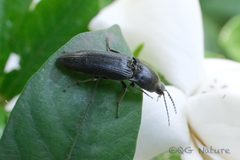
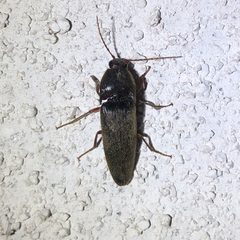
Melanotus cribricollis is a click beetle (Coleoptera: Elateridae) whose larvae are the of bamboo shoot wireworms, causing significant damage to bamboo forests in China. Larvae feed gregariously on fresh bamboo shoots, with up to nearly 20 individuals per shoot and damage rates reaching 80%. The lives underground throughout its long , making prevention and control difficult. Research has characterized its innate immune system, including a β-1,3-glucan recognition protein gene that mediates defense against fungal such as Metarhizium pingshaense.
Pronunciation
How to pronounce Melanotus cribricollis: /mɛˈlænətəs ˌkrɪbrɪˈkoʊlɪs/
These audio files are automatically generated. While they are not always 100% accurate, they are a good starting point.
Images
Habitat
Bamboo forests; underground in soil
Distribution
Deqing County, Zhejiang Province, China; bamboo forests of Zaoyuan
Diet
Fresh bamboo shoots
Life Cycle
Long ; larval stage is the feeding stage causing damage to bamboo shoots
Behavior
Larvae feed gregariously on bamboo shoots, with up to nearly 20 individuals observed per fresh shoot; lives underground, making detection and control difficult; exhibits innate immune response involving β-GRP-mediated upregulation of antimicrobial (defensin and ) upon fungal ; RNAi suppression of β-GRP increases mortality and downregulates antimicrobial peptide genes
Ecological Role
Significant pest of bamboo forests; target for using fungi such as Metarhizium pingshaense
Human Relevance
Economic pest of bamboo forests with damage rates up to 80%; subject of research on using and fungi; used as model organism for studying insect innate
Sources and further reading
- BugGuide
- GBIF taxonomy match
- iNaturalist taxon
- NCBI Taxonomy
- Meloidae Holdings | Entomology Research Museum
- How a City-Raised Entomologist Found Her Path in Agricultural Pest Management
- Entomology 2020: Attendees Share Early Reactions to On-Demand Presentations, Posters
- Pin-Chu Lai, Ph.D. - Entomology Today
- Cloning and Functional Characterization of a Novel β-GRP Gene From Melanotus cribricollis