
Melanotus castanipes
(Paykull, 1800)
Chestnut-footed Click Beetle
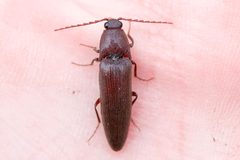
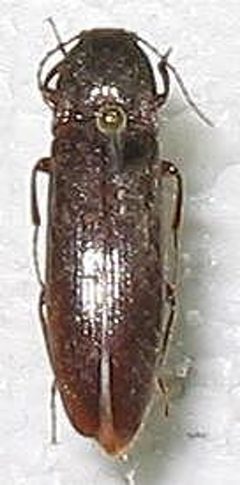
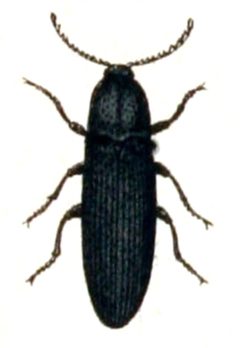
Melanotus castanipes is a click beetle in the Elateridae. It is a medium-sized , measuring 13–19 mm in length, with a uniformly black or slightly browner and an elongated body with tapering . The species is distributed across eastern Canada and is known for its long , which extend beyond the margin of the pronotum. Like other click beetles, it possesses the characteristic clicking mechanism for righting itself when overturned.
Pronunciation
How to pronounce Melanotus castanipes: /mɛˈlænoʊtəs kæˈstænaɪˌpiːz/
These audio files are automatically generated. While they are not always 100% accurate, they are a good starting point.
Identification
Distinguished from similar Melanotus by the combination of uniformly black coloration (or slightly browner ), long extending well beyond the pronotum margin, and the presence of longitudinal rows of pits on the plus densely scattered pits on the pronotum. The specific epithet 'castanipes' (chestnut-footed) may refer to subtle coloration differences in the legs, though sources describe them as black. Separation from other Melanotus species requires examination of antennal length relative to body and pronotal punctation patterns.
Images
Distribution
Eastern Canada: recorded from Manitoba, New Brunswick, Newfoundland and Labrador, Nova Scotia, and Ontario
Similar Taxa
- Melanotus communisSimilar size and appearance; both are agricultural pests (corn wireworm). M. communis is specifically noted as a pest of potatoes in North America, while M. castanipes distribution is centered in eastern Canada. Antennal proportions and exact punctation patterns differ.
- Other Melanotus species contains multiple similar black click beetles; precise identification requires detailed examination of antennal length, pronotal shape, and elytral striation/punctation patterns.