
Euphyes
Scudder, 1872
grass skippers
Species Guides
9- Euphyes arpa(Palmetto Skipper)
- Euphyes bayensis(Bay Skipper)
- Euphyes berryi(Berry's skipper)
- Euphyes bimacula(Two-spotted Skipper)
- Euphyes conspicua(Black Dash)
- Euphyes dion(Dion Skipper)
- Euphyes dukesi(Dukes' skipper)
- Euphyes pilatka(Palatka Skipper)
- Euphyes vestris(Dun Skipper)
Euphyes is a of grass skippers (Hesperiidae: Hesperiinae) comprising approximately 22 distributed across North America, the Caribbean, and parts of Central America. Species are typically associated with wetland and grassland , with larvae feeding on sedges (Cyperaceae) and other monocots. The genus includes several regional endemics and habitat , some of conservation concern.
Pronunciation
How to pronounce Euphyes: /ˈjuː.faɪ.iːz/
These audio files are automatically generated. While they are not always 100% accurate, they are a good starting point.
Identification
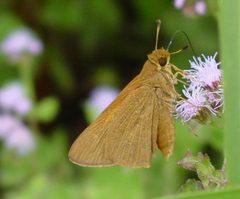
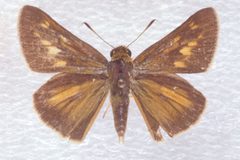
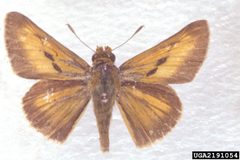
Separation from similar grass skipper (e.g., Hesperia, Polites, Atalopedes) relies on wing pattern details, association, and in some cases genitalia examination. Euphyes generally lack the well-defined checkered wing fringes of Hesperia. The dun skipper (E. vestris) is distinguished by uniformly dull brown wings without prominent markings. The black dash (E. conspicua) shows a characteristic dark dash on the forewing. The Palatka skipper (E. pilatka) is restricted to sawgrass marshes in the southeastern United States. Regional endemics (E. bayensis, E. berryi, E. dukesi) have restricted ranges that aid identification. Male genitalia, particularly valvae structure, are used for definitive species identification.
Images
Habitat
Primarily wetlands including marshes, wet prairies, sedge meadows, and edges of lakes and streams. Some occupy drier grasslands and savannas. Larval plants (sedges and rushes) dictate specificity; several species are tightly associated with particular wetland vegetation types such as sawgrass (Cladium) marshes or Carex-dominated meadows.
Distribution
North America from southern Canada through the United States, Mexico, Central America, and the Caribbean (Jamaica). Greatest diversity in the eastern and central United States. Several with highly restricted ranges: E. bayensis (Florida), E. berryi (North Carolina coastal plain), E. dukesi (disjunct in Michigan, Indiana, North Carolina, Virginia).
Seasonality
fly primarily during summer months, with most active June–August in northern portions of range; extended or multiple periods possible in southern regions. Some species (e.g., E. vestris) have relatively long flight seasons from late spring through early fall. stage varies by species; larvae of many species overwinter.
Diet
Larvae feed on sedges (Cyperaceae), primarily Carex , and in some cases other monocots including rushes (Juncaceae) and sawgrass (Cladium). visit flowers for nectar, including composites, milkweeds, and other wetland forbs.
Host Associations
- Carex - larval primary larval for most Euphyes
- Cladium - larval for E. pilatka and related wetland
- Juncus - larval recorded for some
Life Cycle
Complete . laid singly on plant leaves or stems. Larvae construct shelters by folding or tying leaves, feeding nocturnally within. occurs in leaf shelters or in litter at base of host plant. Number of varies: in northern range, potentially or partial second generation in south. typically as partially grown larva in .
Behavior
have rapid, erratic low over vegetation, frequently perching on grass stems or bare ground. Males perch to await females, sometimes establishing territories in open areas. Both sexes visit flowers for nectar. Mating occurs in vegetation; females oviposit on plants, often selecting young growth. Larvae are concealed feeders, remaining within leaf shelters during daylight.
Ecological Role
of wetland forbs as . Larvae function as primary consumers in wetland , converting sedge to insect tissue available to . Serve as prey for birds, spiders, and predatory insects. Some are indicators of intact wetland and specific vegetation .
Human Relevance
Several of conservation concern due to wetland loss. E. bayensis (bay skipper) and E. dukesi (Dukes' skipper) are considered rare or vulnerable; E. berryi (Berry's skipper) has extremely limited range. Subject of ecological study regarding wetland restoration and sedge meadow conservation. Not economically significant as pests.
Similar Taxa
- HesperiaSimilar size and preference; distinguished by checkered wing fringes and more angular wing margins
- PolitesOverlapping wetland ; Polites typically smaller with more contrasting orange and dark brown patterning
- AtalopedesSimilar grassland association; Atalopedes often show more yellow-orange coloration and different wing shape
- WallengreniaSimilar wetland skippers; distinguished by wing venation details and genitalia structure
More Details
Conservation Status
Wetland drainage and degradation threaten multiple Euphyes . E. dukesi has experienced significant range contraction; E. bayensis is restricted to undisturbed coastal marshes. Climate change and sea level rise pose additional risks to coastal endemics.
Taxonomic History
established by Scudder in 1872. groups (peneia, subferruginea, dion, vestris) recognized based on morphological and ecological similarities, though phylogenetic relationships remain under study.