
Atalopedes
Scudder, 1872
Sachems and Allies
Species Guides
1- Atalopedes campestris(Field Skipper)
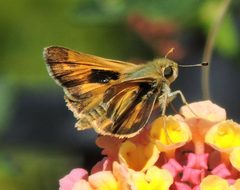
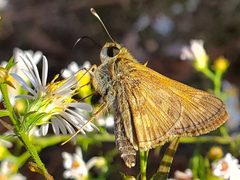
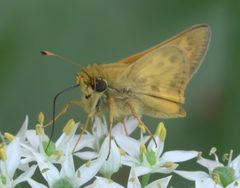
Atalopedes is a of ( Hesperiidae) containing approximately seven distributed across North and South America. The genus includes notable species such as Atalopedes campestris (sachem skipper), which has been extensively studied for its response to climate change, and Atalopedes huron (Huron skipper). Species within this genus are associated with grassland and prairie , where frequently visit flowers for nectar. The genus was described by Scudder in 1872.
Pronunciation
How to pronounce Atalopedes: /ˌætəˈloʊpɪˌdiːz/
These audio files are automatically generated. While they are not always 100% accurate, they are a good starting point.
Images
Habitat
in this are found in grassland and prairie . Atalopedes campestris has been observed in shortgrass prairie in Oklahoma, where were found on flowers of Helianthus annuus ( sunflower). Atalopedes huron has been recorded in restored tallgrass prairie remnants in Missouri.
Distribution
The occurs in North America and South America. Atalopedes campestris ranges from southern California northward to Washington State and western Nevada, having expanded its range significantly since the 1920s. Atalopedes huron occurs in the central United States, including Missouri. South American include Atalopedes mesogramma, Atalopedes carteri, Atalopedes bahiensis, and Atalopedes flaveola.
Seasonality
are active in late summer. In Oklahoma, Atalopedes campestris was observed in late August. In Missouri, Atalopedes huron was observed in late summer field conditions.
Diet
feed on nectar from flowers. Atalopedes campestris has been observed feeding on Helianthus annuus ( sunflower).
Behavior
are and visit flowers. Males and females have been observed together on flower . Atalopedes campestris has shown significant phenological responsiveness to climate change, with advancing first- dates documented in California studies.
Ecological Role
function as when visiting flowers for nectar. Larval plant relationships are not well documented in the available sources.
Human Relevance
Atalopedes campestris has served as an important in long-term climate change research. Art Shapiro's 45-year monitoring study in California identified this as one of the two most responsive to climatic warming, with its range expansion from southern California to Washington State closely matching statistical climate trends.
More Details
Species Groups
The contains three recognized groups: the campestris group (A. campestris, A. huron), the mesogramma group (A. carteri, A. mesogramma), and the clarkei group (A. bahiensis, A. flaveola), plus A. lina which is unassigned to any group.
Climate Change Response
In Shapiro's California study, Atalopedes campestris showed the strongest phenological response to warming among 20 , advancing its first- date by an average of 2/3 day per year (approximately one week per decade) between the 1970s and 2010s.