
Polites
Scudder, 1872
grass skippers
Species Guides
12- Polites baracoa(baracoa skipper)
- Polites carus(Carus Skipper)
- Polites draco(Draco Skipper)
- Polites mardon(Mardon skipper)
- Polites mystic
- Polites origenes(crossline skipper)
- Polites peckius(Peck's Skipper)
- Polites rhesus(Rhesus Skipper)
- Polites sabuleti(Sandhill Skipper)
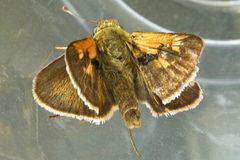
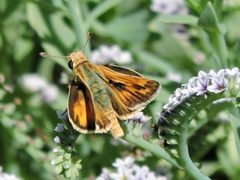
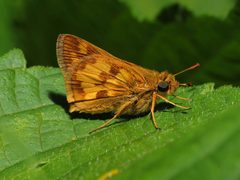
Polites is a of North American grass in the Hesperiidae. The genus was established by Scudder in 1872 and contains primarily distributed across the United States. Members of this genus are small to medium-sized skippers with rapid, darting patterns typical of the Hesperiinae. Some species have become subjects of conservation concern due to declines, with at least one species (Polites mardon) having been petitioned for federal protection.
Pronunciation
How to pronounce Polites: //ˈpɒlaɪtiːz//
These audio files are automatically generated. While they are not always 100% accurate, they are a good starting point.
Identification
Polites skippers can be distinguished from other grass skipper by a combination of wing pattern and structural characteristics. in this genus typically have relatively plain, earth-toned wings (brown, orange, or tawny) with small, discrete light spots. The forewings are more pointed than in some related genera, and the hindwings usually lack the prominent marginal banding seen in certain other Hesperiinae. Accurate identification to species level often requires examination of genitalia or detailed wing spot patterns, as several species are visually similar.
Images
Habitat
in this inhabit open, grassy environments including prairies, meadows, savannas, and montane grasslands. Some species occupy specialized such as coastal dunes or alpine meadows. Many Polites species are associated with native bunchgrasses and early-successional vegetation . Habitat specificity varies by species, with some being habitat and others restricted to particular grassland or montane .
Distribution
The Polites is to North America, with distributed across the continental United States. Individual species show varying ranges: Polites sonora occurs in the Sierra Nevada mountains of California, while Polites mardon has been documented in Washington state and other Pacific Northwest locations. The genus as a whole spans diverse climatic zones from coastal to montane environments.
Seasonality
periods vary by and latitude. Most species are or , with adults active during spring and summer months. Specific timing depends on elevation and local climate conditions, with montane species typically flying later in the season than lowland counterparts.
Host Associations
- grasses - larval Larvae feed on various grass (Poaceae), the defining association for grass skippers (Hesperiinae)
Life Cycle
Like other Hesperiidae, Polites undergo complete with , larva, pupa, and stages. Larvae construct shelters by folding or rolling grass blades, feeding within these structures. occurs in the larval shelter or in a separate silken cocoon among grasses. stage varies by species; some overwinter as larvae, others as pupae.
Behavior
exhibit rapid, erratic low over grasses, perching with wings partially open in the typical skipper posture. Males patrol territories and perch on low vegetation to await females. Both sexes visit flowers for nectar.
Ecological Role
As herbivores, larvae contribute to nutrient cycling in grassland . serve as of low-growing flowers and as prey for insectivorous birds and other .
Human Relevance
Several Polites have become focal species for insect conservation efforts. Polites mardon (mardon skipper) was petitioned for federal listing in 2002; while the petition was ultimately rejected in 2012, the species remains listed as endangered in Washington state. Conservation efforts for this species have involved protection and collaboration with forestry services. The exemplifies broader patterns of grassland decline documented across North America.
Similar Taxa
- HesperiaAnother of grass skippers with similar size and preferences; Hesperia often have more prominent wing markings and different spot arrangements
- OchlodesSimilar grassland skippers; Ochlodes typically show more robust body proportions and different male genitalia structure
- ThymelicusEuropean grass skippers with convergent ; distinguished by geographic distribution and subtle wing venation differences
More Details
Conservation status concerns
declines in Polites mirror broader patterns of grassland decline across North America. The mardon skipper (Polites mardon) serves as a case study in proactive conservation: petitioned for federal listing in 2002, it became the subject of intensive research and management before the petition was rejected in 2012 due to recovery efforts. This illustrates the potential for pre-listing conservation action to benefit at-risk insect species.
Research significance
Polites sonora (Sonora skipper) has been studied in the context of climate change impacts on montane insects. Research at Donner Pass in the Sierra Nevada examined how strategies affect vulnerability to warming winters, finding that overwintering as may be particularly sensitive to reduced snowpack and warmer minimum temperatures.
Sources and further reading
- BugGuide
- Wikipedia
- GBIF taxonomy match
- iNaturalist taxon
- NCBI Taxonomy
- Catalogue of Life
- Where Are All the Butterflies? | Bug Squad
- Polites -sonora - Entomology Today
- The best species name ever! | Beetles In The Bush
- How Climate Change is Affecting Insect Biodiversity
- A Look at the Science of Insect Conservation