
Euphyes bayensis
Shuey, 1989
Bay Skipper
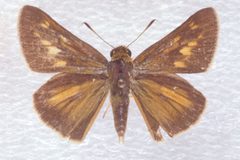
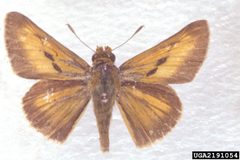
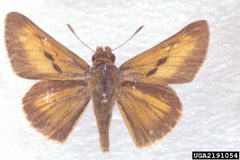
Euphyes bayensis, the bay skipper, is a hesperiid to the Gulf Coast of the United States. It is restricted to tidal sawgrass marshes, a that has experienced significant loss. The has two periods per year and is considered globally imperiled due to its narrow range and specific habitat requirements.
Pronunciation
How to pronounce Euphyes bayensis: /ˈjuːfaɪ.iːz bəˈjɛn.sɪs/
These audio files are automatically generated. While they are not always 100% accurate, they are a good starting point.
Identification
May be confused with Euphyes dion. Distinguishing features between these two are not specified in available sources.
Images
Appearance
Wingspan 37–44 mm. The exhibits typical skipper with a robust body and relatively large . Specific wing coloration and pattern details are not documented in available sources.
Habitat
Tidal sawgrass marshes in the coastal zone. Specifically associated with sawgrass-dominated wetlands subject to regular tidal influence.
Distribution
Coastal Mississippi, Louisiana, and Texas, United States. Restricted to Gulf Coast tidal marsh systems.
Seasonality
Two per year: late May and September. are active during these periods.
Diet
feed on flower nectar. Larval plant associations are not documented in available sources.
Life Cycle
, with two annually. Specific details regarding , larval, and pupal stages are not documented.
Human Relevance
Subject to conservation concern due to vulnerability. Threats include major hurricanes, wetland loss from human activity, possible use, and sawgrass burning. Listed as globally imperiled by NatureServe.
Similar Taxa
- Euphyes dionThe bay skipper may be confused with this congeneric based on overall appearance.
More Details
Conservation Status
NatureServe lists the as globally imperiled (G2). The restricted coastal marsh is vulnerable to storm damage, development, and management practices.
Taxonomic History
Described by Shuey in 1989, indicating relatively recent recognition as a distinct .