
Euphyes pilatka
(Edwards, 1867)
Palatka Skipper, Saw-grass Skipper
Euphyes pilatka, commonly known as the Palatka skipper or saw-grass skipper, is a in the Hesperiidae. It is strongly associated with sawgrass marshes in the southeastern United States, where its larvae feed exclusively on Cladium jamaicensis. The has a restricted coastal distribution and is notable for its specialized requirements.
Pronunciation
How to pronounce Euphyes pilatka: //ˈjuːfaɪiːz paɪˈlæt.kə//
These audio files are automatically generated. While they are not always 100% accurate, they are a good starting point.
Identification
Distinguished from other Euphyes by its association with sawgrass and geographic restriction to the Atlantic and Gulf coastal plains. The plain, dark wing coloration with reduced spotting separates it from more boldly patterned skippers such as Euphyes dion. The species is unlikely to be confused with other skippers outside its specialized marsh habitat.
Images
Appearance
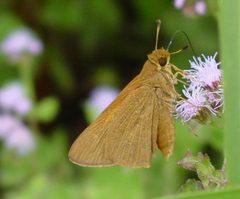
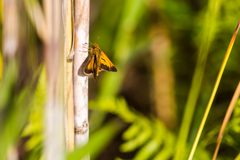
Wingspan 45–54 mm. A medium-sized skipper with relatively plain, dark brown to orange-brown wings. The forewings typically show small pale spots. The overall coloration is subdued compared to many related skippers, lacking bold contrasting patterns.
Habitat
Freshwater and brackish marshes dominated by sawgrass (Cladium jamaicensis). Occupies coastal plain wetlands from sea level to low elevations, particularly in areas with standing water and dense emergent vegetation.
Distribution
United States: southeastern Virginia south through peninsular Florida and the Florida Keys, west along the Gulf Coast to southern Mississippi. Strays recorded north to northern Maryland and west to southwestern Louisiana.
Diet
Larvae feed on leaves of Cladium jamaicensis (sawgrass). food sources not documented in available sources.
Host Associations
- Cladium jamaicensis - larval sole known plant; larvae feed on leaves
Life Cycle
Larvae construct shelters by rolling leaves of the plant. occurs within these shelters. Detailed and number of per year not documented.
Behavior
Larvae live in rolled-leaf shelters on the plant. are active in sunny conditions within marsh . is rapid and low, typical of grass-skippers.
Ecological Role
A herbivore tightly linked to sawgrass marsh . Serves as a prey item for marsh-associated including birds and arthropods.
Human Relevance
No direct economic importance. Of interest to lepidopterists and conservation biologists due to its specialized requirements and restricted range. Habitat loss through marsh drainage and coastal development represents the primary threat.
Similar Taxa
- Euphyes dionOverlaps in range but prefers different and has more boldly patterned wings with distinct pale spots
- Euphyes conspicuaSimilar size and general appearance but occurs in different geographic regions and
More Details
Subspecies
Two recognized: E. p. pilatka (nominate, widespread) and E. p. klotsi (Florida Keys, described 1985). The Florida Keys shows subtle differences in wing pattern and size.
Conservation Status
Not formally listed but vulnerable due to dependence on intact sawgrass marshes, which have declined significantly due to coastal development, drainage, and sea level rise.