
Euphyes bimacula
(Grote & Robinson, 1867)
Two-spotted Skipper
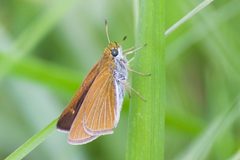
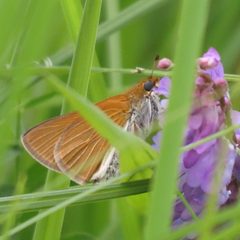
Euphyes bimacula, the two-spotted skipper, is a small in the Hesperiidae found across eastern and central North America. It is distinguished by dark brown upperside wings and pale tawny orange undersides, with a wingspan of 25–30 mm. The is listed as endangered in Connecticut. Larvae feed specifically on Carex trichocarpa, while nectar on several flowering plants including pickerelweed and common milkweed.
Pronunciation
How to pronounce Euphyes bimacula: //ˈjuːfaɪ.iːz baɪˈmæk.jʊ.lə//
These audio files are automatically generated. While they are not always 100% accurate, they are a good starting point.
Identification
Small dark brown skipper with pale tawny orange underwings; distinguished from similar Euphyes by distribution and subtle wing pattern differences. The specific epithet 'bimacula' (two-spotted) refers to diagnostic spotting, though observers should consult regional field guides for precise spot placement. Similar to other grass-skippers but associated with wetland where sedge grows.
Images
Habitat
Wetland supporting the larval plant Carex trichocarpa; includes marshes, wet meadows, and sedge-dominated areas. frequent areas with nectar sources such as pickerelweed and milkweed stands.
Distribution
North America: from northeast Colorado and western Nebraska eastward across the northern plains to southern Quebec; south through New England to central Virginia; coastal plain south to Georgia; and Gulf Coast states. Eastern Nebraska marks the approximate western boundary of the main range.
Diet
Larvae feed exclusively on Carex trichocarpa (a sedge). feed on nectar from pickerelweed (Pontederia cordata), sweet pepperbush (Clethra alnifolia), blue flag (Iris versicolor), common milkweed (Asclepias syriaca), and spiraea (Spiraea spp.).
Host Associations
- Carex trichocarpa - larval food plantObligate ; larvae feed exclusively on this sedge
Life Cycle
Complete with , larva, pupa, and stages. Eggs deposited on or near sedge. Larval development occurs on Carex trichocarpa. details not specified in sources. Adults emerge and feed on nectar.
Ecological Role
function as when nectaring. Larvae are herbivores on Carex trichocarpa, contributing to nutrient cycling in wetland . Serves as prey for .
Human Relevance
Listed as endangered in Connecticut by state authorities, making it a of conservation concern. Subject of watching and photography. No significant agricultural or economic impact documented.
Similar Taxa
- Other Euphyes speciesSimilar size, shape, and general coloration; require examination of wing pattern details and association for separation
- Grass-skippers (Hesperiinae)Shared characteristics including rapid darting and hooked ; E. bimacula distinguished by specific spot pattern and wetland preference
More Details
Subspecies
Three recognized: E. b. bimacula (Grote & Robinson, 1867) — nominate form; E. b. arbotsti Gatrelle, 1999; and E. b. arbotsti (Dodge, 1872) [note: subspecies appears duplicated in sources and may require verification]
Conservation Status
State-listed as endangered in Connecticut; not federally listed. trends and threats not well documented in available sources.
Sources and further reading
- BugGuide
- Wikipedia
- GBIF taxonomy match
- iNaturalist taxon
- NCBI Taxonomy
- Catalogue of Life
- Please Pass the Chocolate Chirp Cookies | Bug Squad
- Home invaders III - Fall field cricket, Gryllus pennsylvanicus — Bug of the Week
- Bug Eric: Fly Day Friday: Biting Midges, No-See-Ums, Punkies
- What’s all this chirping about? Ask the fall field cricket, Gryllus pennsylvanicus — Bug of the Week
- The troubadour downstairs – fall field cricket, Gryllus pennsylvanicus — Bug of the Week
- Field crickets invade a home with a wake-up call: Fall field cricket, Gryllus pennsylvanicus — Bug of the Week