
Euphyes vestris
(Boisduval, 1852)
Dun Skipper, Sedge Witch, Dun Sedge Skipper
Euphyes vestris is a ( Hesperiidae) found across much of North America. have a single in July and are associated with sedge-dominated . The shows notable geographic variation with several described , including disjunct in western mountain and coastal regions. Larval development depends on sedges (Cyperaceae), while adults visit diverse flowering plants for nectar.
Pronunciation
How to pronounce Euphyes vestris: //ˈjuːfaɪ.iːz ˈvɛstrɪs//
These audio files are automatically generated. While they are not always 100% accurate, they are a good starting point.
Identification
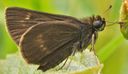
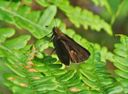
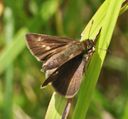
Distinguished from similar dark skippers by the combination of yellow-orange and with brown-black wings, plus the specific wing markings: black stigma in males, small cloudy white spots in females. The single in July and association with sedge provide additional context. Disjunct western require careful separation from related Euphyes , particularly in California where E. v. vestris and E. v. harbisoni occur.
Images
Habitat
Sedge-associated including wet meadows, marshes, and areas with Cyperus and Carex . Occupies diverse settings from eastern deciduous woodlands to western montane and coastal regions where sedges occur.
Distribution
North America from Nova Scotia west across southern Canada to southern Alberta, south to Florida, Gulf Coast, and eastern Texas. Disjunct in High Plains, Rocky Mountains, and Pacific Coast. E. v. metacomet covers the extensive eastern and central range; E. v. vestris and E. v. harbisoni are California endemics; E. v. kiowah occupies intermediate or specialized ranges.
Seasonality
active in July. One per year ().
Diet
Larvae feed on sedges (Cyperaceae), specifically recorded on Cyperus esculentus and Carex heliophila. feed on nectar from white, pink, and purple flowers including Asclepias syriaca, Vicia americana, Prunella, Mentha × piperita, Apocynum, Ceanothus americanus, and Echium vulgare.
Host Associations
- Cyperus esculentus - larval foodplantSedge
- Carex heliophila - larval foodplantSedge
Life Cycle
Complete with single . emerge in July. Larval stage feeds on sedges; pupal stage and strategy not described in sources. Oviposition and early instar details not documented.
Behavior
visit flowers for nectar. period concentrated in July. Specific territorial, mating, or roosting not described in sources.
Ecological Role
Larval herbivore on sedges; of diverse flowering plants. Specific functions or impacts not documented.
Human Relevance
Subject of observation and photography. No economic importance or conservation status noted in sources. 'sedge witch' reflects association.
Similar Taxa
- Other Euphyes speciesWestern disjunct may overlap with related Euphyes; requires examination of genitalia or detailed wing pattern analysis for definitive identification
- Dark Hesperiidae skippersGeneral resemblance in size and coloration; distinguished by yellow-orange / and specific sexual wing markings
More Details
Subspecies complexity
Four with overlapping ranges in California (E. v. vestris and E. v. harbisoni) suggest ongoing taxonomic refinement may be needed
Disjunct distribution
separated by Great Plains and arid interior indicate historical range fragmentation or specialized tracking