
Spilosoma
Curtis, 1825
tiger moths, ermine moths
Species Guides
7- Spilosoma congrua(Agreeable Tiger Moth)
- Spilosoma dubia(Dubious Tiger Moth)
- Spilosoma latipennis(Pink-legged Tiger Moth)
- Spilosoma pteridis(brown tiger moth)
- Spilosoma vagans(Wandering Tiger Moth)
- Spilosoma vestalis(Vestal tiger-moth)
- Spilosoma virginica(Virginian Tiger Moth)
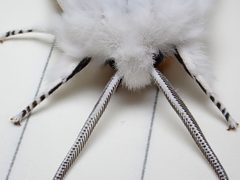
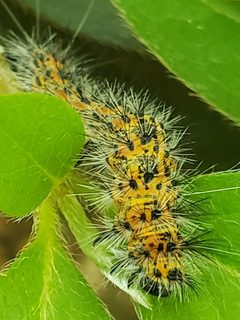
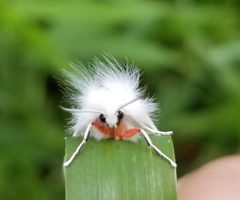
Spilosoma is a of tiger moths in the Erebidae, established by John Curtis in 1825. The genus is taxonomically heterogeneous and widely acknowledged to require systematic revision, with many likely needing reclassification into separate genera. Members are commonly known as tiger moths or ermine moths, with larvae often called 'woolly bears' due to their dense, colorful setae. The genus has a global distribution with particular diversity in tropical and temperate regions. Several species are significant agricultural pests, notably Spilosoma obliqua (Bihar hairy caterpillar) in South Asia, which causes severe defoliation of jute, legumes, and other crops.
Pronunciation
How to pronounce Spilosoma: /ˌspiː.loʊˈsoʊ.mə/
These audio files are automatically generated. While they are not always 100% accurate, they are a good starting point.
Identification
Distinguished from related tiger moth by combination of wing venation patterns, antennal , and genitalia structure. The heterogeneous nature of the genus means -level identification often requires examination of genitalia and detailed wing pattern analysis. Some species groups have been proposed for separate generic status, including subgenera Rhagonis and Rhodareas. Similar to Estigmene and Hypercompe but differs in wing shape and venation details. The 'yellow bear' caterpillar (Spilosoma virginica) lacks the black terminal bands of the banded woolly bear (Pyrrharctia isabella), with which it is frequently confused.
Images
Habitat
Diverse including meadows, fields, agricultural areas, gardens, and forest edges. Many associated with herbaceous vegetation and woody plants. Agricultural pest species abundant in crop fields, particularly rain-fed agricultural tracts.
Distribution
Global distribution with records from North America, Europe, Asia, Africa, and Australia. Particular in South and Southeast Asia, with significant pest in India and surrounding regions. Some species with restricted regional distributions (e.g., Spilosoma erythrozona in Himalayas, Yunnan, and Tibetan plateau).
Seasonality
activity varies by and latitude. Temperate species typically active in late summer and autumn. Some species with multiple per year in warmer climates; others with single generation and larval stage.
Diet
Larvae are herbivores feeding on leaves of diverse plants including woody and herbaceous . Specific pest species feed on jute (Corchorus spp.), legumes (Vigna radiata, Vigna mungo, Phaseolus spp.), sesame, cowpea, cashew, and various vegetables, oilseeds, and medicinal plants. of many species feed on nectar and pollen.
Life Cycle
Complete with , larva, pupa, and stages. Egg period approximately 5-6 days. Larval development through 6 instars; 3rd-to-5th instars most damaging in pest . Larval period duration varies by plant (18-25 days under optimal conditions). Pupal period approximately 7-10 days. Total duration ranges from 35-47 days depending on host plant and temperature. Some species overwinter as larvae.
Behavior
females use olfactory, visual, and tactile cues for plant recognition and oviposition. Attraction to specific leaf surface chemicals including n-alkanes and free . Gravid females attracted to herbivore-induced plant volatiles including 3Z-hexenal, 1-hexanol, 3Z-hexenyl acetate, 2-octanol, and ocimene. Larvae feed voraciously on host leaves, with later instars causing most damage. Some show resistance to multiple classes.
Ecological Role
Larvae function as primary consumers and herbivores. Some significant agricultural pests causing severe defoliation and yield reduction. Serve as for including ichneumonids (e.g., Therion morio) and braconids. Contribute to ecological imbalance when broad-spectrum used injudiciously, leading to secondary pest and resistance development.
Human Relevance
Several are major agricultural pests, particularly Spilosoma obliqua (Bihar hairy caterpillar) in jute and legume in South Asia. Larvae known as 'woolly bears' or 'yellow bears' are familiar to the public; folklore incorrectly attributes weather prediction ability to some species. Some species considered for of plants (e.g., ailanthus webworm, Atteva aurea, formerly in Spilosoma).
Similar Taxa
- PyrrharctiaBoth contain 'woolly bear' caterpillars with dense setae; Pyrrharctia isabella (banded woolly bear) has distinct black terminal bands versus unbanded yellow/orange of Spilosoma virginica
- EstigmeneSimilar tiger moth ; historically closely associated with Spilosoma but differs in wing venation and genitalia structure
- HypercompeLarge tiger moths with boldly patterned ; giant leopard moth caterpillar (Hypercompe scribonia) similar to Spilosoma larvae but with all-black setae and different defensive curling
- AttevaFormerly classified in Spilosoma; ermine moth with distinctive orange, black, and white pattern differs in specialization on Ailanthus altissima
Misconceptions
The 'yellow bear' caterpillar (Spilosoma virginica) is frequently confused with the banded woolly bear (Pyrrharctia isabella) in folklore about winter weather prediction; unlike the banded woolly bear, the yellow bear lacks the variable orange band width that inspired the folklore. The is taxonomically unstable with many groups requiring reclassification, meaning historical literature may place species in different genera.
Sources and further reading
- BugGuide
- Wikipedia
- GBIF taxonomy match
- iNaturalist taxon
- NCBI Taxonomy
- Catalogue of Life
- Dashing caterpillars predicting weather: Woolly bears, Pyrrharctia Isabella; yellow bears, Spilosoma virginica; and leopard moths, Hypercompe scribionia — Bug of the Week
- Stylish Lepidoptera: Ermine Moth, Atteva aurea; Yellow-Collared Scape Moth, Cisseps fulvicollis; Pearl Crescent, Phyciodes tharos; Variegated Fritillary, Euptoieta claudia — Bug of the Week
- Bug Eric: Wasp Wednesday: Therion morio
- Archive — Bug of the Week
- Comparative biology of Spilosoma obliqua
- Behavioral Responses of a Generalist Pest, Spilosoma Obliqua Walker, Towards the Leaf Surface Wax Chemicals of Three Types of Jute Crop and Implications in Pest Management
- Life history and re-description of Spilosoma erythrozona (Kollar, [1844]) from Pakistan (Lepidoptera: Erebidae: Arctiinae)
- Population ecology and ETs based time series for climate smart pest management of Spilosoma obliqua Walker
- The Role of Green Gram Plant Volatile Blends in the Behavior of Arctiid Moth, Spilosoma Obliqua
- Potential host range of Spilosoma dalbergiae (Moore) n. ssp. (Lepidoptera: Arctiidae) in India