Atteva
Walker, 1854
ermine moths, ailanthus webworms
Species Guides
1- Atteva aurea(Ailanthus Webworm Moth)
Atteva is the sole in the Attevidae, a group of small to medium-sized within the superfamily Yponomeutoidea. The genus has a pantropical distribution with approximately 70 described . Most species occur in tropical regions of the Americas, Asia, and Oceania, though Atteva aurea has expanded into temperate North America following the introduction of its plant, Ailanthus altissima (Tree of Heaven). are often strikingly patterned in orange, black, and white, and several species are nectar feeders rather than .
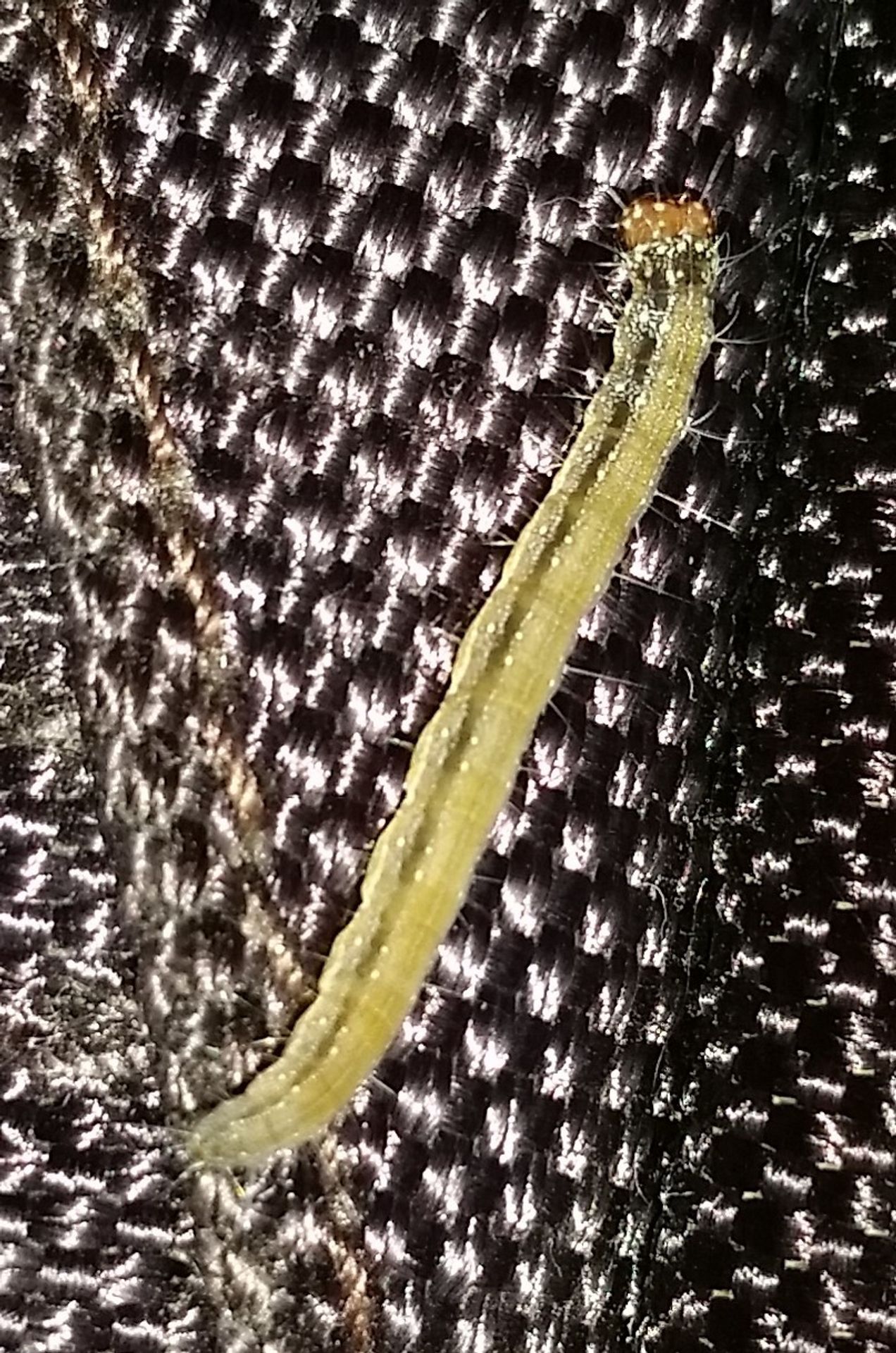
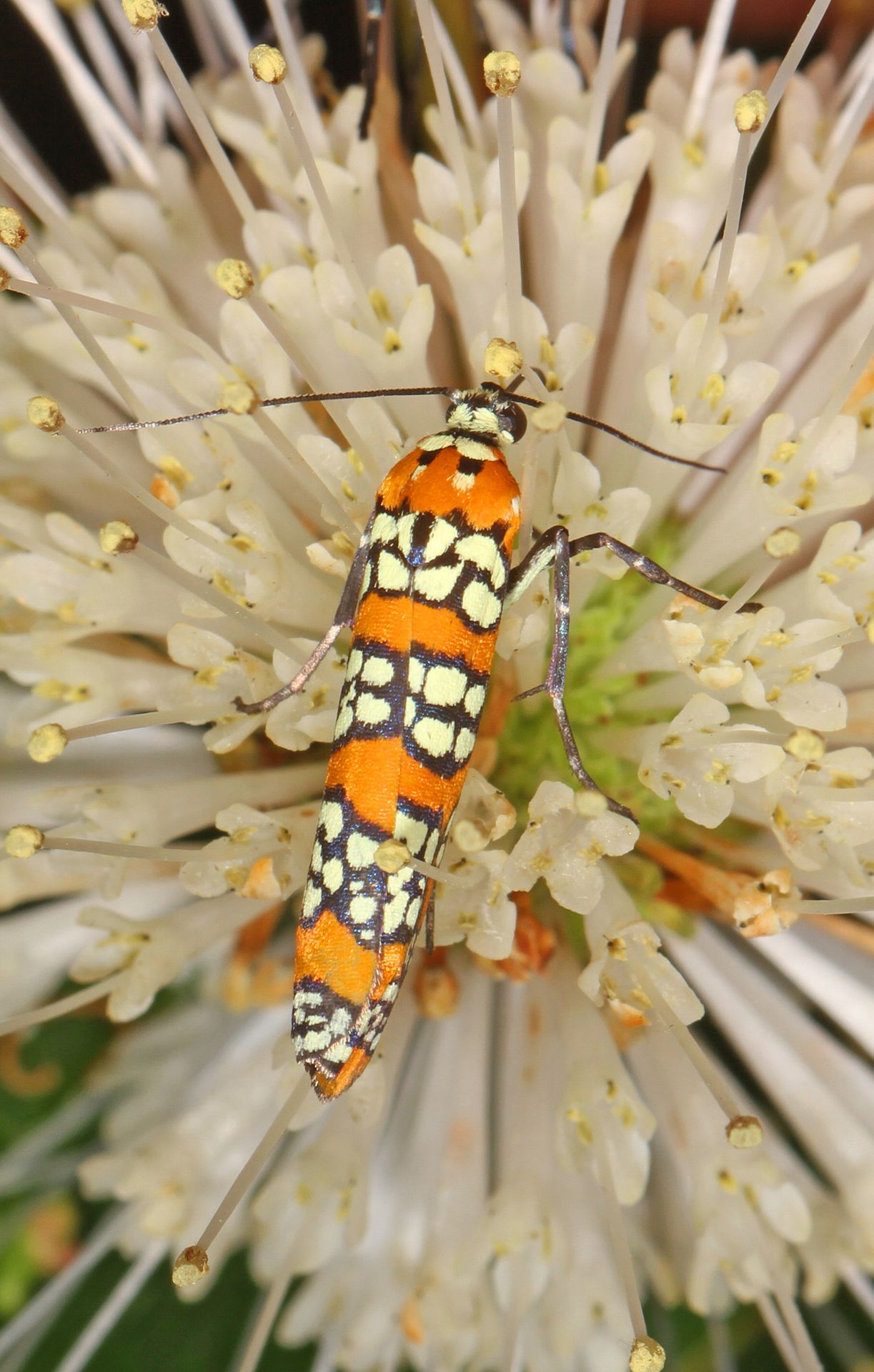
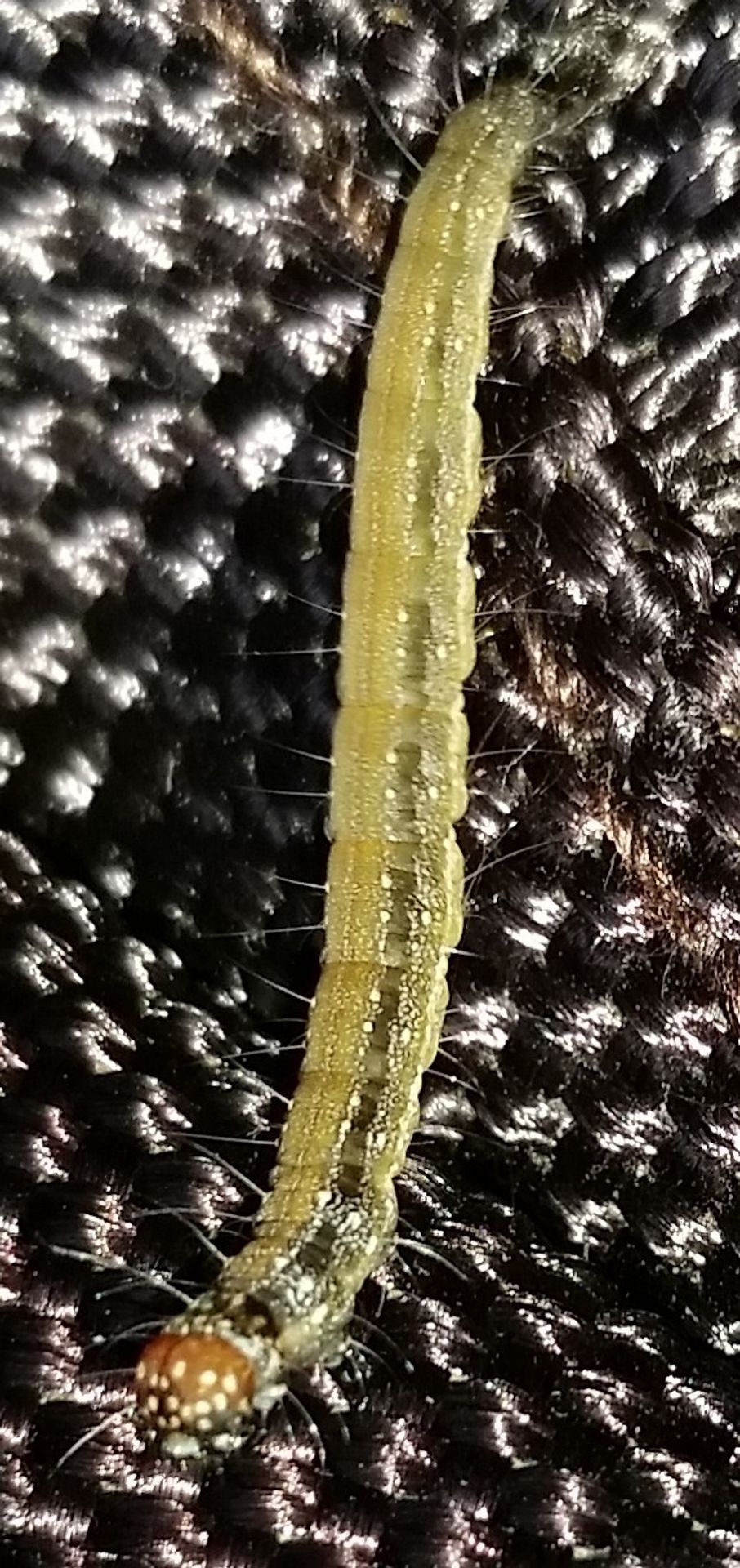
Pronunciation
How to pronounce Atteva: /æˈtɛvə/
These audio files are automatically generated. While they are not always 100% accurate, they are a good starting point.
Images
Distribution
Pantropical distribution with recorded from Central and South America, the Caribbean, Southeast Asia, Australia, New Guinea, and Pacific islands. At least one species, Atteva aurea, extends into temperate zones of eastern North America. Recent records document range expansion into southern Ontario, Canada, and new country records for Laos.
Host Associations
- Ailanthus altissima - larval Tree of Heaven; introduced enabling northward range expansion of A. aurea
- Simarouba glauca - larval Native paradise tree in Florida and Central America
- Ailanthus triphysa - larval of A. fabriciella in India
- Eurycoma longifolia - larval Tongkat Ali; of A. sciodoxa in Malaysia
Life Cycle
Complete with , five larval instars, pupa, and stages. For A. sciodoxa under laboratory conditions: eggs hatch in 5.7 days with 81.1% hatchability; larval period lasts 20.7 days; pupal stage 6.2 days; adult lifespan 13.2 days; total 46.3 days. Pupae are sexually dimorphic with females larger than males. Females have longer pupal periods and adult lifespans than males.
Behavior
of some , notably Atteva aurea, are and visit flowers for nectar. Larvae are web-forming caterpillars that construct communal silken webs on plant foliage from which they feed. Larvae of A. fabriciella have been reported to cause irritation in humans upon contact.
Ecological Role
Larvae function as herbivores and can cause significant defoliation of plants. Atteva aurea has been investigated as a potential agent for the Tree of Heaven (Ailanthus altissima). of some contribute to pollination while foraging for nectar.
Human Relevance
Some are considered potential agents for Tree of Heaven. Ailanthus webworm (Atteva aurea) is a familiar sight in eastern North American gardens and meadows in late summer and fall. Contact with dense larval of A. fabriciella has caused itching and irritation in humans.
Similar Taxa
- Yponomeuta spp.Formerly placed in Yponomeutidae; both are small with spotted or patterned wings, but Attevidae now treated as separate
- Cisseps fulvicollisYellow-collared scape moth shares similar orange-and-black coloration and , but belongs to Erebidae (tiger moths)
More Details
Taxonomic uncertainty
The Attevidae was long considered a (Attevinae) within Yponomeutidae. No consistent hypotheses regarding relationships, placement, and ranking have been published, though the prevalent view is that Attevidae likely form a within Yponomeutoidea.
Vagabond life history
Atteva aurea cannot survive northern winters and re-colonizes temperate regions annually through northward from southern refugia, similar to .
Recent taxonomic work
Becker (2009) revised New World Atteva , and Sohn & Wu (2013) described two new species from China and clarified the identity of Atteva fabriciella in Asian tropics.
Sources and further reading
- BugGuide
- Wikipedia
- GBIF taxonomy match
- iNaturalist taxon
- NCBI Taxonomy
- Catalogue of Life
- Watch out Tree of Heaven, native and invasive insects are ready to wage war on you: Ailanthus webworm, Atteva aurea, and spotted lanternfly, Lycorma delicatula — Bug of the Week
- Aposematic autumn moths: Yellow-collared scape moth, Cisseps fulvicollis, and Ermine moth, Atteva aurea — Bug of the Week
- Bugs in Orange and Black, Part I: An ermine moth, ailanthus webworm, Atteva aurea — Bug of the Week
- Stylish Lepidoptera: Ermine Moth, Atteva aurea; Yellow-Collared Scape Moth, Cisseps fulvicollis; Pearl Crescent, Phyciodes tharos; Variegated Fritillary, Euptoieta claudia — Bug of the Week
- Bug Eric: Last Night to Blacklight?
- Archive — Bug of the Week
- NOTE ON THE DISTRIBUTION OF ATTEVA AUREA FITCH
- Developmental Biology of the Tiger Moth, Atteva sciodoxa Meyrick (Lepidoptera: Yponomeutidae) under Laboratory Conditions
- Hosts, Morphological Notes, Distribution Records, and Systematics of Three Common Honduran Moths, Atteva aurea (Attevidae), Mesophleps adustipennis (Gelechiidae), and Hyblaea puera (Hyblaeidae)
- A Severe Outbreak of the Ailanthus Webworm, Atteva fabriciella Swederus (Lepidoptera: Attevidae), on Ailanthus triphysa (Simaroubaceae) in Kerala, India: Taxonomy, Distribution, Biology and Damage Symptoms
- Two species of Atteva Walker, 1854 (Lepidoptera, Attevidae) new to Laos, with DNA barcodes.