
Spilosoma dubia
Walker, 1855
Dubious Tiger Moth
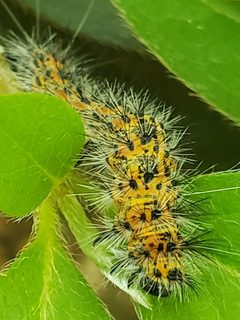
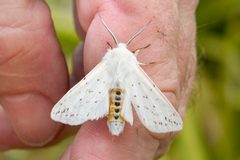
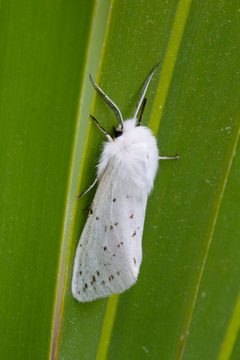
Spilosoma dubia, the dubious tiger moth, is a North American tiger moth described by Francis Walker in 1855. It inhabits aspen parkland and southern forests across southeastern Canada and the eastern United States. are active in late spring, with larvae feeding on specific plants.
Pronunciation
How to pronounce Spilosoma dubia: //ˌspaɪloʊˈsoʊmə ˈdjuːbiə//
These audio files are automatically generated. While they are not always 100% accurate, they are a good starting point.
Identification
The dubious tiger moth can be distinguished from similar Spilosoma by geographic range and preference. It is smaller than the giant leopard moth (Hypercompe scribonia). The similar agreeable tiger moth (Spilosoma congrua) overlaps in range and requires closer examination for separation.
Images
Appearance
have a wingspan of 32–38 mm. The exhibits the typical tiger moth patterning characteristic of the Spilosoma.
Habitat
Aspen parkland and southern forests. Occupies wooded and semi-open environments with mixed vegetation.
Distribution
Southeastern Canada west to Alberta, including Manitoba and Saskatchewan; eastern United States. Distribution records confirm presence in Alberta, Manitoba, Saskatchewan (Canada), and Vermont (USA).
Seasonality
are on wing from mid-May to mid-June. Single-brooded with a narrow period in late spring.
Diet
Larvae have been recorded feeding on Prunus serotina (black cherry). feeding habits are not documented.
Host Associations
- Prunus serotina - larval food plantblack cherry
Life Cycle
Complete with , larva, pupa, and stages. Larvae overwinter, with adults emerging in spring. Specific details of site and stage are not documented.
Ecological Role
Larval herbivore; contributes to nutrient cycling in forest . Specific ecological interactions are not well documented.
Human Relevance
No significant documented interactions with humans. Not considered an agricultural pest.
Similar Taxa
- Spilosoma virginicaYellow bear ; larvae sometimes entirely orange, overlapping in eastern North America but with broader range and different larval coloration
- Spilosoma congruaAgreeable tiger moth; similar size and pattern, overlapping range, requires careful examination for separation
- Hypercompe scriboniaGiant leopard moth; much larger with distinct patterning and all-black spiny larva
More Details
Sources and further reading
- BugGuide
- Wikipedia
- GBIF taxonomy match
- iNaturalist taxon
- NCBI Taxonomy
- Catalogue of Life
- Bug Eric: A Nursery Web Spider, Pisaurina dubia
- Dashing caterpillars predicting weather: Woolly bears, Pyrrharctia Isabella; yellow bears, Spilosoma virginica; and leopard moths, Hypercompe scribionia — Bug of the Week
- Befriend wasps and they will befriend you: Digger wasps, Scolia dubia and Scolia nobilitata — Bug of the Week