
Tachininae
Tribe Guides
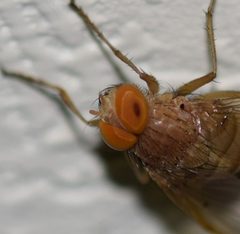
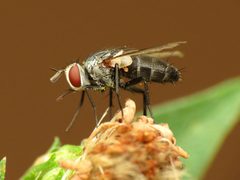
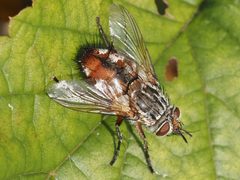
15Tachininae is a of tachinid flies (Diptera: Tachinidae) comprising approximately 127+ across 53+ and 14 tribes. The group is supported as monophyletic based on molecular data, with the exclusion of Macquartini and Myiophasiini. Members are obligate of insects, with documented in Lepidoptera (primarily), Coleoptera, Diptera, and Dermaptera. They serve as important agents of agricultural and forest pests.
Pronunciation
How to pronounce Tachininae: /tæˈkaɪnɪˌniː/
These audio files are automatically generated. While they are not always 100% accurate, they are a good starting point.
Identification
Identification to level requires examination of morphological characters including chaetotaxy (bristle arrangement), facial structure, and male terminalia. Specific diagnostic features vary by tribe; for example, Chaomyia exhibit nearly bare , strongly protruding lower facial margin, bare , two postpronotal setae, 2 presutural and 3 postsutural dorsocentral setae, and 3 pairs of strong marginal scutellar setae with crossed setae. Tribe-level identification relies on combinations of , thoracic bristle patterns, and wing venation characters.
Images
Habitat
span temperate to alpine environments including montane forests, alpine shrub meadows, alpine grasslands, and agricultural landscapes. Documented occurrences range from lowland areas to high elevations (1600–3179 m a.s.l.) on the Qinghai-Tibet Plateau and in the Russian Far East.
Distribution
Widespread across the Holarctic and Oriental regions. Documented localities include: Primorsky Krai (Russian Far East); Qinghai-Tibet Plateau of China including Qinghai Province, Tibet Autonomous Region, and northwestern Yunnan; and broader distributions across Europe, Asia, and North America based on -level occurrence records.
Host Associations
- Lepidoptera - larval 86.6% of records; predominantly Noctuidae (34.1%), (10.7%), and Tortricidae (9.2%)
- Coleoptera - 9.6% of records; includes Scarabaeidae (Holotrichia parallela, Gametis jucunda, Anomala luculenta)
- Diptera - 1.9% of records
- Dermaptera - 1.9% of records
Life Cycle
Obligate with larval development inside insects. females typically deposit or larvae on or near hosts; larvae penetrate host tissues and complete development within the host body, eventually killing it. Specific developmental details vary by and host association.
Ecological Role
Important entomophagous contributing to of insect herbivores. Documented function against agricultural, horticultural, and forest pests including Spodoptera exigua, Lymantria dispar, and scarab beetles. Trophic connections in larval stage have practical significance for programs.
Human Relevance
Scientific and practical importance in of insect pests. Specific documented applications include of caterpillars damaging leaves, flower buds, flowers, and fruits of trees and shrubs; and parasitism of scarab damaging roots and vegetation.
Similar Taxa
- ExoristinaeAnother tachinid with lifestyle; distinguished by different larval reproductive strategies (typically oviparity vs. more diverse strategies in Tachininae) and morphological characters of the and terminalia
- PhasiinaeTachinid often associated with true bugs (Hemiptera) as ; differs in host range and typically exhibits more slender body form with distinctive wing venation patterns
More Details
Tribal Classification
Contains 14+ tribes including Bigonichetini, Brachymerini, Ernestiini, Germariini, Germariochaetini, Glaurocarini, Graphogastrini, Iceliini, Leskiini, Macquartiini, Megaprosopini, Minthoini, Myiophasiini, Myiotrixini, Neaerini, Nemoraeini, Ormiini, Palpostomatini, Pelatachinini, Polideini, Proscissionini, Protohystriciini, Siphonini, and Tachinini. Tribal assignments have been questioned by Stireman et al. but revised classifications remain formally unpublished.
Molecular Phylogenetics
Monophyly of Tachininae is supported by molecular data with the exclusion of Macquartini and Myiophasiini, which may require reclassification.
Sources and further reading
- BugGuide
- Wikipedia
- iNaturalist taxon
- NCBI Taxonomy
- Catalogue of Life
- Tachinid flies (Diptera: Tachinidae, Tachininae) – parasites of insect pests
- Chaomyia, a new monotypic genus of Tachininae from the Qinghai-Tibet Plateau, China (Arthropoda, Insecta, Diptera, Tachinidae).
- Three new species and two newly recorded species of Tachininae from Tibet, China (Arthropoda, Insecta, Diptera, Tachinidae).