
Exoristinae
Tribe Guides
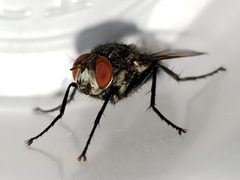
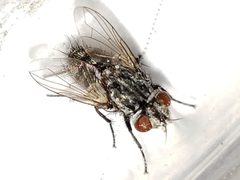
9Exoristinae is a of tachinid flies (Diptera: Tachinidae) comprising approximately 1,000 described across 11 tribes. Most species are of Lepidoptera caterpillars, though some tribes exhibit specificity for other insect orders including Orthoptera and Heteroptera. The subfamily is distributed worldwide with greatest diversity in the Neotropics. Several species have been employed in programs against agricultural pests.
Pronunciation
How to pronounce Exoristinae: /ɛksɔˈrɪstɪniː/
These audio files are automatically generated. While they are not always 100% accurate, they are a good starting point.
Identification
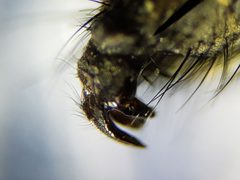
typically possess a well-developed postscutellum and aristate with the bare or pubescent. The is distinguished from other tachinid subfamilies by larval characteristics: first instar larvae bear a cephalopharyngeal skeleton with a distinct bridge, and are rather than separate. Tribal-level identification requires examination of male terminalia and chaetotaxy patterns, particularly the arrangement of katepisternal setae and the structure of the male .
Images
Habitat
Occupies diverse terrestrial from tropical rainforests to temperate grasslands and agricultural systems. Distribution closely tracks that of lepidopteran . Some associated with specific vegetation types: Euthelairini species found in grasslands and palm-dominated where hosts occur; Winthemiini frequently recovered from crop systems including coconut plantations.
Distribution
distribution with highest in the Neotropical Region. Euthelairini primarily Neotropical, ranging from Mexico to Brazil with two described Nearctic . Winthemia analis documented from Brazil, Trinidad & Tobago, Guyana, Colombia, Ecuador, Peru, Bolivia, Paraguay, and Argentina. Compsilura concinnata established in the Palearctic Region including the Iberian Peninsula.
Host Associations
- Brassolis sophorae laurentii - larval-pupal endoparasitoidLepidoptera: Nymphalidae: Brassolinae; recorded for Winthemia analis in coconut crops
- Charaxes jasius - Lepidoptera: Nymphalidae; recorded for Compsilura concinnata in Iberian Peninsula
- Neoconocephalus triops - Orthoptera: Tettigoniidae; first record for tribe Euthelairini, for Neomintho beckersi
Life Cycle
Developmental strategy varies by tribe. Winthemia analis exhibits larval-pupal endoparasitism: larvae develop internally, exit pupae through a slit on the left side of the 6th abdominal segment, pupate within 1-2 hours, and emerge as after 13-15 days. Protandry observed with male preceding females. Multiple larvae may share the same exit opening. Total viability from pupa to adult approximately 75% under observed conditions.
Behavior
includes location and oviposition on or near larval hosts. Winthemia analis larvae show stereotyped exit behavior: 83% exit through a single elongated ovate slit on the left side of the 6th abdominal segment of the host pupa. When multiple parasitoids inhabit one host, most use the same exit opening rather than creating separate openings. Parasitized pupae become immobile and develop dark brown coloration, distinguishing them from healthy pupae.
Ecological Role
Primary of Lepidoptera, functioning as significant mortality factors for caterpillar . Some tribes contribute to regulation of Orthoptera (Euthelairini on Tettigoniidae). Natural enemy services in agroecosystems: Winthemia analis acts as biocontrol agent of Brassolis sophorae, a pest of coconut crops. rates observed at 21.4% in field studies.
Human Relevance
Several utilized in classical and . Compsilura concinnata introduced to North America for gypsy moth (Lymantria dispar) control. Winthemia species investigated for management of agricultural lepidopteran pests. Some species reared commercially for inundative release in programs.
Similar Taxa
- TachininaeLarval separate rather than ; lacks bridge in cephalopharyngeal skeleton of first instar
- Phasiinae often possess a more robust body form and different male terminalia structure; frequently of Heteroptera rather than Lepidoptera
- DexiinaeFirst instar larvae with reduced and distinct body shape; includes some formerly misplaced in Exoristinae (e.g., Hypohoughia)
More Details
Tribal Classification
Eleven tribes currently recognized: Acemyini, Anacamptomyiini, Blondeliini, Eryciini, Ethillini, Euthelairini, Exoristini, Goniini, Masiphyini, Thrixionini, and Winthemiini. Euthelairini reclassification in 2024 provisionally recognized seven and 27 described , with taxonomic changes including revival of Eupelecotheca and synonymization of Euthelaira, Iteuthelaira, and Neominthoidea with Neomintho.
Host Specificity Patterns
Blondeliini and Goniini predominantly parasitize Lepidoptera. Euthelairini show association with Orthoptera (Tettigoniidae). Acemyini frequently parasitize Heteroptera. records remain incomplete for many ; dozens of Euthelairini remain undescribed.
Sex Ratio and Reproduction
Winthemia analis exhibits highly female-biased sex ratio (0.98) and averages 1.6 per (maximum 3). Host suitability decreases at higher parasitoid loads: survival drops to 33.3% when three larvae present versus 75% overall viability.
Sources and further reading
- BugGuide
- Wikipedia
- NCBI Taxonomy
- Catalogue of Life
- A new species of Neomintho Brauer & Bergenstamm and provisional reclassification of the tribe Euthelairini (Tachinidae, Exoristinae)
- First Host Record for Winthemia analis (Macquart) (Diptera: Tachinidae: Exoristinae) in Brazil: Brassolis sophorae laurentii Stichel (Lepidoptera: Nymphalidae: Brassolinae)
- Compsilura concinnata (Meigen, 1824) (Diptera, Tachinidae, Exoristinae), parasitoide de Charaxes jasius (Linnaeus, 1767) (Lepidoptera, Nymphalidae) en la península ibérica