
Exoristini
Genus Guides
7Exoristini is a tribe of flies within the Tachinidae, Exoristinae. The tribe contains approximately 22 , including the type genus Exorista Meigen, 1803. Members are flies, with larvae typically developing inside other insects. The tribe is distinguished from related tachinid tribes by morphological features of the male terminalia and larval cephalopharyngeal skeleton. Exoristini has a distribution, with found across multiple continents.
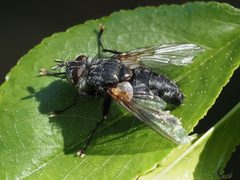
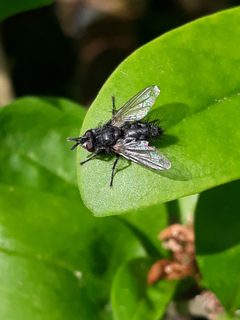

Pronunciation
How to pronounce Exoristini: /ɛk.sɔˈrɪs.tɪ.naɪ/
These audio files are automatically generated. While they are not always 100% accurate, they are a good starting point.
Identification
Exoristini can be distinguished from other Tachinidae tribes by examining male genitalia: the surstyli are typically or closely approximated basally, and the are often slender and curved. The tribe differs from Blondeliini in having a more reduced larval mouthhook structure. Exorista , the most diverse , are recognized by their striped and relatively robust body form. Separation from Tachinini requires examination of the abdominal sternite 6 in males, which is typically broader in Exoristini. Identification to species level often requires dissection and examination of internal genitalic structures.
Images
Habitat
vary by and , encompassing forests, grasslands, agricultural areas, and urban environments. Larval habitats are determined by availability rather than specific environmental conditions. are frequently found in open, sunny areas where they actively search for hosts or nectar at flowers.
Distribution
distribution. Documented from North America, Europe, Asia, Africa, Australia, and South America. Individual show varying geographic ranges: Exorista is widespread across the Holarctic and Oriental regions; Tachinomyia occurs in North America; Chaetogena and Phorocera are primarily Palearctic.
Seasonality
activity varies by latitude and . In temperate regions, most species are active from late spring through autumn (May–October in the Northern Hemisphere). Some species exhibit or multivoltine with overlapping . Tropical species may be active year-round.
Life Cycle
All members are . Females deposit or larvae on or near , or oviposit directly into host bodies. Larvae develop internally within the host (endoparasitism), typically consuming the host before pupating. Hosts include Lepidoptera (primarily), Hymenoptera, and occasionally other insects. Development time varies with temperature and host , typically ranging from 1–4 weeks for larval development.
Behavior
are and active fliers. Females exhibit -searching , often visually locating hosts on vegetation. Some are attracted to flowers for nectar feeding. Males patrol territories or aggregate at lekking sites. Defensive behaviors include rapid escape and, in some species, (death feigning) when disturbed.
Ecological Role
Significant agents, regulating of herbivorous insects, particularly Lepidoptera. Exorista are among the most important of pest caterpillars globally. The tribe contributes to top-down in natural and agricultural , with some species used in programs.
Human Relevance
Several are commercially produced and released for of agricultural pests, particularly Exorista larvarum and related species against noctuid pests. Some species have been introduced outside native ranges for , with documented cases of successful establishment. No species are known to be of medical or veterinary importance.
Similar Taxa
- TachininiSimilar overall and , but differs in male abdominal sternite 6 structure and larval cephalopharyngeal skeleton morphology. Tachinini typically have more robust body forms and different wing venation patterns.
- BlondeliiniShares lifestyle but differs in male terminalia structure, particularly the separation and shape of surstyli. Blondeliini larvae possess more developed accessory in the cephalopharyngeal skeleton.
- EryciiniClosely related tribe with similar associations, but distinguished by differences in the structure of the male and the arrangement of abdominal sternites.
More Details
Type genus
Exorista Meigen, 1803
Included genera
Alloprosopaea, Austrophorocera, Bessa, Chaetexorista, Chaetoria, Chetogena, Crassicornia, Ctenophorinia, Eozenillia, Exorista, Gueriniopsis, Hillomyia, Macrohoughiopsis, Maculosalia, Metaphorocera, Neophryxe, Parasetigena, Phorcidella, Phorinia, Phorocera, Stomatotachina, Tachinomyia
Taxonomic notes
The tribal classification of Tachinidae has undergone significant revision. Exoristini as currently circumscribed is supported by both morphological and molecular phylogenetic studies, though relationships among constituent remain partially unresolved.