
Eryciini
Genus Guides
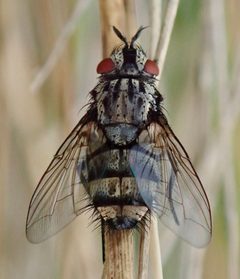
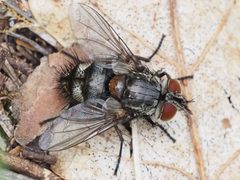
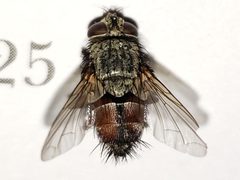
10Eryciini is a tribe of tachinid flies comprising approximately 128 . The tribe serves as a repository for exoristine that cannot be placed into other tribes, resulting in a polyphyletic . Members are of Lepidoptera larvae, with documented associations to caterpillars in Crambidae, Notodontidae, Noctuidae, Pyralidae, and Tortricidae. A new genus, Santarosamyia, was described in 2024 from Rica based on specimens reared from wild-caught caterpillars.
Pronunciation
How to pronounce Eryciini: //ɛrɪˈsaɪ.ɪˌnaɪ//
These audio files are automatically generated. While they are not always 100% accurate, they are a good starting point.
Identification
The tribe is characterized by proclinate ocellar setae, two notopleural setae, three to four katepisternal setae, and a row of black setulae to the occipital row. Placement within Eryciini is challenging due to lack of comprehensive revisions and overlapping morphological characters with other exoristine tribes.
Images
Habitat
Found in major terrestrial including tropical dry forest and adjacent . Specimens have been reared from caterpillars collected in vegetation of various types.
Distribution
distribution with records from the Nearctic, Neotropical, and other biogeographic regions. Type locality for recently described Santarosamyia is Area de Conservación Guanacaste, Sector Santa Rosa, Rica.
Seasonality
activity corresponds to from caterpillars; timing varies by and region.
Host Associations
- Crambidae - larval
- Notodontidae - larval
- Noctuidae - larval
- Pyralidae - larval
- Tortricidae - larval
Life Cycle
Larval development occurs within Lepidoptera caterpillars. emerge from formed after host death. Specific developmental durations vary by and are not well documented for most Eryciini .
Behavior
Endoparasitoid of Lepidoptera larvae. More than 750,000 wild-caught caterpillars have been reared in ongoing biodiversity inventories to document these - relationships.
Ecological Role
Acts as a regulating of Lepidoptera larvae. Contributes to tri-trophic ecological databases linking parasitoids, their , and host food plants.
Human Relevance
Contributes to potential through of caterpillar pests. The ongoing biodiversity inventory in Rica has generated substantial data on --plant relationships relevant to conservation and agriculture.
Similar Taxa
- Other Exoristinae tribesEryciini is distinguished by the combination of proclinate ocellar setae, two notopleural setae, and three to four katepisternals; however, boundaries between tribes remain poorly resolved due to polyphyly and overlapping characters.
- BlondeliiniBoth tribes contain tachinid of Lepidoptera, but differ in chaetotaxy; Eryciini specifically shows the characteristic row of black setulae to the occipital row.
More Details
Taxonomic instability
The tribe is considered polyphyletic and serves as a default placement for exoristine that do not fit into better-defined tribes. Comprehensive revisions are needed to resolve natural groupings.
Research significance
The Area de Conservación Guanacaste inventory has made Eryciini one of the better-documented tachinid tribes in terms of associations, though authors caution that additional rearing records are needed to establish robust conclusions about host range and specificity.