
Phryxe
Robineau-Desvoidy, 1830
Species Guides
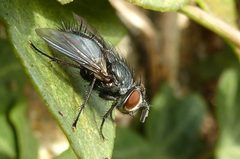
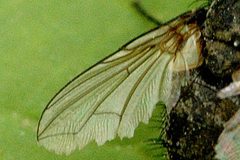
1Phryxe is a of tachinid flies (Diptera: Tachinidae) established by Robineau-Desvoidy in 1830. within this genus are of lepidopteran larvae, with documented including forest pests such as the spruce budworm (Choristoneura fumiferana) and pine processionary caterpillar (Thaumetopoea pityocampa). The genus exhibits ovolarviparous , with females depositing or first-instar larvae directly onto or near host insects. At least 15 species are recognized, distributed primarily across the Holarctic region.
Pronunciation
How to pronounce Phryxe: //ˈfrɪksi//
These audio files are automatically generated. While they are not always 100% accurate, they are a good starting point.
Images
Habitat
Forest , particularly coniferous forests where lepidopteran occur. Associated with pine plantations and native pine stands.
Distribution
Holarctic distribution; recorded from Denmark, Norway, and Sweden. Individual have more specific ranges: Phryxe pecosensis occurs in British Columbia, Canada; Phryxe caudata has been studied in European pine forest systems.
Host Associations
- Choristoneura fumiferana - spruce budworm; primary for Phryxe pecosensis
- Thaumetopoea pityocampa - pine processionary caterpillar; for Phryxe caudata
Life Cycle
Ovolarviparous: females deposit or first-instar larvae. Embryonic development has been observed . For Phryxe pecosensis, egg deposition to formation requires 7–11 days (females take longer), puparium completion within 24 hours, and 9–11 days later. Larval growth involves increasing total content with changing relative proportions of individual amino acids; free amino acid concentrations decrease while protein-bound amino acids increase during development.
Behavior
targeting lepidopteran larvae. Phryxe caudata has been observed as a for hyperparasitoids in the Eudinostigma (Braconidae), indicating it occupies a middle trophic position in parasitoid .
Ecological Role
agent of forest lepidopteran pests. are influenced by tree , which affect timing of host and consequent exposure to . Serves as host for hyperparasitoids, contributing to complex interactions in forest .
Human Relevance
Potential for of forest pests, particularly in conifer plantation management. Timing of on versus native pine affects rates, with implications for dynamics of pests like Thaumetopoea pityocampa.
Similar Taxa
- Other Tachinidae generaPhryxe belongs to tribe Eryciini within Exoristinae; distinguished by specific combinations of bristle patterns and male terminalia, though detailed diagnostic features require examination
More Details
Hyperparasitism
Phryxe caudata serves as for hyperparasitoid in the Eudinostigma (Braconidae), indicating complex trophic interactions in its .
In vitro development
Complete embryonic development of Phryxe caudata has been achieved in artificial culture media, with agarose-gelled complete medium yielding larval viability comparable to conditions.
Sources and further reading
- BugGuide
- Wikipedia
- GBIF taxonomy match
- iNaturalist taxon
- NCBI Taxonomy
- Catalogue of Life
- Composition corporelle en acides amines du parasitoide Phryxe caudata (Diptera) au cours de sa croissance larvaire
- STUDIES ON DIPTEROUS PARASITES OF THE SPRUCE BUDWORM, CHORISTONEURA FUMIFERANA (CLEM.) (LEPIDOPTERA: TORTRICIDAE): II. PHRYXE PECOSENSIS (TNS.) (DIPTERA: TACHINIDAE)
- Descriptions of adults, immature stages and venom apparatus of two new species of Eudinostigma Tobias (Hymenoptera, Braconidae), hyperparasitoids of Phryxe caudata (Rondani) (Diptera, Tachinidae)
- DEVELOPPEMENT EMBRYONNAIRE IN VITRO, EN MILIEU ARTIFICIEL DEFINI DE DEUX PARASITOIDES OVOLARVIPARES, PHRYXE CAUDATA ET LIXOPHAGA DIATRAEAE (DIPTERA, TACHINIDAE)
- The influence of host tree species on timing of pupation of Thaumetopoea pityocampa Schiff. (Lep., Thaumetopoeidae) and its exposure to parasitism by Phryxe caudata Rond. (Dipt., Larvaevoridae)1