
Phorocera
Robineau-Desvoidy, 1830
Species Guides
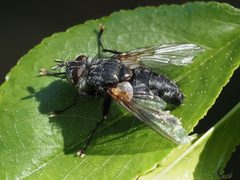
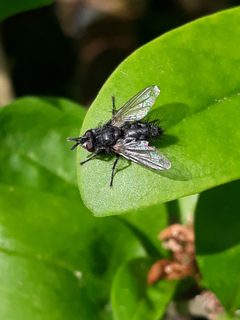
1Phorocera is a of tachinid flies comprising approximately 13 described . Species in this genus are of various insect , particularly and lepidopteran larvae. Several species have been investigated for of forest pests, including conifer-feeding sawflies and the spruce budworm. The genus is characterized by specific and morphological features used in identification.
Pronunciation
How to pronounce Phorocera: /fəˈrɑsərə/
These audio files are automatically generated. While they are not always 100% accurate, they are a good starting point.
Images
Habitat
Conifer forests and other wooded where insects occur. are associated with forest supporting or spruce budworm .
Distribution
Recorded from Denmark, Norway, and Sweden (GBIF). Distribution likely broader across the Holarctic region given associations with widespread forest pests.
Host Associations
- sawflies (Hymenoptera: Symphyta) - primary Phorocera hamata develops within cocoons
- Choristoneura fumiferana (spruce budworm) - primary Phorocera incrassata is a of this tortricid
Life Cycle
Phorocera incrassata is , with emerging in late June to early July. Females deposit on larvae; eggs hatch and larvae penetrate host tissue. The overwinters as a larva within the host larva, with host death occurring in spring. occurs within host remains. For Phorocera hamata, larvae develop within cocoons after host cocoon formation, forming puparial cases within host cocoons; adults emerge from both and host cocoons.
Behavior
of Phorocera hamata escape from cocoons by leaving a characteristic round cap that appears cut from the cocoon wall. The escape mechanism involves alternate expansion and contraction of the against the surrounding cocoon wall.
Ecological Role
of forest insect pests, contributing to natural of and spruce budworm .
Human Relevance
Investigated and transferred between regions for of forest pests. Phorocera incrassata was moved from Western to Eastern Canada for release against spruce budworm.
Sources and further reading
- BugGuide
- Wikipedia
- GBIF taxonomy match
- iNaturalist taxon
- NCBI Taxonomy
- Catalogue of Life
- The Biology of Phorocera hamata A. & W., a Tachinid Parasite of Sawflies
- STUDIES ON DIPTEROUS PARASITES OF THE SPRUCE BUDWORM, CHORISTONEURA FUMIFERANA (CLEM.) (LEPIDOPTERA.TORTRICIDAE): VI. PHOROCERA INCRASSATA SMITH (DIPTERA:TACHINIDAE)
- OBSERVATIONS ON THE EMERGENCE OF PHOROCERA HAMATA A. AND W. (TACHINIDAE) FROM SAWFLY COCOONS